



Your basket is empty

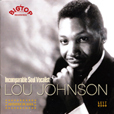
Superb, refined soul music, mostly written in the Brill Building (including a bunch of Bacharach & Davids), originally issued by Big Top in New York.
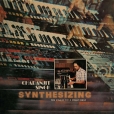
Astounding 1982 conjurations of ancient ragas on the Roland TB-303 and TR-808 synths which would define Acid. Pulsating, minimal grooves; a living Indian antecedent of House.
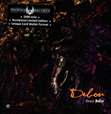
Released in cooperation with Singh’s estate. With a sixteen-page LP booklet containing previously-unpublished photos and two new essays. Remastered; luxuriating over four sides for maximum aural impact.
‘The mesmeric bass lines, the spare simplicity of the arrangements and the constant motion make the whole work a proper piece of electro history, akin to Manuel Gottsching’s E2-E4 for its understated visionary importance’ (Mojo).
Karuna Khayal runnings from 1975. ‘Orchestrated fuzz guitar, echo-drenched percussion, reverbed bass, zithers, assorted taped sounds and vocals that are simply inspired… a must for devotees of Faust and Can.’

Plenty of prime Upsetters here.
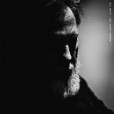
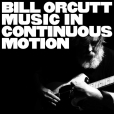
‘Returns to original composition and the blues… with a freshness and authority that nostalgic retreads cannot deliver… Three songs (Odds Against Tomorrow, The Writhing Jar, Already Old) are multi-tracked, an innovation that, for guitar buffs familiar with Orcutt’s stripped-down vernacular, jumps out of the grooves like a Les Paul sound-on-sound excursion in 1948, or a Jandek blues rave-up in 1987. Specifically evoking John Lee Hooker’s double-track experiments on 1952’s Walking the Boogie, the steady chord vamps of Odds Against Tomorrow and Already Old form a harmonic turf on which Orcutt solos with lyrical abandon. The Writhing Jar’s crashing overdubs recall the brassy six-string voicings of This Heat or Illitch. With the exception of the unreconstructed Elmore James-isms of Stray Dog’ and the Layla-finale-like haze of All Your Buried Corpses Begin To Speak, the remaining non-overdubbed tracks dovetail snugly with Orcutt’s previous solo output, reeling gently in a Mazzacane-oid mode or vibing up the standards (Moon River)... Odds Against Tomorrow challenges contemporary solo guitar practice in a way that simultaneously nullifies hazy dreams of folk purity and establishes a new high-water mark for blues-rock reconstruction” (Tom Carter).
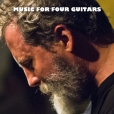
‘What really impressed was its precision, its 14 guitar miniatures bringing to mind the cascading melodies of Steve Reich, or Malian kora music… There’s so much going on in these dense constructions, you’re likely to hear new layers and combinations with each spin’ (The Wire, Releases Of The Year).

‘A collection of canonical, mature acoustic guitar soli to contrast against the fractured downtown conceits of previous acoustic releases… Jump On It, with its living-room aesthetics and big reverb, packs a disarming intimacy absent from the formal starkness of Orcutt’s earlier acoustic outings… Not quite refuting (yet not quite embracing) the polish of revered watershed records by Bert Jansch, John Renbourn, or Bola Sete, Jump On It treads a path between the raw and the refined… Each track is a key to a memory, a building block in a shining anamnesis leading to the recollection that hey, we’re all humans in a shared cosmos, and music is one way we might make that universe go down easy. And who wouldn’t jump on that?’ (Tom Carter)
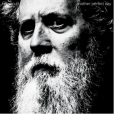
‘Boomerangs back into the slashing chords and frenzied double-picking of the Harry Pussy years, tossing the gentler melodic glow of the last few solo records into the dustbin. In other words, this may be Orcutt’s most overtly punk-rockist record since Gerty Loves Pussy, his first solo electric LP from a decade ago. It’s an affirmation that Orcutt is above all a lead player—angular runs scaling the heavens, ricocheting back to ground zero before climbing again. Orcutt builds tension with short phrases, repeated with slight variability until it seems like they’ll never stop, finally slamming into a fresh line like the dawning valley at the crest of the mountain pass. Another Perfect Day is, ultimately, something of a solo guitar Nouveau Roman, an exhilarating run through melodic reiteration, impossible crescendos (check out those ecstatic crowd hoots on For the Drainers) breaking into—a moment rarely found on an Orcutt record—soft, whisper-quiet tracer notes at the end of A Natural Death. Another Perfect Day returns Orcutt to the immediacy of his earliest records while maintaining the melodic complexity, phrasing, and flow of a player, who’s been going, what—four-plus decades now? And when he taps his roots, it’s a reminder of exactly what was so exciting about Orcutt’s playing in the first place.’
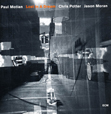
With Chris Potter and Jason Moran.
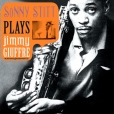
An overlooked jazz classic.
In step with Giuffre’s lean, startling arrangements, Stitt expressively reins in his virtuosity: he plays dazzlingly as ever, swinging hard, but with a new lyricism and freedom.
The band is killer — including Frank Rosolino, Jack Sheldon, and Lawrence Marable — and Giuffre himself plays some of his best tenor saxophone on record.
Scintillating and absorbing; hotly recommended.
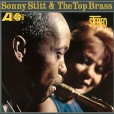
Top-quality, all-analogue reissue by Speakers Corner.