Your basket is empty


‘Psychological Drama’.
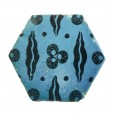
Pure worries from Leipzig — three club burners steeped in Detroit traditions, distilling the explorations in collective, nervy hypnosis of KM live sets. As the music slowly unfurls, there he is at every turn, subtly tweaking its parameters, redistributing its weight, pricking its grooves into a state of utterly infectious perpetual movement.
The two visions of Chilazon track opposite pathways: the first is twelve minutes of gorgeous, dubwise, aquatic techno, spattered with kicks and razor-sharp hi-hats, and smeared with ghostly echoes; then a terse mesh of broken drums, escalating to a quiet yet feverishly intense peak. Lanthanum is calligraphic swordplay, its toms and bass stabs warily circling one another in a graceful steppers’ dance, spaced-out and fathoms-deep.
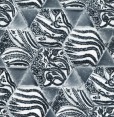
Fierce, subtle music, radically strange and unafraid of the deep, but with a killer understanding of rhythm. Lush drum-machine nocturnes, gnarly electronica and glorious flowerings of zoned-out dubspace: an evolutionary music, continuously engaged with experimentation both in the studio and the club.
Whether prepared solo, or jointly with his spar Mix Mup, a Kassem Mosse recording is less of a stand-alone creation than the next thrilling installment of an unstoppable groove. True to form, Disclosure dazzlingly extends some of the most mystical, essential dancefloor-rooted music of the last decade, from dusty, dream-state techno on Workshop and Mikrodisko, to frazzled beatdowns on Trilogy Tapes and Nonplus.
Pedigree techno and house are the lifeblood of Disclosure, yet with something newly microscopic about them. Its mesmerising juggle of pointillistic percussion, melting-wax chords and fleshy bump’n’grind suggests biological processes at work, as if Mosse has zoomed right into the cellular metabolism ticking away at the core of the music.
These textures are woven into some of KM’s richest and most emotionally complex material so far, constantly enlivened by forays into jazz, dub and beyond. Check the farty-bottom, broken-down, steel-pan minimalism of Collapsing Dual Core, just the job for coursing around Detroit in a car at night; and Phoenicia Wireless’ dastardly, intricate combination of glowering John Carpenter synths, heavy static and junked consoles on remote, as if the beats are fighting a wave of dirt, soot and fossilisation. The frantic, interstella tarantella of Galaxy Series 7; the wonky bump-and-hustle and heavy-lidded drama of Purple Graphene, to close.
Expertly pieced-together and paced, Disclosure brilliantly registers all the self-contained coherence and artistic authority of an album proper, yet shadowed throughout by the open-ended and questing spirit so vital to Mosse’s music. Its intimate enactments of non-closure, and its sense that anything could happen at any moment; its thematic play between excess and incompleteness, babble and tongue-tied stutter, and-you-don’t-stop grooving and entropy, wobble and the pause-button.
Trash and ready in a spiffy Bankhead sleeve, too.
Double bim. Bim, bim.

Titles inspired by Johnny Griffin’s sojourn in Pentonville nick (for outstanding income tax) at the start of a Ronnie Scott’s stint earlier in the year. With clarinettist Tony Coe on song; Sahib Shihab and co.
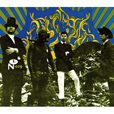
Previously unissued underground rock from 1969, Rockford, Illinois.
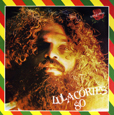
From 1980, Recife, Brazil: ‘crazed ethno folkrock; magical, gentle, jungle folk psych zones; hard-hitting, coke-dusted fuzz rock; insane mutant disco dancefloor groove; tweaked Americana; acid vocal raga trance.’

Moritz from Basic Channel and Rhythm And Sound, alongside Vladislav Delay (Chain Reaction) and Max Loderbauer (Sahko): a dream crossing of classic Berlin techno, On-The-Corner Miles, Larry Heard, and Can.
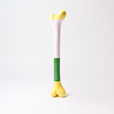
At its most open, shifting and expressive to date. For all the music’s complexity and deep coherence, freedom is the key. At times it grooves hard; at others it’s lush, romantic.
With Tikiman and Marc Muellbauer.
A handful of LPs signed by Moritz!

At its darkest and most driving. The group is clear and unanimous — this is their best yet.

Meditative, absorbing dance music in true Moritz style — at times seemingly transfixed by its own elements, and minimal almost to vanishing-point, but quickly back ticking, kicking and amassing.
Tony Allen, Max Loderbauer and Moritz von Oswald; mixed by Ricardo Villalobos.
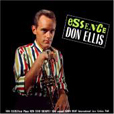
Years before his big bands and electronics — the trumpeter on Pacific Jazz LP from 1962, more experimental than usual for the label, with Paul Bley and Gary Peacock — bracing, often free-form.
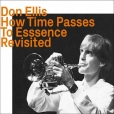
‘How Time Passes and Essence were issued at a time when jazz history was being made practically on a monthly basis. There are a few reasons why they became submerged in the tsunami of groundbreaking albums released in the first years of the 1960s. For starters, Candid and Pacific Jazz simply did not have the market clout of Atlantic, Impulse, and other labels. Furthermore, Don Ellis’ music differed significantly from that of the avatars of free jazz, occupying a space between contemporary jazz and mid-century chamber music. However, the times eventually caught up. More than sixty years after their initial release, these recordings were as prescient as they are brilliant.’
With Jaki Byard, Ron Carter and Charlie Persip, in the earlier group; then Paul Bley, Gary Peacock and Gene Stone / Nick Martinis.
‘With Touch, the Tortoise bandmembers — Jeff Parker, Dan Bitney, Douglas McCombs, John Herndon, and John McEntire — harness their collectivist songwriting approach, a slightly anarchistic but resolutely egalitarian process where ideas triumph over ego towards an abstracted muscularity. While there are still excursions into the dusky, elegantly gnarled jazz ambience that flourished on landmark works like Millions Now Living Will Never Die and TNT, Touch is perhaps most remarkable for Tortoise’s unapologetic embrace of grand gesture. Aerodynamically re-engineered Krautrock, hand-cranked techno rave-ups, and pointillist spaghetti western fanfares are all imbued with Tortoise’s now-signature internal logic — equally alluring and confounding, a puzzle to be savored rather than solved.’
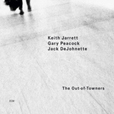
With Gary Peacock and Jack DeJohnette, live in 2001 — this trio at its peak — kicking off with a Cole Porter and closing with a heart-rending solo piano reading of It’s All In The Game.