



Your basket is empty

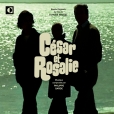
His soundtrack to Claude Sautet’s 1972 film, featuring Romy Schneider’s haunting voice-over of La Lettre De Rosalie. ‘Like a magical bridge between baroque and electronic music, mixing Moog synthesizer sequences with acoustic instruments.’

The trio of Daniel Carter (reeds, trumpet, flute), William Parker (bass, trombonium, shakuhachi), and Hamid Drake (drums).
The title Painters Winter addresses “those who paint with sound, in different landscapes, to celebrate the coming of the seasons: winter spring summer and autumn. Acknowledging the entire universe of world jazz music. Discovering the undiscovered.” According to WP’s liner notes, ‘The music on this album is a tribute to the flow of rhythm as melody and pulsation. Laced with the joy and the bounce, the dance and the heartbeat. Giving a nod to all the music that has ever passed through us.’
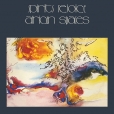
‘At a distance of more than forty years, the radicalism and significance of African Spaces can be seen more clearly. Ambitious, uncompromising, and resolutely progressive, it represents a unique high-water mark in South Africa’s long musical engagement with the newest developments in American jazz — a response to the cosmic call of Return To Forever, and an answer to Miles’ On The Corner… a complex and challenging jazz fusion that shifted the terms of South Africa’s engagement with jazz towards new music being made by pioneers such as Chick Corea, Weather Report, John McLaughlin, Pat Metheny and others.
‘This debut recording is one of the key documents in the South African jazz canon. Emerging in the aftermath of the 1976 Soweto uprising, and taking its place alongside the crucial mid-1970s music of Malombo, Abdullah Ibrahim, and Batsumi, it is a defining but unsung musical statement of its era.’
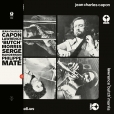
The fruits of a recording session deftly convened by Jef Gilson, to take advantage of Serge Rahoerson’s visit to Paris from Madagascar for just a few days in November 1976. Though a saxophonist by training, Serge had played drums on The Creator Has A Master Plan for the Malagasy album. To establish rhythmic foundations, Gilson reunited him in this capacity with Baroque Jazz Trio bassist Jean-Charles Capon. Recruited from Gilson’s current big band, Saravah saxophonist Philippe Maté and cornetist Butch Morris — on the verge of hooking up with David Murray — added their contributions later.
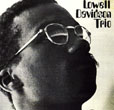
Ornette brought the pianist to ESP in 1965.
With Milford Graves and Gary Peacock.
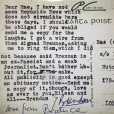
Previously unreleased recordings made in the Chelsea Hotel in 1960 on 1/4” tape, transferred here for the first time; the basis of Confessions Of An Irish Rebel, published posthumously five years later.
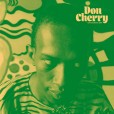
The Organic Music Society in super-quality audio, recorded by RAI in 1976 for Italian TV.
Ecstatic, bare-naked, free-as-the-birds music, with Cherry playing pocket-trumpet, the great Brazilian percussionist Nana Vasconcelos, the Italian guitar of Gian Piero Pramaggiore, and the tanpura drone of Moki.
‘A pure hippie aesthetic, like in an intimate ceremony, filters a magical encounter between Eastern and Western civiliziations, offering different suggestions of sound mysticism: natural acoustics in which individual instruments and voices are part of a wider pan-tribal consciousness. A desert Western landscape marries Asian and Latin atmospheres. Indigenous contributions with berimbau explorations find fossil sounds of rattles and clap-hands invocations. Influences of Indian mantra singing are combined with eternal African voices or with folkish-Latin guitar rhythms, while flute and drums evoke distant dances.’
Interviewing Shirley Collins recently, Stewart Lee noted how so many of her songs are ‘stories that go back hundreds of years, and that suggests there’s a continuity to existence, which means we don’t have to worry.’ Quite different music, obviously, but Om Shanti Om is the same kind of miracle medicine.
It’s a must.
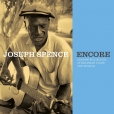
Wonderful, previously-unheard recordings by the legendary Bahamian guitarist, at his peak in 1965, made at his only New York concert, at home in Nassau, and in a Manhattan apartment. Gripping, one-off playing, continuously stepping out of line, or surprising you with accents, like Monk; rough, enraptured singing in the age-old tradition of local sponge fishermen, with startling irruptions of humming, babble and scat.