Your basket is empty

Fierily imperious roots from 1998, for Opera House. With Mikey General and a dub; and a show-stealing toast from label-boss Buccaneer.
Ishu and Xylon from Sound Iration, produced by Manasseh for Youth Sound in 1990. Quality digi UK steppers, with a nice melodica version, and a hollowed-out dub.
Tearaway call-and-response vocal ska, rare and deadly; with a killer Baba Brooks.
Top-notch Japanese presentation.
JING-BANG, n. Also jin-; ging-bang; jabang. A considerable number. Gen. in phr. the hail jin(g)-bang, the whole lot, company, concern, affair. Also used attrib. and contemptuously — a worthless collection or lot (Uls. 1924 W. Lutton Montiaghisms 24, Uls. 1947).
Wgt. 1880 G. Fraser Lowland Lore 172: ‘Ye maun ken that the haill jingbang o’ them’s as Eerish as Rosy Monahan.’ Sc. 1892 Stevenson Wrecker xviii.: ‘He was the only one I ever liket of the hale jing-bang.’ Ayr. 1901 G. Douglas Green Shutters xiv.: ‘We’ve got the jing-bang lot if we’re quick.’
‘Bottling the vehemence bursting forth nightly in the downtown NYC loft scene, these 1973 recordings at Marzette Watts’s studio are furious, brutal, and poignant.
‘Mixed and mastered from the original tapes, this expanded 2020 LP edition restores sections of the original record inexplicably excised from the CD release in the nineties, adding more than double the playing time of the original LP, in fascinating variations.
‘Heavyweight vinyl; quality pressing.’
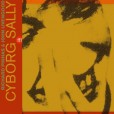
The 1994 return of pioneering electronic guru Richard ‘Heldon’ Pinhas to the forefront of the French underground scene. The fruits of a two-year collaboration with John Livengood from Red Noise and Spacecraft, inspired by Norman Spinrad’s novel Rock Machine. First vinyl issue.
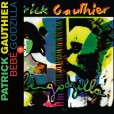
Keyboardist with Heldon, Magma and co, joined on his debut LP by the likes of Richard Pinhas and Christian Vander — no less — together with Bernard Paganotti, François Auger, Didier Batard… An outstanding mixture of synthy electronics and jazz-rock. First vinyl issue.
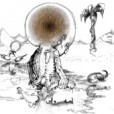
No-one else makes music like this: devilishly complex but warm and intuitive, stirring together a dizzying assembly of outernational and outerspace influences, whilst retaining the subby funk-and-hot-breath pressure of Shackleton’s soundboy, club roots.
The result is an evolutionary, truly alchemical music — great shifting tides of dub, minimalist composition and choral song (Five Demiurgic Options); ritual spells to ward off the darkness (Before The Dam Broke, The Prophet Sequence); radiophonia and zoned-out guitar improv (Seven Virgins); even the febrile, freeform psychedelia of eighties noise rock (Sferic Ghost Transmits / Fear The Crown).
Over the five years since Music For The Quiet Hour, Vengeance’s vocal and lyrical range has rolled out across this new terrain. Throughout these six transmissions he’s hoarse preacher, sage scholar and ravaged bluesman; blind man marching off to war, and exhausted time-traveller warning of impending socio-ecological catastrophe.
Six dialogic accounts of our conflicted times, then, expanding beyond the treacly unease of the duo’s early collaborative work into something subtler and more emotionally shattering — its shades of brightness more dazzling, and its darkness even murkier.
“We almost didn’t hear it when the foundations went.”
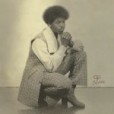
His terrific Positive-Negative LP from 1976, plus singles for Golden Voice, Mercury and Tosted (including the original Now That I Have You), and the sixties sides of his organ-funk combo the TMGs.
Lovely, characterful, poignant soul music which irresistibly radiates the singer’s worship of Curtis Mayfield and Marvin Gaye.
Al Green, Philly Soul and also-ran frustration are in the wings: What Can I Do came out of Grand Rapids on the coat-tails of Back Up Train; I’m A Stranger was recorded at Sigma, in the slipstream of Be Thankful For What You Got.
“I’m out here all alone… trying to find my way… I don’t know where to roam… I just don’t know what to say about all this… I’m a stranger.”
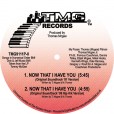
Ecstatic, cosmic soul from 1981, swirling into space on flurries of brass, two-step bass, and TM’s overdosed-with-joy falsetto.
Outsider, casio versions of the Electric Prunes, Ramones and co, al fresco in early-eighties San Francisco.
A cosmic, percussive jam and bitter-sweet electroid house — both veering sharply into dark, steely, dubwise self-harm. Allegedly the fiftieth utterance of our favourite dance music label in the world. Hats off! More worries!
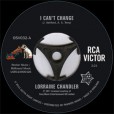
Terrific soulful Northern banger — a Wigan anthem — and classic Motor City fire from Jack Ashford’s Pied Piper Productions. Performed, written and produced by LC.
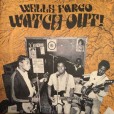
Rare 45s by these standard-bearers of the funky, counter-cultural heavy rock-scene in mid-seventies Rhodesia. Watch Out was its anthem.