
Your basket is empty

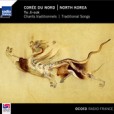
The singer Yu Ji-suk, with a 10-piece ensemble of choir and percussion, performing the Seodo Sori repertoire of the north-west provinces. Nostalgic, dynamic folk songs, rooted in everyday life.
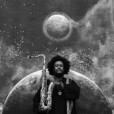
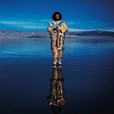
The celebrated three-hour set of this close collaborator of Flying Lotus and Kendrick Lamarr.
Two drummers, two bassists, two keyboardists, trumpet, trombone and vocals, plus string orchestra and full choir.
‘The music reflects many inspirations — John Coltrane, Horace Tapscott’s Pan-African People’s Arkestra, Azar Lawrence’s Prestige period, Donald Byrd’s and Eddie Gale’s jazz and choir explorations, Pharoah Sanders’ pan global experiments, Afro-Latin jazz, spiritual soul, and DJ culture… It challenges the cultural conversation about jazz without compromising or pandering’ (AllMusic).
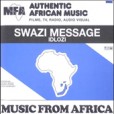
More from the archives of Tom Mkhize, re-imagining traditional South African music as Library Music in 1980s Johannesburg. Plenty of mbaqanga on this volume, running back to kwela, marabi and early South African jazz. The opener’s a knockout — thumb piano (heavy with delay), makhoyane gourd-resonated musical bow, sikhelekehle fiddle, steel drum and synthesizer.
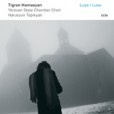
Armenian sacred music from the fifth to nineteenth centuries — chants, hymns and sharakans — in settings for choir and piano.
‘Extraordinarily beautiful… Hamasyan uses the characteristic, Eastern-hued Armenian modes to summon up an ancient world. It’s very different to Jan Garbarek and the Hilliard Ensemble’s million-selling Officium, but if you like that, you’ll love this’ (The Independent).
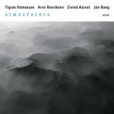
The Armenian pianist in a quartet setting, meditating on ancient folk melodies (including a couple of compositions by Komitas), between jazz and ambient.
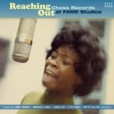
Representing every Chess artist recording at Muscle Shoals, 1967-69. The likes of Etta James, Irma Thomas, Laura Lee, Bobby Moore and Mitty Collier, in the era of the studio’s second great rhythm section, the Swampers. Plenty of unfamiliar glories, and throwing in three instrumentals by Charles Chalmers and crew.
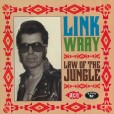
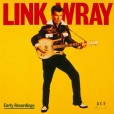
45s and rarities — classics like Ace Of Spades — recorded for the Swan label of Philadelphia, 1963-67, at his brother Ray Vernon’s rough and ready studio in Washington DC. With younger brother, Doug, on the drums and Shorty Horton on bass, and Ray on second guitar.
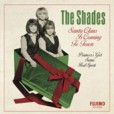
The Shades had freshly peeled away from The Techniques, because besides singing Winston Riley wanted to try producing, and Bruce Ruffin needed room… and this is a gem of a calling card.
Sweetly hopeful, rocking rocksteady — with an undertow of foreboding — which Junior Delgado revisited for Dennis Brown, ten years later.
There’s a killer Marry Me dub on Meditation Dub, judiciously beginning ‘Boss, boss, boss, boss, boss, boss, boss, boss, boss, boss…’
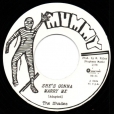
Secret-weapon late-70s mix; more light-footed, upful and optimistic.
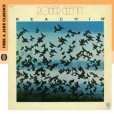
Stone-classic Latin fusion album, produced by Larry Mizell. The boom track in the day was Rio — a galloping jazz samba — but there is plenty of pure Mizells brilliance, and Paul Jackson and Bill Summers layer in the Headhunters. Don’t miss the Afro-Cuban drum chant, to close.
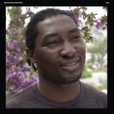
‘SK Kakraba is a master of the gyil xylophone — fourteen wooden slats strung across calabash resonators. The silk walls of spiders’ egg sacs — ‘paapieye’ in the Lobi language — are stretched across holes in the gourds, giving each note a buzzy rattle. SK learned as a child from elders in his Lobi community in the far northwest reaches of Ghana.’
Beautiful, spare, mesmeric recordings — song cycles, dirges, improvisations based on traditional songs, original compositions — newly made.
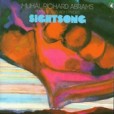
Perhaps the great pianist’s best record — duets with the Arts Ensemble bassist Malachi Favors, in 1975.
Mostly from two cassettes, Douce Torture and Aut Aut, each limited to twenty-five copies, originally self-released in the early 2000s by Vincent E.F. from Turin. ‘A mixture of hardware electronics, guitar and musique concrete-style sampling techniques, recorded on everything from minidisc to VHS tape. With its roots in vintage dub, Krautrock and Italo-Industrial artists like Maurizio Bianchi and Mauthausen Orchestra… and yet strikingly original.’
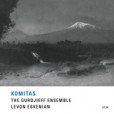
‘Music, its forms and rituals, has the power to bring us close to distant civilizations. Armenia offers a special case: a sacred culture that was preserved and presented at its fullest flowering through the work of one man, the scholar-monk Soghomon Soghomonian, known under his religious name as Komitas.’
Duduk, blul, santur, tar, saz, dap, kamancha, kanon, oud…
Underground soul and funk from early-seventies LA — Henry Porter, Jechonias Williams and co, with one foot inside the Watts 103rd St. Rhythm Band — lovingly unearthed by Now Again.
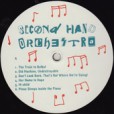
‘Lo-fi, primitive orchestral pieces for a Swedish TV-documentary series that in the end never was finished. Someone said, If the Penguin Café Orchestra would’ve used old rhythm-boxes and recorded rough demos influenced by Moondog, then this would’ve been it. That’s not true, but it’s still a hell of an album. Unique and warm. And in totally gorgeous sleeves… Old album covers have been remade and glued and etched on with the old artworks shining through here and there.’