
Your basket is empty

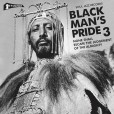
A third entertaining, deep selection of Studio One roots.
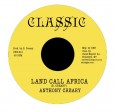
The drummer of the Gladiators Band and the Upsetters, recording with his own Solid Foundation Band at the Black Ark in the down-time of a Junior Byles’ session. A rework of The Animals’ version of an English folk song, with a leg-up from Byles’ own A Place Called Africa. Originally released on Sight’N'Sound, by Studio One.
Lovely, mystical roots, with an ace dub, touched with unmistakable Perry genius.
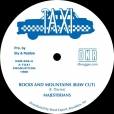
Previously on dubplate only, this legendary UK soundsystem weapon was produced by Sly And Robbie at Maxfield Avenue in the early eighties, with (perhaps) the Mighty Travellers at the microphone. Chasmic, head-spinning. Pure murder.
Cool and deadly 80s digi out of I-Plee’s E&F Studios in the Bronx. Excellent singing, tough rhythm.
Heavy, spaced-out, discombobulated rubadub cut at Munchie Jackson’s Sunshine Studio in the Bronx, in the mid-1980s, with Jackie Mittoo at the controls. Junior devotes his debut recording to a richly nostalgic, entertaining set of shout outs.
All-time killer New York dancehall. It’s a must.
Fragile, dignified performances by two of Cajun music’s finest and most unusual artists, originally released on 78 in the late 1920s. French vocals accompanied by guitar or fiddle, or sometimes both. Impeccable ballads and breakdowns. Old school tip-on cover.

Throughout the 1980s and 1990s, Diop was celebrated in Senegal for her taasu, a form of oral poetry spoken call-and-response by griot women to the rhythmic accompaniment of sabar and tama drums. Then, in 1994, she dropped this incendiary combination of taasu and her own stripped, super-charged conception of mbalax…
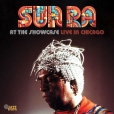
‘One thing is certain about a Sun Ra performance: You never know what to expect. Last week at the Chicago Jazz Festival, he presented a huge troupe of musicians, dancers and acrobats in a veritable circus of improvisation’ (John Litweiler, Chicago Tribune, September 9, 1988).
The entire show as originally broadcast by National Public Radio in the same year.
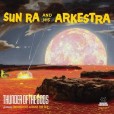
Three previously unreleased transmissions: two salvaged from the hallowed tapes of Strange Strings, his hardcore 1966 masterwork; whilst Calling Planet Earth / We’ll Wait For You — from the same time as Universe In Blue, five years later — is twenty-four minutes from a triumphant show at Slug’s, featuring June Tyson and heavy Ra synths on two Arkestra evergreens.
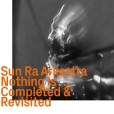
The definitive edition, with much better sound than any of the rather garbled ESP iterations.
‘Recorded on May 18, 1966 at St Lawrence University, Potsdam, NY, Nothing Is…Completed & Revisited has Ra, who was at the time only just beginning to perform on the US college circuit, testing the water with a programme drawn from several stages of his work with the Arkestra. There are space chants (Outer Spaceways Incorporated, Next Stop Mars, Second Stop Is Jupiter, We Travel The Spaceways), a salute to the swing era (Velvet, from the 1959 Saturn masterpiece Jazz In Silhouette), far-out material such as the sixteen minute version of Outer Nothingness from the 1965 ESP album The Heliocentric Worlds Of Sun Ra Vol. l, and trippy exotica such as reed player Marshall Allen’s oboe feature Exotic Forest, here given its first airing on disc.
‘The twelve-piece band is killer, with Allen, tenor saxophonist John Gilmore, baritone saxophonist Pat Patrick and trombonists Ali Hassan and Teddy Nance propelled by the A-team anchors Ronnie Boykins on bass and tuba and Clifford Jarvis on drums. Everyone, including Ra on clavioline and piano, is on top form’ (Chris May, All About Jazz).
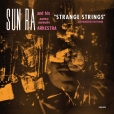
A triumphant edition of one of the most implacable, mysterious, rumbustiously creative albums in the entire Saturn catalogue.
The three tracks comprising the original LP are remastered from tape, doing away with the distortion which has dogged all previous issues. The four additional recordings here are previously unreleased, including two more from the first sessions, and a live performance circa 1967, with Ra leading strange strings on clavinet, and finally a demonstration by Ra of the ‘plaintive’ expressiveness of the Ukrainian bandura.
With excellent notes, including a new essay by David Toop.
‘When I say space music, I’m dealing with the void, because that is of space, too; but I’m dealing with the outer void rather than the inner void, because somehow man is trapped into playing roles into the haven or heaven of the inner void… the word space is a synonym for a multi-dimension of different things other than what people might at present think it means. So I leave the word space open, like space is supposed to be.’
‘If you play it right time, you’re wrong,’ Sun Ra once instructed his Arkestra. ‘I told you, it’s designed for sound.’
From the original Saturn Research publicity flyer for Strange Strings: ‘Too many people are following the past. In this new space age this is dangerous… It is no accident that those who die are said to have passed since those who have PASSED are PAST.’
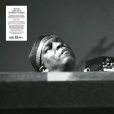
Sensational price for easily the most outstanding release on RSD 2025, imperiously superseding Shandar’s selection of edits.
The Arkestra at its magnificent peak, in its very first performances outside North America (complete with dancers, light-shows, and psychedelic projections of New York and Chicago, moon rockets, Egyptian Gods and plumed African warriors).
‘Plenty of fiery avant-garde action,’ notes Daniel Spicer in The Quietus. ‘Much of this emanates from Ra’s solo interludes. On piano, he remains a suis generis genius of spontaneous creation, drifting from wistful melodic daydreams to sudden irruptions of violent intensity and back again.
‘Around this time, at the turn of the 1970s, he had also begun his tumultuous explorations of the recently purchased Moog synthesizer. Here, Ra approaches the synth not as an electric guitar substitute, as contemporaries such as The Mahavishnu Orchestra’s Jan Hammer were then doing, but as a furious generator of alien sounds and timbres as though beamed in from some far galactic outpost. There are also group improvisations of boiling energy – often conducted by Ra using a lexicon of theatrical gestures – which forge ahead into the most coruscating free jazz, with saxophonists John Gilmore and Marshall Allen straining at the horn’s limits.
‘And yet, for all that, the shows were approachable, enjoyable and, above all, fun. Across the four hours of music, a wide range of moods are touched upon. There are the many anthemic songs and chants – such as Satellites Are Spinning and We Travel The Spaceways – delivered in vocalist June Tyson’s sweet, down-home tones with enthusiastically ragged call-and-response choruses by the rest of the Arkestra spelling out Ra’s sci-fi philosophy. There are wafting space-ballads; muscular, big band hard-bop workouts; and percussion-heavy rainforest modal jams. Each of the two evening programmes feels like a meandering yet comprehensive journey into the deepest recesses of Ra’s imagination, calling in on all his obsessions and preoccupations.’
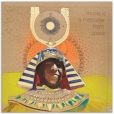
‘New and archival recordings all orbiting around the intergalactic soundscape introduced by Sun Ra. Ra’s own a capella I Don’t Believe in Love, recorded by Ra at home in Chicago during the 1950s, kicks the program off. This intimate private recording is followed by two intense new solo improvisations by French guitarist Raymond Boni, one acoustic and one electric, inspired by seeing the Arkestra preparing for a gig in Arles in 1976. The first side wraps up with Jason Adasiewicz’s riveting unaccompanied vibraphone workout on Ra’s Lanquidity and Where Pathways Meet. With a completely different take on Lanquidity, Side Two begins with four wild remixes by legendary Cologne techno pioneer Wolfgang Voigt, using layered samples from the LP. Hailing from the intersection of free jazz and out rock, Ken Vandermark’s band Spaceways Inc., with bassist Nate McBride and drummer Hamid Drake, continue with a Ra medley, in collaboration with the Italian band Zu. And where the program started in disbelief, love-skepticism, it concludes with Joe McPhee’s emphatic loving embrace on Cosmic Love, a classic tenor/synth sound-on-sound recording from 1970.’
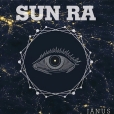
With cover art by Emil Schult, who designed classic 1970s LPs for Kraftwerk. Very limited.
Top-notch, super-soulful rocksteady.
With an alternate take.