

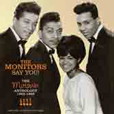
Your basket is empty

A double-header of booting, irresistible JA rhythm and blues.
This beautiful acoustic cut is previously unissued. Raw soulful lovers, with close-harmony backing, and double bass and guitar as irresistible as Egyptian Reggae. Terrific.
Opportunity knocking once. Mid-tempo doowop-ska. On the flip, the Sneer Towners, hardly a household name themselves.
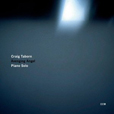
Engrossing, luminous, abstract pianism from Evan Parker, Roscoe Mitchell cohort.
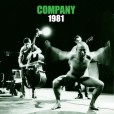
Previously unreleased recordings by various lineups drawn from Derek Bailey, Tristan Honsinger, Christine Jeffrey, Toshinori Kondo, Charlie Morrow, David Toop, Maarten Altena, Georgie Born, Lindsay Cooper, Steve Lacy, Radu Malfatti and Jamie Muir.
Journalists often make the brief history of Free Improvisation conform to the idea that the history of music is a nice straight line from past to present: Beethoven… Brahms… Boulez. Thus Derek Bailey, Evan Parker and John Stevens — together with Brötzmann and co across the Channel — were the trailblazing ‘first generation’, forging a wholly new language alongside contemporary avant-garde and free jazz. Figures like Toshinori Kondo and David Toop, willing as they were to incorporate snippets of all kinds of music, were the pesky ‘second generation’, happily cocking a snook at the ‘ideological purity’ of Bailey’s non-idiomatic improvisation.
‘Company 1981’ shows up the foolishness — the wrongness — of such storylines. Check the eclectic collection of guests Bailey invited to Company Weeks over the years. He had clear ideas about the music, but he was no ideological purist.
One of the founders of Fluxus, Charlie Morrow injects blasts of Cageian fun into half the recordings here, whether blurting military fanfares from his trumpet, or intoning far-flung scraps of speech. Cellist Tristan Honsinger and vocalist Christine Jeffrey join in the joyful glossolalia, while Bailey, Toop and Kondo contribute delicious, delicate, hooligan arabesques, by turns.
The remainder are performed by a different ensemble: Bailey, bassist Maarten Altena, former Henry Cow members Georgie Born and Lindsay Cooper on cello and bassoon, the insanely inventive Jamie Muir on percussion, and trombonist Radu Malfatti, showing his mastery of extended technique. Were that not enough, there’s the inimitable purity of Steve Lacy’s soprano ringing high and clear above the melee. Glorious!
There’s always been this idea that Free Improvisation is somehow Difficult Listening, but when the doors of perception are thrown open and prejudice cast aside, you realise that it’s not difficult at all. “Is it that easy?” chirps Morrow, at one point. Indeed it is.
Enjoy yourself.
Derek Bailey’s guests for Company Week at London’s ICA in July 1982 were contemporary classical pianist Ursula Oppens, folk/jazz singer-turned-improviser Julie Tippetts and her partner pianist Keith Tippett, violinist/electronics wizard Philipp Wachsmann, guitarist Fred Frith, trombonist George Lewis, harpist Anne LeBaron, and from Japan free jazz bassist Motoharu Yoshizawa and sound artist Akio Suzuki.
Altogether they performed the stunning extended improvisation Epiphany.
In different, more intimate lineups they detonated numerous Epiphanies.
Here, to start, Yoshizawa and Oppens (both on the keyboard and inside her piano) bounce ideas off each other like ping-pong balls.
Then Tippetts, Wachsmann and Bailey do extraterrestrial cubist flamenco; and Lewis and Frith rumble at everyone magnificently.
Tippett and Oppens kaleidoscope the entire history of the piano into just over fifteen minutes (Fourth and Fifth) with added seasoning from LeBaron and Wachsmann.
To close, Akio Suzuki — despite once describing himself as “pursuing listening as a practice” — makes one hell of a racket with his self-made instruments: a flute, a spring gong and his analapos (two single-lidded cylinders attached by a long steel coil, which he can manipulate and strike, besides vocalising into the tube). Yoshizawa and Bailey give him a real run for his money, and it all builds to an ecstatic, swirling, grinding climax, with Suzuki whooping and hollering wildly.
More buried treasure from Company Week 1982: seven previously unissued Epiphanies by lineups involving Derek Bailey, Ursula Oppens, Julie Tippetts, Keith Tippett, Philipp Wachsmann, Fred Frith, George Lewis, Anne LeBaron, Motoharu Yoshizawa and Akio Suzuki.
Fred Frith is a stellar improviser — 1974’s Guitar Solos is still a seminal album of free improv — and he has three opportunities here to showcase his considerable talents. Eleventh is a tour de force of extended technique, with George Lewis working slowly but surely through a variety of trombone mouthpieces, while Frith’s guitar, strummed, bowed or prepared, could be a theremin, a koto, a mouse trapped inside a grandfather clock or a lion cub inside a shoebox. Bookending the album, on Seventh he swaps Webernian shards with Lewis and harpist Anne LeBaron and on Thirteenth, with pianist Keith Tippett, he condenses a whole lifetime of musical exploration into a mere twelve minutes. When it’s over both musicians are so amazed they burst out laughing.
Elsewhere, on Eighth, Wachsmann reveals his understated mastery of both his violin and the electronics he’s devised to extend its range, and pianist Ursula Oppens proves she’s as adept as conjuring forth magic from inside her instrument as she is at the keyboard. Major and minor triads too!
Ninth is spikier, with Lewis quacking, spitting and wheezing like a flock of geese let loose in a fairground, while Derek Bailey and Motoharu Yoshisawa patiently explore the outer limits of acoustic guitar and double bass. Bailey and Lewis team up again on Twelfth to take on Oppens — and everybody wins. Voice is more to the fore on Tenth, with Julie Tippetts’ coloratura and flute and Akio Suzuki’s analapos and spring gong flying high, while LeBaron, Wachsmann and Yoshizawa weave intricate webs of pizzicati, spiccati and glissandi beneath.
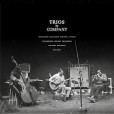
A typically eclectic collection of guests joined Derek Bailey for Company Week in 1983: saxophonists Evan Parker and Peter Brötzmann; cellist Ernst Reijseger, mainstay of Dutch new jazz (ICP Orchestra, Clusone Trio); American wind virtuoso J.D.Parran, veteran of the Black Artists’ Group and Anthony Davis and Anthony Braxton ensembles.
The French bassist Joëlle Léandre is equally at home playing free or performing works by Cage and Scelsi, while Vinko Globokar is an acclaimed composer as well as a trombonist of monstrous virtuosity.
British electronics pioneer Hugh Davies served time alongside Globokar with Karlheinz Stockhausen. Percussionist Jamie Muir was with Davies on the very first (Music Improvisation) Company outing in 1970, before a brief stint with King Crimson.
Is there an ideal number of musicians for free improvisation? Bailey once described playing solo as a “second-rate activity” – though he did it spectacularly well – while at the other end of the spectrum, large improvising ensembles can descend into an unwieldy racket.
Three may be a crowd for some, but for Pythagoras it was the perfect number, and trios work surprisingly well in improvised music. Sometimes one instrument takes centre stage, like Parker’s circular-breathing soprano at the beginning of Five, but knowing when to lie low, as he does in the brief austere Three, is just as crucial to the success of the whole. Muir makes sure he doesn’t get in the way of Globokar and Parran’s leisurely exchanges on Four, but the trombonist is all over the place on One, with Léandre racing up and down her bass and Davies all spikes, squeaks and squiggles.
With a touch of Bailey’s dry humour, two of these seven recordings aren’t trios at all: Trio Minus One is his duo with Reijseger, running the gamut from crazed polyrhythmic strumming (imagine Reinhardt and Grappelli playing Schoenberg and Nancarrow simultaneously) to what must be the fastest cello pizzicati ever recorded. And on the closing ecstatic nonet, Brötzmann and trumpeter John Corbett prove that more cooks don’t necessarily spoil the broth but sure as hell can spice it up.
Capitol and Motown sides.
Early seventies Philly soul, with Van McCoy, Bobby Martin and Thom Bell at the desk. The title song was their big hit. Nice version of The Temptations’ I Wish It Would Rain.