Your basket is empty

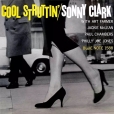
It’s a must. The bluesy, grooving title track is essential Sonny. With Art Farmer (playing superbly), Jackie McLean, Philly Joe Jones and Paul Chambers.
Blue Note Classic Vinyl series: all-analogue, mastered by Kevin Gray from the original master tapes.
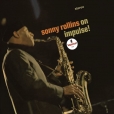
Rollins’ LPs for Impulse! are neglected. Here is the first of three he recorded in 1965-66, taking fierce flight from five standards. It’s all wonderful, but check the scorching calypso, Hold ‘Em Joe — with Rollins’ characteristic carnivalesque, askance danceability, his ‘impudent swing’, writ large — and the deconstruction of Three Little Words to close, as if to say, Okay, enough of that, now watch this space.
Great sound, too, this Acoustic Sounds issue.
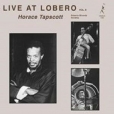
The great trumpeter with Cecil McBee, Stanley Cowell, and Jimmy Hopps, at Slugs’ nightclub in New York City, on May 1 1970.
‘Tolliver, McBee and Cowell (in that order) each contribute a composition to this superb, compelling set; though very much distinct, each is equally strong. Drought is the kind of dark-hued, well-honed burner which Tolliver routinely produced in his fertile years. Felicite is a more contemplative affair, a deeply felt and empathically performed piece. The unit here is in particularly sublime form, merging considerable skill with a staggering emotion. Orientale falls somewhere in between the pace of the two, with Cowell’s Eastern scales establishing an austere, industrious tone throughout its seventeen-and-a-half minutes.’
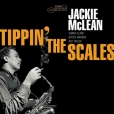
Recorded between Let Freedom Ring and One Step Beyond, it’s presumably the laidback presence of HJ hero Sonny Clark — who also contributes half the compositions — which tips the scales away from JM’s more screwface, outward-bound trajectory, towards good-old-fashioned, limber, bluesy hard bop. Though a throwback, cancelled at the time (and shelved for twenty years), it’s downright classic Blue Note now.
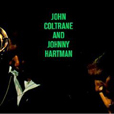
One of the very greatest jazz vocal albums of all time.
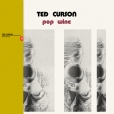
Outstanding modal set for Futura in 1971, with the superb French trio Georges Arvanitas, Jacky Samson, and Charles Saudrais, expertly proliferating Mingus and Trane.
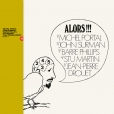
The illustrious clarinettist alongside John Surman, Barre Phillips, Stu Martin, and Jean-Pierre Drouet, in 1970. Iconic Futura cover-art by Avoine.
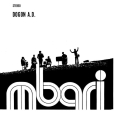
A thrilling, uncompromising blend of free jazz, funk, and blues.
JH is at his most intensely wake-the-dead and crying, on alto saxophone, with Baikida Carroll on trumpet, Phillip Wilson on danceable tuned drums, and Abdul Wadud playing a blinder on cello.
“So the great names, Johnny Coltrane and stuff like that? Most all of them were extraordinary blues players. This music is blues-driven. In terms of what has gone on before. Now where it goes from here — where it is going from here — may not be the same thing, ’cause it has to change, or it’ll die in my opinion. You know what I mean? The traditions keep on turning over! People keep looking rearward for the tradition. The tradition in this music is forward! Forward! Not what you did last week, but this week! You see what I’m saying? Now… that’s a hard road.”
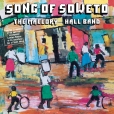
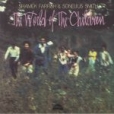
Like The Last Special, this was recorded at Johannesburg’s Video Sounds Studios in December 1974, in the depths of the apartheid era, by a twelve-piece touring band from California which immediately moved beyond the segregated hotels and ballrooms to build links with local South African players and audiences.
Featuring pianist Kirk ‘Habiba’ Lightsey, Rudolph Johnson from Black Jazz, and Billy Brooks, both records are superbly arranged slabs of peak 1970s funky big-band soul jazz, with tasteful Latin inflections and more than a nod to South Africa’s upful township jazz sound.
Try Hamba Samba!
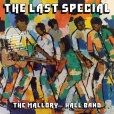
Blue Mabone!
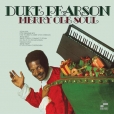
It’s a Christmas album but fear ye not. It’s from the same six months as How Insensitive and Now Hear This, with Airto running between these sessions and the recording of Bitches Brew. Try the grooving opener, with DP alternating on piano and celeste.
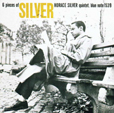
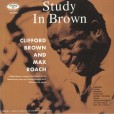
From 1956, recycling the previous year’s Jazz Messengers, subbing Louis Hayes for Blakey. Apparently Silver wasn’t planning on becoming a bandleader, but the success of Señor Blues propelled him forwards. Hank Mobley and Donald Byrd in full effect.
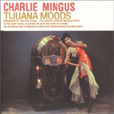
LP from Speakers Corner.
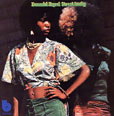
Dazzling, foundational jazz-funk from 1973, with Larry Mizell back at the desk (after Black Byrd), featuring killers like Lansana’s Priestess — as sampled by Theo Parrish on his Baby Steps EP — and the title track, with hot flute by Roger Glenn, and a smack of Curtis to its vocal chorus. Superior pressing; gatefold sleeve.