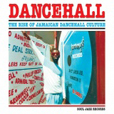
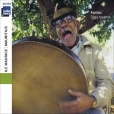

In his dazzling, rubadub flow, with intricate rhyming, lavish word-play and off-the-wall allusiveness, his genial socialism and jubilant, green-fingered vegetarianism, his knockabout sense of humour and all-round irrepressible good vibes, Ranger is the peerless heir to U-Roy and Dennis Alcapone… and the most diplomatic of envoys for the new dancehall styles just around the corner. He’s undervalued because of a perceived lack of gravitas, but he’s one of the all-time great deejays, and this is his best work.
Have a listen to the musical shock attack Automatic: over Take A Ride, no less, he bundles the Last Poets into a breakneck stream of consciousness, with walk-ons for Marcus Garvey, Bag O Wire, and Garvey’s secretary Mother Muschett; Dovecot Memorial Park and Madison Square; a bad boy who doesn’t know Ranger’s dad is a cop; succinct advice like ‘natty don’t play card inna Babylon yard’; a big baboon in the light of the moon, a broken chair, a felt hat, an anchor you can’t conchor…
“Everybody was wondering why I sounded different. And the reason I sounded different was through I did grow in England and I have the English accent and when I speak you can hear every word I am saying clearly. It was a plus for me. And then through I liked to write poetry and write songs, you know I’m a writer, I stick to the topic from start to finish.”
And the musical rhythms are a preposterous fish-tea tidal wave of Studio One classics (plus a Shank I Sheck): Take A Ride/Truths & Rights, Real Rock/Armageddon Time, One Step Beyond, Hot Milk, Throw Me Corn, Never Let Go, Full Up, Please Be True, Things A Come Up To Bump.
So let the good time roll, with Sir Coxsone at the control. When Ranger talk, the dance it have fe cork.
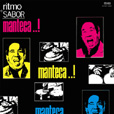
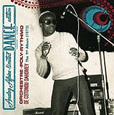
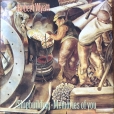
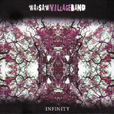
Deliriously enjoyable. Terrific cover art, too.
Very highly recommended. Five ribbits, five bims, five flash-its, five oinks.
‘Dave Cudlip’s debut album, inaugurating the highly promising, experimental label Klang Tone (spawn of the estimable Stroud record shop): a stunning and unique combination of ethereal ambient soundscapes, undulating rhythms, and atonal sound collage, with Harmonia and Autechre looming amongst its forebears.’
‘These recordings are traces of something I have come to love to do in large resonant spaces, which is to set up sustained chords on multiple organs and then move slowly through the sound. The instruments are usually far apart, which makes for the emergence of large fields of continuous change, spaces of harmonicity that can be passed through layer by layer and which contain within them points of both clarity and overwhelming complexity. The organ pipes are tuned and retuned, though sometimes I leave them just as they are. What I’m searching for is the moment when a particular kind of sounding texturality is revealed – it is rough, focused and yet strangely transparent.’
Funky Donkey is brawling, invigorating, all-in, full-throttle fire music by the Human Arts Ensemble, recorded live in the Berea Presbyterian Church in St. Louis, in 1973, with Lester Bowie and co giving it some hoof. Charles Bobo Shaw’s composition Una New York is more spaced-out, limber, melodious, and funky. Guitarist Marvin Horne plays a blinder.
A key Black Arts Group recording.
‘Recorded at home in 2012, early acoustic guitar improv performances from the Bhutanese expat, who’d come to Asheville, NC to study in 2000 and discovered worlds of anarcho-punk and avant garde such as he’d only dreamed. Having made recordings of his newly-located improvisational conception, he intuited a desire to go deeper in his explorations of the recorded sound of the guitar, melding and colliding traditional music with his feeling for the range of textures within.’
The duo of Bill Orcutt — on four-string guitar — and drummer Tim Koffley.
‘Taking leads from James Blood Ulmer and Fred Frith’s Massacre, here is the link between the contemporaneous Thunders-esque punk of Orcutt’s Trash Monkeys and the mayhem of Harry Pussy…
‘Consider the closer Wattstock, where Koffley forms the bedrock for an extended Orcutt hotbox of instantly-composed harmolodics. And also God Are You There, It’s Me, Watt, where we can hear the spontaneous vocal bursts (the only vocals on the album) that would re-emerge on Orcutt’s early solo records…
‘An early, major piece of the unfolding and complex puzzle of Orcutt’s music. A foundation.’