

Your basket is empty

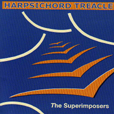
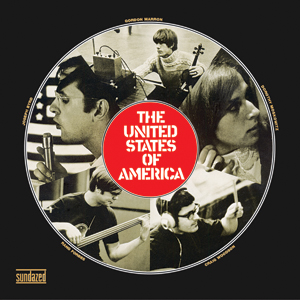
A third album of luscious sampladelic pop magic. Catchy, laid-back Beach Boys-esque pop and Laurel Canyon-bedsit-style loveliness.
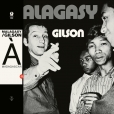
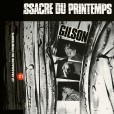
The fabulous, legendary LP originally issued by Lumen in 1972, born out of several visits to Madagascar by Gilson and fellow musicians from Paris, and their collaborations with musicians on the island.
Fittingly the first trip was on May 13 1968, the day of the general strike in France: this is tumultuous, insurgent, joyous, blisteringly swinging, outernational Malagasy jazz, including a a charged, unmissable The Creator Has A Masterplan, and Avaradoha, a composition by Madagascan saxophonist Serge Rahoerson (who leads this recording), which was the anthem of the rotaka protests in 1972, bringing down the neo-colonial First Republic of Madagascar. The closer showcases various traditional Madagascan percussion instruments, played by the same trio which that year recorded Le Massacre Du Printemps, Gilson’s avant-noise homage in memoriam of Stravinsky.
Hot.
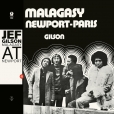
Jef Gilson, Sylvin Marc and his cousin Ange Japhet, Del Rabenja, Gérard Rakotoarivony and Frank Raholison, blending together bebop, sub-Saharan roots and electric funk.
Requiem Pour Django, Dizzy 48 and Anamorphose — renamed Salegy Jef after this re-routing via Madagascar — rejuvenate Gilson compositions from the previous couple of decades. Newport Bounce is a reworking of Interlude, recorded by Gilson in 1969 with Philly Joe Jones. Le Newport was a club in rue Grégoire de Tours, Saint Germain des Prés.
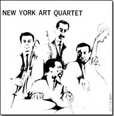
Milford Graves (percussion), Leroi Jones (vocals), Roswell Rudd (trombone), John Tchicai (alto saxophone), Lewis Worrell (bass).
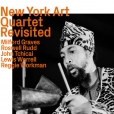
Strikingly original, still: open and untethered, dreamily ramshackle and provisional, dazzlingly polyphonic.
‘All that is solid melts into air,’ as Marx puts it; ‘all that is holy is profaned, and man is at last compelled to face with sober senses his real conditions of life, and his relations with his kind.’
Tracks 1-4 comprised the eponymous release on ESP in 1964: Roswell Rudd, John Tchicai, Lewis Worrell, Milford Graves, with a walk-on by Leroi Jones (reciting Black Dada Nihilismus).
Tracks 5-9 were released on Fontana the following year, as Mohawk: Roswell Rudd, John Tchicai, Reggie Workman, Milford Graves.
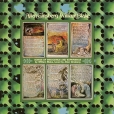
The first disc presents the original MGM LP, with Ginsberg accompanying himself on piano and harmonium, supported by Don Cherry, Elvin Jones and Bob Dorough amongst others, in twenty-one vocal settings of Blake’s Songs Of Innocence And Experience. Plus an alternate take, as well as a song intended for the LP, but left off due to time constraints.
A couple of years later, in 1971, Ginsberg returned to the Blake material, recording eleven songs in San Francisco with none other than Arthur Russell. The ensemble also recorded three Tibetan mantras with a Buddhist choir. All on the second disc.
The classic session plus eleven previously unissued performances, featuring contributions from Bob Dylan, Happy Traum, Don Cherry, Peter Orlovsky, Arthur Russell and co, in a luxuriously turned out 28-page colour booklet with rare photos and new essay by the producer Pat Thomas.
John Hammond was chuffed by the original release of The First Blues in 1983: ‘I recorded Allen in 1976 but Columbia Records refused to issue the results, considering the songs obscene and disrespectful. I am thrilled to finally be able to present Allen… I will present ‘disrespectful’ music like this as often as possible.’
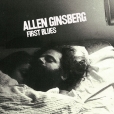
With Arthur Russell, Bob Dylan, Anne Waldman, Perry Robinson, David Amram and co, having a whale of a time in sessions which sound like the best kind of parties, between 1971 and 1981.
‘Rags, Ballads & Harmonium Songs. Chanteys, Come-All-Ye’s, Aborigine Song Sticks. Gospel, Improvisations, Renaissance Lyrics, Blake Hymns, Bluegrass, Hillbilly Riffs, Country & Western, 50’s R&B, Dirty Dozens & New Wave.’
The first-ever full vinyl reissue; gatefold sleeve. Photography by Robert Frank!