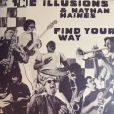


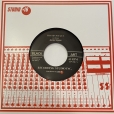
A double header from the Detroiter. Both highly-sought-after sides are reissued here for the first time.
Only previously issued as a UK promo 7”, Lend A Hand became one of the biggest ‘modern’ Northern Soul tracks of all-time after spins at venues like the Highland Room at the Blackpool Mecca, and Wigan Casino. The track was first championed by DJ Colin Curtis in 1974.
From 1969, Come See What’s Left Of Me is on the mellower side of Northern Soul, but still a dancer, and another classic. First ushered onto the Northern scene at the Stafford All-Nighters back in 1985.
‘With just four long, leisurely, percussion-drenched tracks, it’s a latin-jazz jam-band dream, with none other than Joe Henderson adding smoky tenor that ratchets up the intensity and mystery, and fusion avatars Stanley Clark and Lenny White super-charging the grooves. Think of it as a direct descendant of In A Silent Way, but with a lysergic twist and Miles’s tentative phrases replaced by Gasca’s brash, sassy blasts.’ (Jazzwise)
‘Though one long piece, New Old Medicine moves through several unofficial chapters. It originates in the psychic depths with a pensive melody. Gradually solidifying, the organ’s first solo ushers the piece into a swaying, reverent dance. This dance nears its end with a vigorously percussive section on oud, handing it off to the violin for a climactic solo. A momentary pause, then the rhythm thickens, and the musicians ride untethered through the midnight. This frenzy is followed by a calm repose on placid water. But this calm is merely a deep inhale before the final charged ascent into cosmic rapture.’
This is sublime. Check it out!
‘The most affecting solo piano album I’ve heard since Keith Jarrett’s much-loved The Melody At Night, With You more than 20 years ago’ (Richard Williams).
‘... the notes hang individually in the air as though being held up to the light… It’s so slow and patient, it becomes an observation of passing time’ (The Wire).
‘Naqvi’s electronics, Smith’s trumpet and Cyrille’s percussion acquiesce with finesse in a perfect simpatico balance of accommodating and complimentary interplay. The trio balance bursts of energy with delicate stillness to create a feeling of meditation. Nuanced, textural, subtle yet devastatingly affective as well as sensitive and contemplative where appropriate, they also deliver bursts of incredible energy and impact; navigating a path between expressions of dismay and meditative healing resolutions – both a protest and paean for harmony.’
‘Killer!’, says Gilles Peterson.
‘Exquisitely constructed… They are not landscapes to be admired at a distance, but inscapes to be explored with attentive care’ (The Wire).
‘Solace for the soul’ (All That Jazz).
‘Sangam means ‘meeting place’ in Sanskrit. Don obviously knew exactly what he wanted to do, and Latif immediately understood, his fingers fizzing across the tablas at frightening speed… It was Don who suggested that Latif overdub new tabla parts to enrich and add complexity to the first takes. We could reasonably have expected to spend the night doing this because this was the first time the percussionist had done this. It took him all of five minutes to get used to listening to the first tracks over the headphones before playing them without the slightest mistake. When we got to the timpani, which he was playing for the first time, his keen sense of pitch and tone once again did miracles. During one take, just for the fun of it Latif started to play a fairly slow, disconnected duple time, moving on to three and then four… all the way up to 19 by which time his fingers were whizzing invisibly across the skins, leaving us in awe and him looking as if he didn’t know what the fuss was all about. All this just made Don even keener to impress his musical companion for a day…
‘Of course, the subtleties of this album call for greater analysis, for example the meeting between the Malian doussou n’gouni and Indian tablas, the Hammond organ taking over from the tampura, 5 1/4 time as if it were the easiest thing in the world, the reinvented Indonesian gamelan… and the lyricism of the pocket cornet.’
Excellent condition. Unopened, tight, no knocks.
Live recordings made at Théâtre Dunois, Paris, in April, 1981.
Three ravishingly soulful, wondrous ragas in the Hindustani Indian classical manner, superbly played on sarod and tabla.
Mohini is an enchantress, sometime slayer of demons.
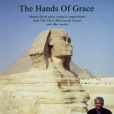
‘You’re never too old to learn something new. Reed credits bebop with keeping him and his friends out of reform school because they were too busy listening to records to get into trouble. Finding fame as a writer, he returned to music circuitously, eventually taking the plunge at aged 60 to study jazz piano. Diagnosed with prostate cancer in 2006 he hastily assembled a quintet to fulfil a lifelong ambition of recording an album. He made the record (and recovered). Cash-strapped during COVID, he became a composer to generate funds money for his plays, enlisting his daughter Tennessee as narrator.
‘These humble origins and a genuine love and natural talent for music are what underpins The Hands Of Grace. Consisting of works written for Reed’s play The Slave Who Loved Caviar alongside new original compositions, it brings in close friends and family to accompany his casual, unvarnished playing style that’s so genuinely heartfelt it feels as if you could be sat alongside in their living room. The music carries a lived-in simplicity yet it also holds something ambiguous that draws it away from the predictable. Music papers rustle, a living room chair is dragged up to the keys whilst Reed’s wife Carla contributes violin and daughter Tennessee recites her poetry on standout How High The Moon. This is a poignant family affair with no-one left out, ending on a touching tribute and voicemail from their late daughter Timothy.’