‘Battle of Cannae is a dubby roller filled with crisp percussion and meditative warmth. Next up, Battle of Carrhae is a deep 120bpm bass groover with detailed percussion and rich textures that tie the first side together beautifully. On the flip, Stolen Land, a collaboration with Melbourne heavyweight Pugilist, takes things into club territory. Spacious, weighty and rhythmically twisted, filled with polyrhythmic grooves, a few wubs, and gritty percussive drive. Strap in. To close, Battle of Edessa pushes the tempo to 160bpm — a sharp, hypnotic finisher that shows why Big Hands continues to stand out as one of the most exciting producers doing it right now.’
Epiphany \ i-ˈpi-fə-nē \ (1) a manifestation of the essential nature of something (usually sudden) (2) an intuitive grasp of reality through something (usually simple and striking) (3) an illuminating discovery or disclosure.
All three definitions apply perfectly to this span of music recorded at London’s ICA in July 1982. It’s a miracle of group interaction, wonderfully paced, moving steadily between moments of mounting intensity and tension. The passage about halfway through — when Derek Bailey’s harmonics ring out above a sheen of inside piano tremolos and shimmering electronics, topped off by Julie Tippetts’ soaring vocalese — is simply sublime. After which it’s fun to try and tell the two pianists apart. Are those runs Ursula Oppens, with her formidable technique honed from years performing some of the twentieth century’s most difficult notated new music, or are those Keith Tippett’s crunchy jazz zigzags? Are those intriguing twangs from one of Akio Suzuki’s invented instruments or could they be Fred Frith’s or Phil Wachsmann’s electronics? Bah, who cares?
There’s plenty of room for the more delicate instruments too, like Anne LeBaron’s harp picking its way gingerly through a pin-cushion of pings and scratches from Bailey and bassist Motoharu Yoshizawa. Of course, some performers are instantly recognisable: Tippetts, as lyrical and flighty on flute as when she sings, Phil Wachsmann, sinuous and sensitive on violin, and trombonist George Lewis, who, as John Zorn once put it, swings his motherfucking ass off.
So many magical moments abound, from the opening dawn chorus of Tippetts’ voice and Frith’s guitar swooping through a rainforest of exquisite piano cascades, to the Zen calm of the closing moments.
Epiphany, indeed.
A follower of the celebrated Cheikh El Afrite, young Raoul taught himself oud, and sang solo for his local synagogue choir — also drawing inspiration from the munchid singing of Sulamia, the largest Sufi brotherhood in Tunisia. In 1934, aged twenty-three, his first album was a smash. Maghreb audiences revered him for his fidelity to his own national traditions, undistracted by more fashionable Lebanese and Egyptian styles.
Ya Samra hymns a prettily-tattooed, blushing, date-flavoured brunette; in Aala Khadek the dirty rascal fancies himself to be a bee, closing in on the delicious nectar secreted in the beauty spot of his beloved.
The Blues Buster showing his gospel roots in this superb, soaring version of the Sam Cooke, with support from Bobby Aitken and the Carib Beats.
Backed with some bumptious ska, led by Val Bennett.
Joyful rug-cutters and sweet soul-uplifters from the town of Morogoro, in early-1960s Tanzania: muziki wa dansi, inspired by Cuban 78s, and dance crazes like the twist and cha cha cha, but making them its own. Here is the cream of over a hundred recordings by Salum, mostly for Mzuri Records of Kenya; pretty much lost till now.
In an old-school tip-on cover, with lyrics in Swahili and English on the inner sleeve.
Lovely stuff.
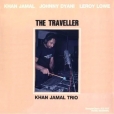
The saxophonist of the Blue Notes and the Brotherhood Of Breath, with pianist Misha Mengelberg, and Han Bennink on drums, trombone, clarinet and viola.
Originally released on ICP in 1979; an absolute classic of improvised music.
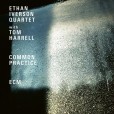
After recent recordings with Mark Turner and Billy Hart, the pianist leads his own quartet through a programme of standards and blues, live at the Village Vanguard.
‘Its prime melodic voice is the veteran trumpeter Tom Harrell. Iverson extols the poetic vulnerability in his playing, particularly in such ballads as The Man I Love and Polka Dots and Moonbeam. The album’s effervescent swing is thanks to the top-flight rhythm team of bassist Ben Street and drummer Eric McPherson, whose subtle invention helps drive Denzil Best’s bebop groover Wee and two irresistibly bluesy Iverson originals.’

Algerian chaabi pop.