

Your basket is empty


Eleven exuberantly swinging, startlingly fresh jazz ragas by an ensemble combining hard-core Bombay jazz messengers, Bollywood royalty, and sitar master Ustad Rais Khan.
This is indo-jazz fusion direct from the source: an extremely rare glimpse of the same Bombay jazz scene that gave us Amancio D’Silva. Nothing kitsch here: by turns rollicking and lyrical, this is edgily committed and heartfelt music-making.
Never reissued since its 1968 release by EMI India, Raga Jazz Style is a collectors’ holy grail of Indian jazz; and this is a highly impressive inaugural salvo by Outernational Sounds, using original masters and beautifully rendered facsimile artwork, with 180g vinyl pressed at Pallas, in Germany.
Very warmly recommended.
Featuring the jazz-dance classic Life Is Like A Samba… a Rinder & Lewis production from 1979.
His second LP, originally released by FMP in 1976. ‘Microtonal string investigations still beguiling and fresh four decades later.’
‘Originally released on FMP in 1973, the debut album by this legendary German guitar improviser and instrument inventor is a resonant and hilarious document of the nascent genius recording his peculiar and wondrous music alone in a studio. Acoustic and unfiltered electric guitars turned back into the supremely malleable instruments they were before they’d been firmly encoded as tools for rock or pop or jazz. Reichel uses a homemade 11-string guitar (with three pickups) for all the tunes except the first one. Reichel is like an improvising Harry Partch, investigating the genesis of lute music.’
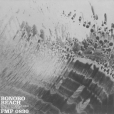
‘Subtitled ‘some more guitar solos’; his fourth and final record of solo guitar works. Next Reichel would turn much of his attention to the bowed wooden-tongued instrument he created called the daxophone. Reichel recorded the six tracks at his home in Wuppertal in April, 1981, and in the process made what might be his masterpiece. These are not just some more guitar solos. Concentrating largely on acoustic guitar with no frets as well as his electric pick-behind-the-bridge guitar, he transforms tones into crystalline formations — patience with resonances, attention to silence, formation of symmetries around a common sonic point, jetting notes that arc and spread and then hover. One might look for other references to describe what Reichel is up to — the magic of Terje Rypdal, the aura of early William Ackerman, the eccentric multiple pickups of Fred Frith — but really this is unique in guitar repertoire. Reichel built his instruments as tools for improvised exploration, and then he dove deep into them, never so far as on tracks like Could Be Nice or the quivering Southern Monologue, or the two brilliant versions of the title track, Bonobo Beach. On Two Small Pieces Announced by a Cigar-Box, the titular box is bowed in a vocal manner that portends Reichel’s development of the daxophone.
‘A beautiful, essential document from one of the great outsider guitarists of all time.’
Epiphany \ i-ˈpi-fə-nē \ (1) a manifestation of the essential nature of something (usually sudden) (2) an intuitive grasp of reality through something (usually simple and striking) (3) an illuminating discovery or disclosure.
All three definitions apply perfectly to this span of music recorded at London’s ICA in July 1982. It’s a miracle of group interaction, wonderfully paced, moving steadily between moments of mounting intensity and tension. The passage about halfway through — when Derek Bailey’s harmonics ring out above a sheen of inside piano tremolos and shimmering electronics, topped off by Julie Tippetts’ soaring vocalese — is simply sublime. After which it’s fun to try and tell the two pianists apart. Are those runs Ursula Oppens, with her formidable technique honed from years performing some of the twentieth century’s most difficult notated new music, or are those Keith Tippett’s crunchy jazz zigzags? Are those intriguing twangs from one of Akio Suzuki’s invented instruments or could they be Fred Frith’s or Phil Wachsmann’s electronics? Bah, who cares?
There’s plenty of room for the more delicate instruments too, like Anne LeBaron’s harp picking its way gingerly through a pin-cushion of pings and scratches from Bailey and bassist Motoharu Yoshizawa. Of course, some performers are instantly recognisable: Tippetts, as lyrical and flighty on flute as when she sings, Phil Wachsmann, sinuous and sensitive on violin, and trombonist George Lewis, who, as John Zorn once put it, swings his motherfucking ass off.
So many magical moments abound, from the opening dawn chorus of Tippetts’ voice and Frith’s guitar swooping through a rainforest of exquisite piano cascades, to the Zen calm of the closing moments.
Epiphany, indeed.
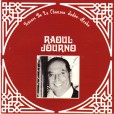
A follower of the celebrated Cheikh El Afrite, young Raoul taught himself oud, and sang solo for his local synagogue choir — also drawing inspiration from the munchid singing of Sulamia, the largest Sufi brotherhood in Tunisia. In 1934, aged twenty-three, his first album was a smash. Maghreb audiences revered him for his fidelity to his own national traditions, undistracted by more fashionable Lebanese and Egyptian styles.
Ya Samra hymns a prettily-tattooed, blushing, date-flavoured brunette; in Aala Khadek the dirty rascal fancies himself to be a bee, closing in on the delicious nectar secreted in the beauty spot of his beloved.
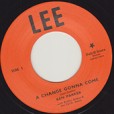
The Blues Buster showing his gospel roots in this superb, soaring version of the Sam Cooke, with support from Bobby Aitken and the Carib Beats.
Backed with some bumptious ska, led by Val Bennett.
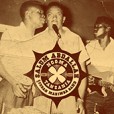
Joyful rug-cutters and sweet soul-uplifters from the town of Morogoro, in early-1960s Tanzania: muziki wa dansi, inspired by Cuban 78s, and dance crazes like the twist and cha cha cha, but making them its own. Here is the cream of over a hundred recordings by Salum, mostly for Mzuri Records of Kenya; pretty much lost till now.
In an old-school tip-on cover, with lyrics in Swahili and English on the inner sleeve.
Lovely stuff.
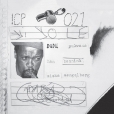
The saxophonist of the Blue Notes and the Brotherhood Of Breath, with pianist Misha Mengelberg, and Han Bennink on drums, trombone, clarinet and viola.
Originally released on ICP in 1979; an absolute classic of improvised music.