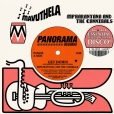

‘When Salsoul boss Ken Cayre handed over the multi-track tapes of Hit and Run to Walter Gibbons in 1976, the burgeoning art-form of the disco edit was liberated from its previous cut & paste routine. Following on from the likes of Grasso, Burgess, Levan, Scott, and Siano, Gibbons had become a lethal beat mixer, with an ‘uncanny sense of mixing that was so accurate it was unbelievable’, according to Francois Kevorkian. After early edit work with Salsoul releases Nice ’N’ Naasty and Salsoul 2001, Gibbons had established himself as a meticulous artist, able to completely rework existing tracks into new extended amalgams of rhythm and sound. Cayre’s multi-tracks conferred the ability to thoroughly deconstruct each of the songs elements, and Gibbons transformed the cut into an eleven minute opus which fellow tape pioneer Tom Moulton would distinguish as being ‘so different from the original that it must be classified as a new record.’ The resulting 12” would go on to sell 300,000 copies; DJs and the dance-floor would now dictate runnings as never before.
‘Whilst Gibbons transformed the original by banishing the strings and brass, Joe Claussell sets out for a different horizon entirely. The lead guitar is exchanged for a clean, chopped chucking; the vocals are promoted to a new spaciousness. The horns presage a rethinking of the rhythm, and by the time the familiar fuzz guitars are welcomed back, the coalescing orchestra has been sustained and revitalized in a complete surrender to time and pulse. As Holloway’s vocals are pulled into non-semantic expression, the track’s foundation is given a final rinse and farewell, before evaporating in delay. This is an iteration every bit inspired and fresh as Gibbons’ landmark mix.’
Stone-classic, game-changing, soul-sister new jack swing from Sisters With Voices — Coko, Taj and Lelee, B-girls from Brooklyn and the Bronx — back in 1992.
Hit rollers like Weak and Right Here; ballads like It’s About Time, for prancin and romancin.
Youthfully irrepressible, emotionally frank, raunchy and sensual; sleek harmonies, sassy rapping; Coko’s vulnerable, killing lead vocals; crisp percussion and driving, synthy bass.
Kaboom, as Method Man would say.
Their masterful sixth LP, from 1975, produced and arranged by Charles Stepney.
This is sheer class all the way but highlights include the perfectly tooled funk of Shining Star, the ravishing mid-tempo title-track, Philip Bailey in full-flight on the killer ballad Reasons, the Janus-faced Africano shunting Chicagoan antecedents like Phil Cohran into hot jazz-funk…
Start here if you don’t own any Earth Wind & Fire.
‘Verve Vault.’
Cornerstone, fully-matured Ubiquity runnings from 1976, with classics like the killer Searching, The Memory, One Sweet Love to Remember, and the laid-back, atmospheric title track. Beloved by the hip hop nation; flipped by luminaries like A Tribe Called Quest, Dilla, Dre, and Common.
Clear vinyl.
Unmissable LP from 1973; round about the same time as Coffy.
Murderously pimped versions of Ain’t No Sunshine and Papa Was A Rolling Stone open and close. There is a slinky, bubbling go at Aretha’s gorgeous Day Dreaming, and the classy, tricky jazz-funk of Cocoa Butter. Not to mention the Pan-African title track: stone-cold-killer, energising, utterly essential Roy Ayers funk.