Your basket is empty

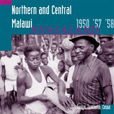
The bangwe zither, the one-stringed karigo lute, the kubu bow, the kalimba, malipenga gourd-kazoo marching music, choral and polyphonic singing.
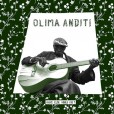
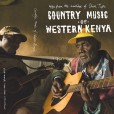
Olima Anditi is a blind guitarist beloved throughout Western Kenya for his old Luo songs about love, morality and politics. This warmly intimate session was recorded in his room in Kisumu, in 2010. Like Usiende Ukualale, it’s lovingly presented, with a colour booklet.
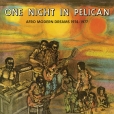
Opening in 1973, tucked into a tangle of railway parts scattered across an industrial park at the western edge of Orlando East, Club Pelican was Soweto’s first night-club, and its premier live music venue throughout the seventies.
Pretty much everyone on the scene passed through its doors — to sing, or perform in the house band, or hang out. Schooled in standards, and fluent in the local musical vernacular, the music would take off in different directions at a moment’s notice — SA twists on jazz, funk, fusion, disco — spurred by the sounds coming in from Philadelphia, Detroit and New York City.
One Night In Pelican encapsulates these halcyon times, with a musical roll call of all the key groups and players, besides evocative, previously-unseen photographs, cover artwork by Zulu ‘Batsumi’ Bidi, and notes by Kwanele Sosibo, lit up by a gallery of first-person testimony.
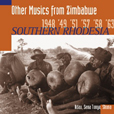
Assorted mbira, mouth bows, karimba, story-songs, mulanji flutes, panpipes, drums.
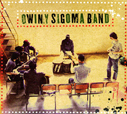
Elmore Judd in Nairobi with Joseph Nyamungo and Charles Okoko.
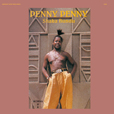
No-shame housey Tsonga-disco and hands-in-the-air rave banged out on Korgs and Ataris in 1994 South Africa. It sold tons, rocking stadiums from Liberia and Sierra Leone to Namibia and Mozambique.
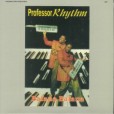
Mid-nineties kwaito by Thami Mdluli (veteran of chart-toppers Taboo and CJB, and in-demand producer of the likes of Sox and Sensations).
Tasty, infectious rhythms and synth-work — if the singing is a bit Black Box — with an up-for-it, DIY energy and self-identity encouraged by the momentum of the liberation struggle in this period. “Once Mandela was released from prison and people felt more free to express themselves and move around town, kwaito was becoming the thing,” says Thami.
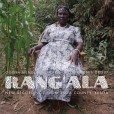
Rang'ala
New Recordings From Siaya County, Kenya: Ogoya Nengo And The Dodo Women's Group
Honest Jon's Records
Open-hearted, fresh, lovely, bumptious recordings of women’s singing, from Rang’ala village in southwest Kenya. ‘Dodo’ is a type of traditional Luo music mostly used for entertainment at weddings, drinking parties and wrestling festivals. Songs in praise of the happy couple, the hardest drinkers and the best wrestlers.
Try the magical fourth song, Arum — about barking like a hornbill.
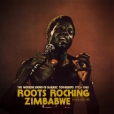
An insurgent blend of rock, rumba, soul and traditional grooves.
Including never-before-released recordings by legends like Thomas Mapfumo and Oliver
Mtukudzi, amongst many others.
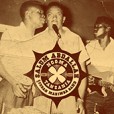
Joyful rug-cutters and sweet soul-uplifters from the town of Morogoro, in early-1960s Tanzania: muziki wa dansi, inspired by Cuban 78s, and dance crazes like the twist and cha cha cha, but making them its own. Here is the cream of over a hundred recordings by Salum, mostly for Mzuri Records of Kenya; pretty much lost till now.
In an old-school tip-on cover, with lyrics in Swahili and English on the inner sleeve.
Lovely stuff.
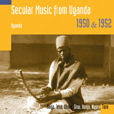
Likembe thumb-piano get-togethers, yodels and ekidongo harps, leg-rattles, vocal knees-ups, magwala horn groups, flutes, xylophones and drums.
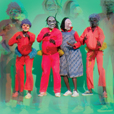
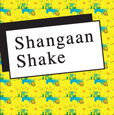
An astounding compilation of the breakneck Shangaan dance output of the Nozinja studio in Soweto, recorded between 2006 and 2009.
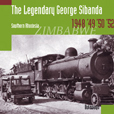
His fine guitar-picking and upbeat, carefree songs brought George Sibanda from Bulawayo the fame throughout southern Africa — and he was versioned in the US — which drove him to drink and an early grave.
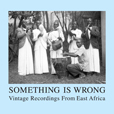
Thirty-five stingers from an HMV run of more than four hundred 78s, recordings made in Uganda and Kenya from the mid-1930s till the mid-1950s.
The second half of the CD.
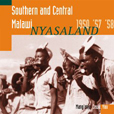
The bangwe board zither, gourd kazoo big bands, tuned likhuba drum ensembles, virtuoso xylophone, a capella singing.
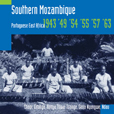
Sena and Ndau mbiras; Shangaan singing, drumming and xylophones; Chopi reedpipes and timbila xylophone orchestras, little girls playing ocarinas; Gitonga drums and singing horns.