

Your basket is empty


‘Eighteen dedications, each hybrid and different, but driven by an utterly personal approach to bebop, Brazilian jazz, Africa and Brazilian roots; thronged with his signature battery of whistles, screams, scales, keyboard, kettles, spoons, squeeze toys, children’s voices, prepared piano and geese calls; with the band adding native instruments like pandeiro, surdo, caixa, apitos, bonecos and agogos, besides saxophones, flute, electric piano, electric bass and so on. Musicians and genres such as Terry Riley, Frank Zappa and Weather Report, Javanese gamelan and Indonesian kulintang come to mind, but there is no real overlap: Pascoal has his own special brew.’
His first recording with his band in fifteen years. “My music is not commercial; it’s not like selling bananas or soap. I’m not in a hurry to record.”
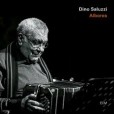
The great Argentinean bandoneon player in his first purely solo recording for more than thirty years.
‘A powerful reminder of Dino’s gifts as a musical storyteller of great subtlety. His pieces in this intimate recording reach back to early memories: Don Caye, subtitled Variations on the work of Cayetano Saluzzi, is a most touching dedication to his father. Throughout, the bandoneonist reflects upon the fleeting passage of time.’
Wonderful music, warmly recommended.

This is terrific.
Brazilian post-punk, art rock and DIY from 1988, released here for the first time, by the duo Celso Alves and Kodiak Bachine (whose records with the band Agentss are desperately sought-after nowadays).
Dubwise and rhythmic, percussive and synthy, with tangy Brazilian roots, and a droll humour to its reflections on embalming, LSD and zombies, the music freewheels roughly and vividly from the truffling, chattering, tropical atmospherics of the opener, through to the machine-funk, Romeroesque terrors of the Greenhouse Massacres, to close.
Sung in Portuguese and English, studded with Spanish, French and German, the lyrics are reproduced on an insert. Pressed at Pallas.
Ace. Check it out.
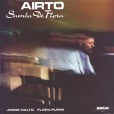
The delirious title cut is unmissable. A massive Dingwalls favourite back in the day, with stupendous, irresistible drumming, and dazzling keyboards by Jorge Dalto.
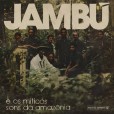
‘The city of Belém, in the Northern state of Para in Brazil, has long been a hotbed of culture and musical innovation. Enveloped by the mystical wonder of the Amazonian forest and overlooking the vastness of the Atlantic Ocean, its Amerindians, Europeans and Africans pioneered musical genres such as Carimbó, Samba-De-Cacete, Siriá, Bois-Bumbás and bambiá.
‘There was a radio station, a recording studio, a music label and a deep, cross-genre roster of artists. Beginning as simple gramophones connected to loudspeakers tied to lamp posts or trees, the aparelhagem sonora of Belém evolved into sophisticated setups, drawing thousands of revelers.
‘The music and tales found in Jambu are stories of resilience, triumph against all odds, and, most importantly, of a city at the edge of the Amazon which has always known how to throw a damn good party.’
‘The area’s best club music from the mid-‘70s, an exuberant, carnival-esque mishmash of local carimbó and siriá styles with big-band brass and frenetic Afro-Latino percussion. Best of all there are the three hip-swivelling cuts by Pinduca, founding father of lambada and king of Carimbó’ (Q).
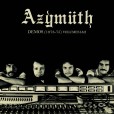
‘On every track the frenetic energy in the studio is palpable, giving the recordings a beautifully personal feel and a sense of the phenomenally creative vision Bertrami, Malheiros and Conti were realising at the time. Fifty years on, Azymuth’s earliest recorded music retains an ineffable, futuristic quality, standing amongst their most captivating and moving work.’

The genre-slaying, polyharmonic, polyrhythmic ‘universal music’ of Hermeto Pascoal and his bassist Itibere Zwarg, performed in 2001 by a workshop comprising twenty-nine of Rio de Janeiro’s most exceptional young musicians.
An overlooked masterpiece amongst recent Brazilian recordings: invigorating and marvellous; warmly recommended.
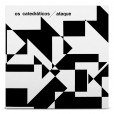
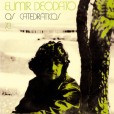
Eumir Deodato and his group Os Catedráticos.
‘The magical, hazy sound of sixties Rio, with monster samba grooves, scorching organ solos and big brass arrangements (featuring trombonist Edson Maciel); all buoyed by the hip rhythms of drummer Wilson Das Neves and Ruebens Bassini on percussion. Besides Deodato’s own, there are compositions by Marcos Valle, Baden Powell and Luiz Bonfa.’
Ace Brazilian funk from 1977, with a flagrant dose of the Herbies.