



Your basket is empty


Reigakusha
Gagaku Suites
Black Sweat
‘Japanese classical music and dance, traditionally performed by families of musicians linked to the ancient Imperial court, and later passed down in Buddhist temple ceremonies and Shinto shrines, Gagaku is the oldest of the Japanese performing arts, with a history more than a thousand years old. Founder and director of the Reigakusha ensemble, Shiba Sukeyasu descends from the Koma clan, dating back to the end of the 10th century. The recordings partly reflect repertoires borrowed from Chinese music between the 5th and 9th centuries.
‘The eternal breath of the flutes (ryuteki and hichiriki) creates a sort of suspension of time, together with the hypnotic and hallucinatory atmosphere of the mouth organs (shō). The meditative tone of the string instruments (bika and koto) that punctuate the voids and silences is impressive, as is the enigmatic percussion section, with the tolling of the gong (shōko) and the calibrated beats of the drums (taiko and kakko).’
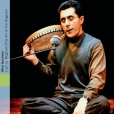
Intense, virtuosic singing in this ancient tradition, accompanied by Qasimov himself playing the daf frame drum and the brothers Mansurov on the tar lute and kamancha fiddle.
‘Simply one of the greatest singers alive, with a searing spontaneity that conjures passion and devotion, contemplation and incantation’ (New York Times).
Featuring the Gamelan Semar Pagulingan — the ‘Gamelan of Love in the Bedchamber’ —playing instruments that no longer exist, in repertoire originally performed just outside the private residence of a raja during meals and quiet times… and when he was up to no good with one of his wives.
Kebyar with sung poetry, gambuh dance-drama, ancient ritual angklung, and solo flute.
Full English translations in the booklet.
Achingly subtle, erotic dance and dance-opera experiments, including the first recordings of female participants; with an extensive essay as a PDF, linked to 1930s silent films and photo library.
‘New, cool, melodic, funky pop from Japan. Six irresistible new songs from veteran members of 90s Tokyo underground pop bands like Love Tambourines, Arch and Bridge, with roots in 80s dance music, the funkier elements of post-punk and the Factory Records roster, and groups like Young Marble Giants and Weekend.’
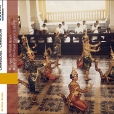
Pinpeat and mohori music — courtly and abstract versus nocturnal and soulful — performed by a female choir and the orchestra of the Royal Palace.
Differently pitched xylophones with bamboo blades suspended above a sound-box; sets of horizontal gongs; oboes; two big buffalo-skin kettledrums.
Masterful playing of the qin zither, in China considered the most noble of instruments, as if tracing the shapes and meanings of silence.
Playing the xun, an ancient ocarina, the xiao, a vertical flute, and the qin zither, half the time with ‘amateur’ ensemble or zheng zither accompaniment. A last exponent in 1996, haunting and poised… dead now.
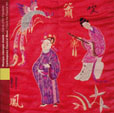
Traditional and popular pieces for drums, xiao and dizi flutes, banhu fiddle, sheng mouth organ, yangkin hammered zither, pipa lute, and xun ocarina (an instrument at least 7,000 years old).
Delicate, quietly profound 1959-60 chamber recordings of old masters, on a dozen instruments, notably the guqin zither, the pipa lute and the xiao flute.
From the south-east corner, with uneasy Estonian identity, and ties to Russia via the Orthodox Church — striking singing about everything, in different lineups, with recordings from the 1930s till up to date.
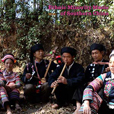
Infectious songs and rootical instrumentals — the fifth SF album presenting Laurent ‘Kink Gong’ Jeanneau’s amazing documentation of the vanishing indigenous music of the rural Asian frontiers.
Gong, angklung and gender wayang under the direction of Anak Agung Gede Mandera.
We ship worldwide. The postage rates for your order are displayed before payment, which is processed using Paypal. You can pay using your Paypal account or any of the following cards. No need to join Paypal.