Your basket is empty

Killer, jostling lineup: Don Cherry, Grachan Moncur, Geri Allen, Charnett and Charles Mofffett.
‘Don has one of his best outings for years, bright, warmly antagonistic and full of melody. Moncur plays as well as ever, varying his slide positions and embouchure to just this side of multiphonics’ (Penguin Guide).
Warmly recommended.
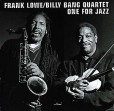
‘An affectionate update on the sort of tightly arranged hard-bop album that was a specialty of the Blue Note label from the mid-1950s through the mid-1960s. Frank Lowe has developed a thoughtfully muscular approach to the tenor saxophone that’s exceptionally resourceful and personal, and his bandmates… are similarly animated by both an exploratory bent and a love for the hard-bop tradition. This is Mr. Lowe’s finest album to date’ (New York Times).
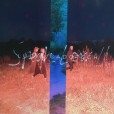
With guests Kit Downes on hammond organ, and cellist Lucy Railton.
Jazz album of the month, in The Guardian: ‘an unusual path, combining spellbinding singing with wayward improv… Speak Low II foregrounds Cadotsch’s crystal-clear lyricism more than its predecessor without ever cramping the freedoms of her classy improvising partners. She brings a graceful accessibility to a personal and ingeniously offbeat setup.’
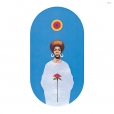
‘With just four long, leisurely, percussion-drenched tracks, it’s a latin-jazz jam-band dream, with none other than Joe Henderson adding smoky tenor that ratchets up the intensity and mystery, and fusion avatars Stanley Clark and Lenny White super-charging the grooves. Think of it as a direct descendant of In A Silent Way, but with a lysergic twist and Miles’s tentative phrases replaced by Gasca’s brash, sassy blasts.’ (Jazzwise)
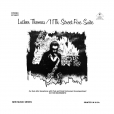
‘Alto saxophonist Luther Thomas was the loose cannon of the Black Artists Group milieu, with a raw freedom and keening, braying, gut-bucket blatancy funkily attuned to the no-wave crew. Besides recordings with Charles Bobo Shaw and Jef Gilson, he was a regular with James Chance and Defunkt, among others. (His collaborator here, the flutist Luther Petty was hot, too, for a brief moment in these years, playing with Lester Bowie’s Sho Nuff Orchestra.)
‘Recorded in 1978, soon after the pair moved from St Louis to NY, this is an emotional, volatile set of blues-drenched duets. The openness of mid-western AACM-style space-play, replete with little instruments, chasmically underpins evocations of the ferocity and unforgivingness of the Big Apple and its competitive loft scene.’
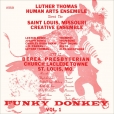
Funky Donkey is brawling, invigorating, all-in, full-throttle fire music by the Human Arts Ensemble, recorded live in the Berea Presbyterian Church in St. Louis, in 1973, with Lester Bowie and co giving it some hoof. Charles Bobo Shaw’s composition Una New York is more spaced-out, limber, melodious, and funky. Guitarist Marvin Horne plays a blinder.
A key Black Arts Group recording.
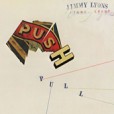
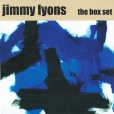
Cecil Taylor’s stalwart collaborator, in the best of his recordings as leader; recorded in 1978 and originally issued by Hat Hut as a 3-LP box set. ‘Five extended pieces, all by Lyons, with a working quintet: Lyons himself on alto, his wife Karen Borca on bassoon, Hayes Burnett on bass, Munner Bernard Fennell on cello, and Roger Blank on drums. Jolting, quicksilver free jazz with terse themes and brilliant interplay, the music is quintessential Lyons — searching, pliant and sincere. Remastered from the original tapes, this first reissue of Push Pull restores the original tracks — two of which were split into LP sides — to their true continuous length.’
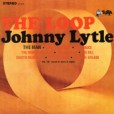
The first of two LPs recorded by the vibes player for the Detroit label Tuba, after Riverside went under in 1964.
With regular trio partners organist Milt Harris and drummer Peppy Hinnant; and Wynton Kelly and George Duvivier dropping in.
Featuring a cracking version of Duke Pearson’s Christo Redentor, and grooving rug-cutters Possum Grease and Hot Sauce… besides the stone-classic Dingwalls-floor-filler The Man.
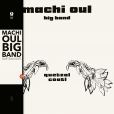
“I had to deal personally with my situation as an expatriate, without disavowing it. I tried not to betray my roots, I tried to translate into my music what was essential to me, to reflect my origins — Latin America, its musical and above all human feelings — while remaining faithful to jazz.”
‘Structured free music’, recorded for Palm in January 1975, with producer Jef Gilson at the helm, and the Chilean pianist Manuel Villarroel leading fourteen musicians, including Jef Sicard, François and Jean-Louis Méchali, and Gérard Coppéré, from the earlier Septet formation.
‘From togetherness to dissonance, we dance to Bolerito and shake it up to Leyendas De Nahuelbuta. As for the finale, it is a serpent which is bedazzling and impossible to pin down. To remind ourselves of this, let’s listen to it again.’
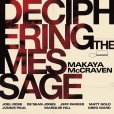
Reshapes of classics by Art Blakey, Horace Silver, Hank Mobley, Dexter Gordon, Kenny Burrell, and Eddie Gale, among others — with contributions from vibraphonist Joel Ross, trumpeter Marquis Hill, alto saxophonist Greg Ward, guitarists Matt Gold and Jeff Parker, bassist Junius Paul, and De’Sean Jones on tenor saxophone and flute.
“When piecing everything together, I wanted to create a narrative that made the listener feel like they were falling into this space or a movement. I was really trying to make a record out of it, not just a series of tracks… The music that we’re making now is part of the same route and is connected, so I want to honor tradition and release something that people can vibe to.”
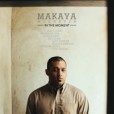
Nineteen, hip-hoppin, be-boppin capsules of funk, conjured and distilled from a year’s worth of weekly shows by the drummer, in a reclaimed bank vault in the heart of Chicago’s Ukrainian Village.
Jazz improvisation — but compact, to-the-point and organic as a mosquiter’s tweeter — dipped in krautrock, d&b, house and B-boy science. Featuring the brilliant vibes playing of Justefan, and local luminaries like Jeff Parker from Tortoise and De’Sean Jones from Underground Resistance.
Warmly recommended.
Recent collaborations in London with Nubya Garcia, Joe Armon-Jones, Soweto Kinch, Ashley Henry, Daniel Casimir and Kamaal Williams… remixed live the next weekend by LeFtO, Ben LaMar Gay, Quiet Dawn, Earl Jeffers & Don Leisure of the Darkhouse Family, and later by Emma-Jean Thackray and Lexus Blondin… finally chopped-up and re-assembled back at Makaya’s home studio in Chicago, into two continuous side-long suites.
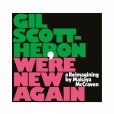
‘A re-imagining.’
Fourteen new pieces of organic beat music cut from the original sessions in New York, Chicago, London and Los Angeles, featuring Brandee Younger, Tomeka Reid, Dezron Douglas, Joel Ross, Shabaka Hutchings, Junius Paul, Nubya Garcia, Daniel Casimir, Ashley Henry, Josh Johnson, Jeff Parker, Anna Butters, Carlos Niño and Miguel-Atwood Ferguson.

A stunning survey of the 1970s heyday of this great Japanese singer and countercultural icon.
Deep-indigo, dead-of-night enka, folk and blues, inhaling Billie Holiday and Nina Simone down to the bone.
A traditional waltz abuts Nico-style incantation; defamiliarised versions of Oscar Brown Jr and Bessie Smith collide with big-band experiments alongside Shuji Terayama; a sitar-led psychedelic wig-out runs into a killer excursion in modal, spiritual jazz.
Existentialism and noir, mystery and allure, hurt and hauteur.
With excellent notes by Alan Cummings and the fabulous photographs of Hitoshi Jin Tamura.
Hotly recommended.