
Your basket is empty

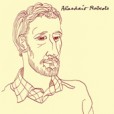
Quite different to A Wonder Working Stone and Spoils, the ten songs here are ‘sparse, intimate and concise. The focus throughout is on Alasdair’s deft acoustic fingerstyle guitar and his voice. The songs are variously elliptical and gnomic, direct and personal, romantic and tender.’ With sparing, decisive contributions on clarinet and tin whistle — and from Crying Lion.
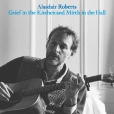
A treat for those of us who like their Alasdair Roberts straight-up and hardcore. A pointed, deep selection of mainly Scottish folk songs, recorded live in the studio; beautifully sung, with minimal, exquisite accompaniment by acoustic guitar, or sometimes piano. Sexual oppression, Scottishness, political resistance; stray cows, mystical horses, waterbird royalty. Stiff shots of rapture, fighting talk, heartbreak, and tragedy. Terrific.
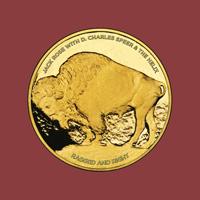
Lowdown lap steel and Telecaster collaborations with D. Charles Speer and The Helix, inspired by Link Wray,
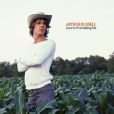
Twenty-one songs, running right back to 1971: assured, lovely, intelligent, good-humoured singer-songwriting, mixing up Americana, folk, pop, art rock, and gentle experimentalism.
Originally released in 2007 this redux edition includes new masters from a recently found pristine tape reel and was remastered by Timothy Stollenwerk at Stereophonic Mastering in Portland, OR. Revised artwork; extensive liner notes by Arthur’s partner Tom Lee.
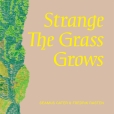
‘Their ability to harmonize together is stunning, their reedy voices coming together and pulling apart amid delicate fingerstyle guitar and concertina deployed in just intonation, which imparts a deeply resonant, almost glowing harmonic presence. It’s all quite subtle, and if you only listen to the way the voices of Cater and Rasten blend you might even miss it—but the full sonic spectrum is what distinguishes and, in certain ways, connects it to traditional practice… Although the album is pure balladry, unfolding with exquisite patience, each song contains nifty little flourishes or instrumental elements that set them apart, such as the slide guitar and wheezy bass harmonica on For the Ear That is No More, or the slow peal of trumpet on Death and the Lady, courtesy of Rasten’s partner in Pip and Oker, Torstein Lavik Larsen. (Peter Margasak, Nowhere Street).
‘All done with such grace and elegance, without a note wasted or any required. Wonderful… faultless and deeply considered’ (Glenn Kimpton, KLOF).
Three high English and Scottish ballads, and three original settings of European folk tales.
Matt gatefold cover; gloss spot varnish.
Check it out!
Warm, hazy and enigmatic Laurel Canyon country-folk — her debut — with well-measured baroque-ish brass and woodwind arrangements, reverbed and layered voices.
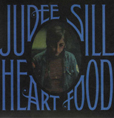
Beautiful, early-seventies, singer-songwriter, orchestral, countrified pop. The challenges of this second album put her back on heroin: it was her last.

Compositions from 1969/70, when Forti was based in Woodstock, New York — ‘stoned in the woods,’ she recalls — around the time of the Festival, just before moving to California, and working and performing with Charlemagne Palestine.
The seven songs here were recorded in 2012 during her exhibition Sounding, at The Box gallery in Los Angeles. The blue vinyl carries an etching of Forti’s Illuminations Drawing on the flip; accompanied by a sixteen-page colour book with images of the original sheet music scored by Charlemagne Palestine.
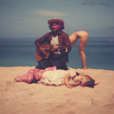
‘An album of cathartic intimacy, built around electronic textures and sparse percussion, with White’s gently yielding, half-spoken vocals pitched pleasingly between Laurie Anderson and Joni Mitchell’ (Mojo).
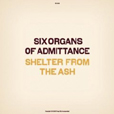
Respite from his recent firestorms, this conjures from spellbinding acoustics and drones galore something meditative and darkly unsettling by turns. Fine vocals and shredding axe work from Elisa Ambrogio.
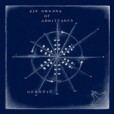
‘The first thing is how unhinged it all sounds. The album brews and boils with an ominously dark tone in a desolate space, dense with energy, guitar overdriven past the point of sanity, slamming drum accents, vocals cutting through in what seems to be comprised of another, as yet unheard, language. Yet, inside the apparent wild abandon and destruction is a strict internal logic of construction that unveils itself upon listening…’ With Noel Von Harmonson from Comets On Fire on drums, and Rob Fisk from Badgerlore sharing the bass-playing with San Francisco psych legend Charlie Saufley.
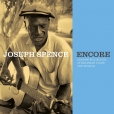
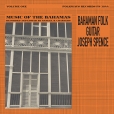
Wonderful, previously-unheard recordings by the legendary Bahamian guitarist, at his peak in 1965, made at his only New York concert, at home in Nassau, and in a Manhattan apartment. Gripping, one-off playing, continuously stepping out of line, or surprising you with accents, like Monk; rough, enraptured singing in the age-old tradition of local sponge fishermen, with startling irruptions of humming, babble and scat.
Legendary stoner folk by former Jefferson Airplane and Moby Grape member (who dropped some LSD and motorcycyled from California to the Nashville studio in his pyjamas).
Terrific analogue recordings of inimitable covers of Thin Lizzy, Nico, Black Sabbath, Abba, Sandy Denny etc, with support from Will Oldham and labelmates Supersilent.