



Your basket is empty


Brand new interpretations of their debut album, ten years on.
‘The Universe Smiles Upon You ii was recorded on January 4-6, 2025, in the same family barn of guitarist Mark Speer, across the same dates where TUSUY was first conceived ten years earlier. Though the conditions were the same — dirt floor, brutally cold, minimal sound isolation, all takes live — the songs aren’t. They’re re-approached, some changed more than others, harnessing the lightning-in-a-bottle energy of TUSUY while discovering what would be unique this time around, in this stage of the band’s life.
‘The result moves like ripples on the water across ten hypnotizing tracks, the barn creating a sense of spaciousness, serenity and creative freedom, nearby wildlife (listen out for the birds on August Twelve ii), rattles and creaks of the barn and all. It’s a tapestry of small movements in nuanced arrangements, slowly revealing the new life, stories and character of someone you’ve met again for the first time in ten years.’
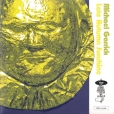
Combining two BBC Radio sessions, recorded at Maida Vale Studios in 1973 and 1978, with Norma Winstone, Henry Lowther, Art Themen, Tony Coe, and the gang.
Eight Garrick originals, including favourites from the Troppo and October Woman LPs, and an early, first showing for River Running and Galilee. Robin’s Rest only appears here.
‘Fabulous,’ says Record Collector.
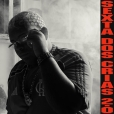
Mental baile future-funk.
Impossibly, round two ratchets through higher gears than round one. The cutting and scratching skills are brutally imperious, by turn eviscerating in split seconds a trembling flock of far-flung musical prey. Out of the wreckage looms the apotheosis of apocalyptic Techno Scratch terror; the ebulliently vengeful prophesy of forebears like Grand Wizzard Theodore and the Knights of the Turntable.
Blisteringly hot.
Late seventies; Channel One.
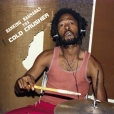
Stanley Bryan was a jack of all trades at Channel One in its heyday. As an engineer, he mixed the Eek-a-Mouse classic Wah Do Dem, for instance. If a drummer dropped out of a session, Stan was the man to step in. And into the night, Ranking Barnabas worked the mic for the Channel One Sound System, often toasting over rhythms that he had recorded himself in the studio. Though Barnabas mixed countless dubs during these years, The Cold Crusher is the only LP released solely under his name, as a limited edition in the US.
Very well presented by the Italian label Jamming, with new notes, and expert sound restoration at Dubplates & Mastering. The terrific cover photo is by Beth Lesser.
Dub fans, don’t dilly dally. This won’t stick around.
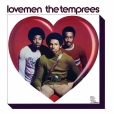
The superb Memphis vocal trio, powered by the sublime falsetto of Jasper ‘Jabbo’ Phillips.
Giddily soulful, ravishing slow jams and sweeter-than-sweet harmony overtures. Paradigmatic murder like If I Could Say What’s on My Mind, Love… Can Be So Wonderful, and I Love You, You Love Me. An all-conquering version of Dedicated To The One I Love, to cap it off.
We love The Temprees.
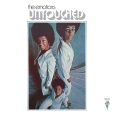
‘Girl group greatness, courtesy of the Chicago-based Hutchinson Sisters (with Theresa Davis on this record) and co-producers Isaac Hayes, David Porter and Ronnie Williams. Recording at Muscle Shoals and Stax seems to have added a little grit to The Emotions’ sound, too; this 1971 classic on the Volt label offers the perfect blend of sweet and sassy. Show Me How was the hit, but it’s Blind Alley that made Untouched one of the most collectible albums of its kind: that track’s one of the most sampled in all of pop and hip hop, most notably by Big Daddy Kane (Ain’t No Half-Steppin’) and Mariah Carey (Dreamlover).’
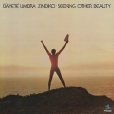
‘After keyboardist/composer Bayeté aka Todd Cochran established his musical presence on the San Francisco scene playing in Bobby Hutcherson’s band, and before becoming a key member of the innovative band Automatic Man, which he co-founded with Santana drummer Michael Shrieve, he recorded a couple of solo albums for the Prestige label that feature some of the most far-out, futuristic music the legendary jazz imprint ever released… Early ‘70s electric Miles is a clear point on the compass, but so are Parliament-Funkadelic and Lonnie Liston Smith, if he were playing a fuzzed-out clavinet instead of a Fender Rhodes.’
“While I’ve held space for the blues aesthetic and jazz in everything I’ve done, I was leaving one world and entering another, unmooring the ship and heading into a sea of unknowns, so to speak.”
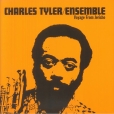
‘There are relatively few places where members of the two great Arkestras — Ra’s and Tapscott’s — cross paths… As you might expect from such a line-up, Voyage From Jericho does not have a wasted note. Every light is most definitely on, the band are running hot, and the spirits are live in the set. Tyler’s compositions are ruggedly carved, heraldic and open; he leads on baritone, sculpting the songs, growling out blue-flamed multi-phonics, the flow in full spate. Boykins steps lightly with his familiar elasticity and glowing presence; Blythe and Cross duck and weave, and Reid clatters and baffles, following and leading, echoing and supporting, always right there in his sui genesis super-precision time-beyond-time. Top-tier fire music.’ (Francis Gooding, The Wire)