Your basket is empty

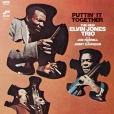
‘Classic vinyl series.’

‘Terry Hall has returned with his best work in decades… a daring, thoughtful set’ (The Guardian); ‘***** the real message lies in the boldness of its musical vision… world music album of the year’ (The Times).
‘Recorded as Blair and Bush were conspiring to strike fear and loathing into the region responsible for these grooves, it’s every bit as topical as Ghost Town, as eerie as War Crimes’ (Time Out).
Nominally this is a collaboration between Terry Hall and Mushtaq, once of British-Asian pioneers Fun-Da-Mental — but ‘everybody we worked with had a story to tell,’ recalls Terry Hall, ‘and their stories became part of the record. We were blessed with the range of people we found.’ A Tunisian singer, a Syrian flautist, an Egyptian who had settled in Iraq, a twelve-year old Lebanese girl, a blind Algerian rapper from Paris, a choir of Polish gypsy refugees brought in from a social club in Leytonstone, the clarinettist who recorded the original Pink Panther theme; singers in Hebrew, English, Arabic, Romany. ‘Everybody had a sense of something in common in their minority and oppression and struggle. In the end, it felt more like we were editing a film than making a record.’
A year in development, the album is also a powerful reflection of the time in which it was made and the storm that was gathering: Bush and Blair were intent on Armageddon in Iraq; in the refugee camps on the West Bank, atrocities were being committed on a daily basis; closer to home, sections of the British media used the fear of terrorism to whip up a hate-fuelled campaign against asylum seekers and other minorities pushed to the margins of society.
‘What was going on as we were making the record seemed to make it more and more political. We had something to say, but we wanted to avoid being worthy or preaching and keep the words to a minimum.’
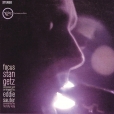
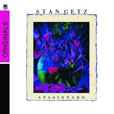
Of all his albums, this was Stan Getz’ favourite. Ours, too.
Freed from the formal orthodoxies of small-group bebop, and revelling in the freedoms opened up by Eddie Sauter’s thrilling strings-based arrangements, lyrical improvisation pours out of the saxophonist (with Lester Young coursing through as per). The music shimmies devil-may-care through jazz, classical, soundtrack, show-tune, and the rest.
Try the dazzling opener. A theme from Béla Bartók’s Music for Strings, Percussion and Celesta is mashed into skittering, paranoid funk, with a killer spot for Roy Haynes. And next up, something quite different, a quiet, complexly tender tribute to Getz’s mum, exquisitely proffered. Just a shame Bill Evans wasn’t sitting in.
Original, knockout; very warmly recommended.
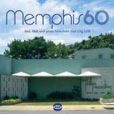
Thrilling rarities from Stax and Goldwax — funky scorchers like The Hawg; hard takes on Ticket To Ride and Tramp; Isaac Hayes’ debut 45; Willie Cobbs’ You Don’t Love Me (which Dawn Penn did over as No, No, No).
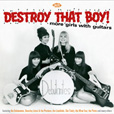
Sparky, attitudinous girl garage from Europe and the US.
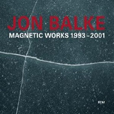
His own selection from two ECMs and an Emarcy — subverting the big-band tropes second-nature to a large improvising ensemble. ‘Inspired by Gil Evans, Claus Ogerman and Oum Khalsoum.’
Blazing start and great delivery, but rather treading water over killer late-80s digi.
Same vintage as his massive Dangerous hit for Redman. Not to mention the more voluble Don’t Touch The Crack by Dignitary Stylish.
Zinging with raw dubplate-style presence, like the other two 45s on this rhythm.

Titles inspired by Johnny Griffin’s sojourn in Pentonville nick (for outstanding income tax) at the start of a Ronnie Scott’s stint earlier in the year. With clarinettist Tony Coe on song; Sahib Shihab and co.
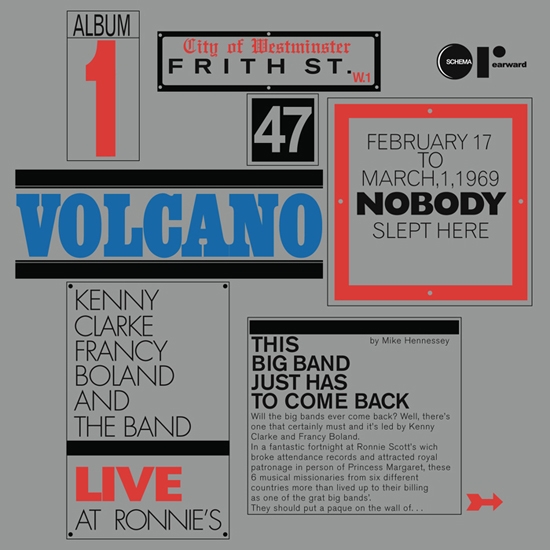
A facsimile reissue of the first half of the Ronnie Scott’s recordings.
Previously unissued underground rock from 1969, Rockford, Illinois.
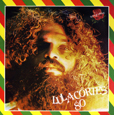
From 1980, Recife, Brazil: ‘crazed ethno folkrock; magical, gentle, jungle folk psych zones; hard-hitting, coke-dusted fuzz rock; insane mutant disco dancefloor groove; tweaked Americana; acid vocal raga trance.’
Tony Allen, Max Loderbauer and Moritz von Oswald; mixed by Ricardo Villalobos.
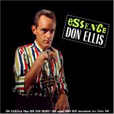
Years before his big bands and electronics — the trumpeter on Pacific Jazz LP from 1962, more experimental than usual for the label, with Paul Bley and Gary Peacock — bracing, often free-form.