


Your basket is empty

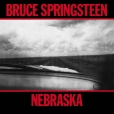
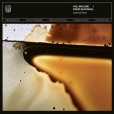
‘Gathers revelatory unheard material from this prolific period including the fabled Electric Nebraska sessions with the E Street Band and solo home and studio recordings, joined by a 2025 remaster of the original album, plus a new performance film of all ten Nebraska songs played in sequence.
‘Springsteen’s 1982 acoustic masterwork is augmented by seventeen contemporary recordings (fifteen previously unreleased) that were part of the groundswell of inspiration that shaped Nebraska and share its haunting themes.’
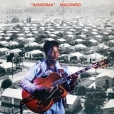
‘In 1978, SA guitar genius Tabane stood at a crossroads. Fresh from three years’ touring in the United States, where he graced the Newport Jazz Festival alongside Miles, Herbie, Pharoah and co, and with a newly signed international distribution deal, he harnessed this momentum to a new, larger band setting, capturing a rare intensity.
‘Sangoma — ‘spiritual healer — bridges contradictions: expansive yet intimate, celebratory yet haunted by exile and return. Tracks like Sangoma, Hi Congo and Keya Bereka are not simply recordings but living testaments, songs that would remain in Tabane’s repertoire for decades. Unlike the moody, immersive character of much of his work, here Tabane is on the move — urgent, restless, uncontainable. ‘Maskanta wa tsamaya’, ‘ass-kicking’.
‘More than four decades on, Sangoma is both an historical document and a timeless invocation. A landmark in SA musical history. From his home in Mamelodi to the world and back again, Tabane’s spiritual healing endures — raw, electric, and unbowed.’
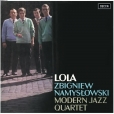
From 1964, a fresh, invigorating, up-for-it, personal take on happening US jazz — Coltrane in particular — blending in themes from Polish folk music. Try the rollicking Piatawka, with its evocation of highlander bagpipes. Scorcher!
Multi-instrumentalist Namyslowski was an alumnus of Krystof Komeda’s ground-breaking quintet. In the early sixties, he formed the Jazz Rockers with Micha Urbaniak, and in 1962 both joined The Wreckers, playing the Newport Jazz Festival. In 1964 his own Modern Jazz Quartet toured throughout England, Scotland, and Wales. “We had songs like Piatawka in the programme, inspired by Polish mountain folklore… These were the forms that had never been heard there before… Not only was I a musician from behind the ‘Iron Curtain’, but it also turned out that this musician had his own voice and showed something innovatory.”
Pianist Wlodzimierz Gulgowski plays a blinder, too; nodding to both Chopin and Mal Waldron. (A decade later he hooked up with Urbaniak, for the LPs Fusion III and Funk Factory.)
Lola was recorded in London; produced by Mike Vernon, who founded the Blue Horizon label, and produced Fleetwood Mac and David Bowie, amongst others. For the cover shot, Decca commissioned the same photographer as for the first Rolling Stones LP, to follow suit. “We are in the same sweaters from Marks & Spencers, only each in a different colour.”
Docteur Nico & African Fiesta Sukisa
Docteur Nico Presents African Fiesta Sukisa 1966-1974
Planet Ilunga
A dazzling mixture of stone classics and gems buried deep in the Sukisa catalogue. Excellent booklet.
‘While exploring the Hawaiian guitar with its clear, airy, plangent, psychedelic effluvia, he continues to replicate the piano comping technique, and adds two missing strings to his bow: a simulation of the sanza (likembé or thumb piano), whose sounds he reproduces right down to the noisemakers of the tiny tin rings, on the one hand, and the sounds of the Luba balafon on the other… Docteur Nico is a genius of our time, whose style makes him the supreme exponent of the most important guitar school in Congolese music. He is recognized by his peers as the greatest African solo guitarist of all time.’
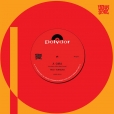
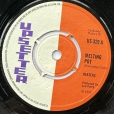
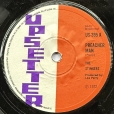
The Tenderness Trio was sisters Jussara and Jurema Silva, and their brother Robson.
From 1973, A Gira is dedicated to nature, spirituality and mindfulness, by way of a tribute to a Candomblé deity, with mesmerizing polyrhythms from the start, soaring vocals and beautiful playing. As the sisters put it — “It has the dancing, the expression, the lyrics and musical relaxation. Something very Brazilian.”
B/w a surprise version of Gato Barbieri’s Last Tango In Paris.
Ace.
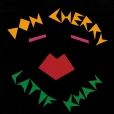
‘Sangam means ‘meeting place’ in Sanskrit. Don obviously knew exactly what he wanted to do, and Latif immediately understood, his fingers fizzing across the tablas at frightening speed… It was Don who suggested that Latif overdub new tabla parts to enrich and add complexity to the first takes. We could reasonably have expected to spend the night doing this because this was the first time the percussionist had done this. It took him all of five minutes to get used to listening to the first tracks over the headphones before playing them without the slightest mistake. When we got to the timpani, which he was playing for the first time, his keen sense of pitch and tone once again did miracles. During one take, just for the fun of it Latif started to play a fairly slow, disconnected duple time, moving on to three and then four… all the way up to 19 by which time his fingers were whizzing invisibly across the skins, leaving us in awe and him looking as if he didn’t know what the fuss was all about. All this just made Don even keener to impress his musical companion for a day…
‘Of course, the subtleties of this album call for greater analysis, for example the meeting between the Malian doussou n’gouni and Indian tablas, the Hammond organ taking over from the tampura, 5 1/4 time as if it were the easiest thing in the world, the reinvented Indonesian gamelan… and the lyricism of the pocket cornet.’