



Your basket is empty


‘If you love the era in which electronic elements began to enter contemporary jazz, during the late ‘60s and ‘70s, you’ll LOVE what Sweden’s Dennis Egberth has been creating.
‘A blend of cosmic composition and chilled ambient and electronic sounds, with floating, irresistible, melodic bass lines, and long, modal build-ups that come alive with exploding lyricism.
‘The drummer is joined by Fredrik Ljungkvist on tenor sax and clarinet, Niklas Barnö on trumpet, Alexander Zethson on Wurlitzer, Linus Hillborg on electronics, and double bassist Joe Williamson.’
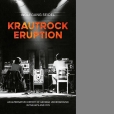
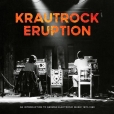
‘A rousing counter-narrative to the usual depictions of Krautrock, which paints a vivid picture of the old Federal Republic of Germany, with all its contradictions. What is now celebrated as Krautrock emerged in this environment, as an attempt to provide the revolution with a soundtrack. This is a vivid, fly-on-the-wall account of the squats, demos and first concerts of bands such as Cluster, Tangerine Dream and Ash Ra Tempel; also a judicious consideration of the influence of minimalist composers such as Steve Reich and Philip Glass, the origins of many Krautrock musicians in jazz, and the role of the synthesiser.’
Great reviews: ‘compelling,’ says Mojo; ‘passionate and revealing,’ says Record Collector.

The long awaited follow-up to the superb compilation Loving On The Flipside, from ten years ago.
‘Contained within this anthology are some of the greatest soul ballads that go sweet with a beat. Most of these songs have never been compiled. Some have never been issued in any form. Some, like the Ledgends entry here, have been sampled to great success (in that case for Freddie Gibbs and Madlib’s Deeper). Some haven’t been sampled, but, like Herb Johnson’s entry, are patiently awaiting their day.’
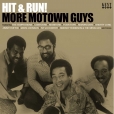
Twenty-five tracks drawn from the golden era of Motown, 1961-1968: fifteen of them never released before.
Marvin Gaye, Smokey Robinson & The Miracles, Marv Johnson, The Temptations and The Four Tops will be familiar names, though the recordings here are rare; The Hit Pack, The Serenaders and Gino Parks will maybe ring a bell; Michael Thomas and Johnny Earl will require this introduction.
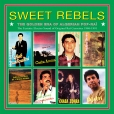
‘Bottling the raw energy of the scene in the 80s and early ‘90s; featuring its young stars Cheb Zahouani, Chaba Zohra and Abderrahmane Djalti. Newly remastered and including liner notes from Raï authority Rabah Mezouane, this compilation brings together eight cassette tracks from the electrifying period when Raï was evolving from more traditional sounds into mesmerising electro funk.’

The civil rights anthem turned Northern floorfiller.
‘The world needs more people like Barbara, someone who is willing to follow her conscience. She is, if the term must be used, a hero’ (Bob Dylan).

Giddying soul music from early-eighties Estonia!
A rework of I See Red by Frida, from Abba, with raw fiddle, and poetic new lyrics by Velly about camels and maidens; plus an unnerving version of Feel Like Makin’ Love.
Check it out!
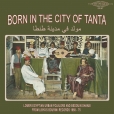
‘Egypt’s ‘official’ popular music throughout much of the twentieth century was a complex form of art song steeped in tradition, well-loved by the middle and upper classes. The music business was highly structured and professional; centred in Cairo. However, far from the metropolis, to the north and northwest, in towns like Tanta and Alexandria and extending across the Saharan Desert to the Libyan border, a raw, hybrid shaabi/al-musiqa al-shabiya style of music was springing up, supported by small, upstart labels.
‘This compilation covers the full range of styles presented by the short-lived but fecund Bourini Records, launched in the late 1960s in Benghazi, Libya. Gobsmacking moments include Basis Rahouma’s transformation into a growling, barking man-lion, and Reem Kamal’s onwards-and-upwards hand-clapping party banger, with a grooving nihilistic dissonance reminiscent of the Velvet Underground. The thorough-going contrast with mainstream Egyptian popular music is stark in Ana Mish Hafwatak, its vocal woven deftly through a constant accordion drone, and the sparse, slow-burning lament Al Bint al Libya. Whereas the mainstream was aspirational, projecting Egyptian culture at its most refined, the performances captured by Bourini were authentic expressions of ordinary, everyday life. More than half a century old, this music has lost none of its urgency, presence, or relevance.’