



Your basket is empty

‘The French jazz magazine Citizen Jazz acclaimed Marthe’s debut album Asura, in 2021, singling out her ‘ability to hold disparate idioms together, to mix a whole bunch of influences (musical or not) in the crucible of her own personality, of her own history, to bring out a great personal and extraordinary whole, a fresh and singular music which belongs only to herself.’
‘This follow-up maintains the same life-affirming energy. It explores new nooks and crannies in the same wonderful universe. Again, it ranges widely, with the same free approach to composition. Some of the tracks make it impossible to keep your dancing feet still, while others give room for introspection and reflection.
‘Herlighetens Vei — Path of Glory — conveys a humble and respectful attitude to Life. It avers that human existence is sacred and mysterious. Keep an open and alert mind, and the mystery will naturally unfold before you.’

‘The saxophonist leading a septet into fascinating, playful and sparky combinations of contemporary music, avant-garde jazz, techno, and improv; a kind of seance summoning the wailing fairy of Irish folklore, a shrieking harbinger of death.’
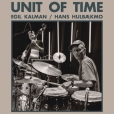
‘Hans Hulbækmo and Egil Kalman have long been a playful and creative rhythm section, with one foot in free jazz and the other in folk music. They’ve played together in the Marthe Lea Band and other projects, and since last year they’ve delved into the folk music of Norway and Sweden — all set in an experimental duo format. Drums and jaw harp (Hans) meet modular synth and double bass (Egil).
‘Unit of Time draws from the rhythmic details of folk music, as the basis for minimalist compositions full of improvisation. It’s not all about the groove, though. Some melodies are interpreted straightforwardly enough, but the unconventional instruments give the music a new depth. Unusual timbres and sonic phenomena emerge, mesemerizingly.’

Jonas Cambien, Magnus Skavhaug Nergaard, Dag Erik Knedal Andersen
The Ear Behind the Airport
Motvind Records
‘Strung between Cambien’s razor-sharp prepared piano, and drummer Andersen’s surgical pointillism, Nergaard grounds the music in fresh bass science. The trio transitions fluently from enveloping drones — drawing from British improv — to ecstatic grooves that nod towards free jazz.
‘Though a debut album, the sound is exceptionally well-balanced. An energised calm fills the music with nerve and momentum, combining contemplativeness and expressivity. An extraordinary sense of consonance and texture creates an inviting tactility; something you can dive deep inside. The music sounds mature, but not remotely complacent. Rough and direct, yet eloquent and generous; both patient and restless, it stands firm.’
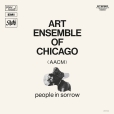
For John Corbett ‘one of the most luminous albums of creative music ever made’, this forty-minute work by the four-piece — Roscoe Mitchell, Joseph Jarman, Lester Bowie, Malachi Favors — is surely the apex of the fourteen studio albums recorded by the Art Ensemble during their two years’ sojourn in France.
‘Still-startling music, which uses space, dynamics, and a wide range of emotions expertly’ (AllMusic).
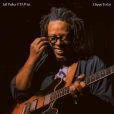
Jeff Parker ETA IVtet.
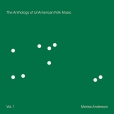
Nine tunes copped from the archives of the legendary 78s collector Harry Smith — ‘pointedly taken from regions shaped by major US conflicts since Anderson’s birth in 1970. While her fascinating liner notes track what is lost and found when trying to translate these compositions, their universal musicality still cuts through. Opener Quodlibet is beautiful: an intricate, minor-key medley of Uzbek tunes originally performed on the dambura (a fretless lute), on which Anderson adds bluegrass techniques to counter her inability to play quarter-tones on her guitar. Her take on a qawwali vocal tune, Hamd, is also a highlight, her stacked guitar layers ringing with warmth and emotion. Gisela Rodríguez Fernández adds violin to Sarvi Simin, a shimmering tune from Soviet-era Afghanistan, while a Yemeni tune, Zar, intended to exorcise evil spirits from the sick, sees Anderson and Fernández constantly rearranging five notes without repetition. Dark ambient moods are also conjured in Pair of Duduk, on which Anderson shifts the drones of Armenian woodwinds on to reverb-heavy guitar and bassy synths, while in Vietnamese tune Whistle Song, transferred from bamboo flutes to electric piano, the composition’s closeness to minimalism sings out.’
Wonderful. Here’s to volume two.

‘The Italian ambient maestro’s 1986 debut, remastered and restored for its 40th anniversary. A peerless infusion of minimal piano, free classical, and balearic new age, Wind is the aural equivalent of swimming alone at night. Housed in a tip-on jacket with the Bear In Heaven issue’s original iconography in reflective silver foil.’