





Your basket is empty

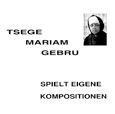
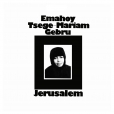
Utterly beautiful solo-piano explorations in African folk, spiritual meditation, Satie-esque classicism and Tatum-esque jazz, by this Ethiopian nun, making her 1963 LP debut, recorded in Germany. Stunning; highly recommended.
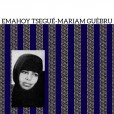
‘Gebru is a true original,’ says Mississippi. ‘Her playing is somewhere between Satie, Debussy, the liturgical music of the Coptic Ethiopian Church, and Ethiopian traditional music. It is some of the most moving piano music you will ever hear! All original compositions available for the first time on vinyl beyond the original early 1960s editions, which are completely impossible to find. Old school tip-on cover with gold foil printing. A must-have masterpiece for anyone who needs some spiritual comfort.’
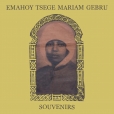
‘Emahoy recorded these songs direct to cassette tape in her family’s home in Addis Ababa in the late 70s. She carried the master tapes with her when she entered permanent exile in Jerusalem in 1985. They stayed in her tiny cell at the Church of Kidane Mehret until her passing, in March 2023, aged 99.
‘I was on my way to see Emahoy and talk about the release of these songs when she passed away. While helping her family clear and pack her belongings, we found the original master tapes, from which this album is produced. Intimate, close, home recordings. You can hear Emahoy’s finger pressing down the stop button, the creak of her piano bench, birds out the window.
‘These are songs of mourning and exile. The Ethiopian Revolution of 1974 had changed her country so radically that Emahoy sang of missing home even though she was still physically in the country.
‘Emahoy wanted badly for these songs to be heard. She was proud of them, and even produced a tiny run of private press CDs sold at the gift shop of the monastery in 2013. But her family and those closest to her advised her against the release, worried about the intense backlash she’d receive for singing as a nun in the conservative Orthodox church.
‘Finally, these recordings get the release they deserve. We hope to do justice to the music and Emahoy’s legacy with this release — packaged in a reflective gold sleeve, with a sixteen-page booklet featuring lyric translations and photos of Emahoy’s life in the monastery in Jerusalem.’
(Cyrus, Mississippi Records).
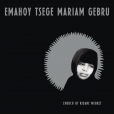
Her 1972 private-press LP, plus two unreleased piano recordings, mapping out a deeply personal take on Ethiopian Church Music.
Here is Emahoy’s most directly sacred and spiritual music-making — and some of her most moving — self-recorded in churches across Jerusalem, on piano, harmonium, and pipe organ.
With extensive biographical notes by Thomas Feng. Beautifully remastered. Old school tip-on jacket with silver-foil stamping. Black or clear vinyl.
Three killers heralding the latest phase of this dazzling expression of a dream Dakar-Berlin nexus. All instrumental — though the opener has snatches of singing — with the vocal versions held back for the album.
The music just gets deadlier and deadlier — harder-boiled and deeper; more focussed, confident and dubwise.
Evoking the ancient cultural legacy of the griots, ‘Walo Walo’ is also the name of the sabar rhythm underlying the opener, which features Ibou Mbaye’s percussive synth-work, Mangone Ndiaye Dieng’s kit-drumming, and Bada Seck’s rigorous jolts of lower-pitched Thiol drum. The ‘Groove’ version is tough as nails; well and truly gnarly.
A tribute to the Baye Fall leader, Ndiguel Groove is a sparse, mellow interpretation of the most traditional cut on the album, showcasing Assane Ndoye Cisse’s insinuating guitar lines, Laye Lo’s super-elasticated snare-drumming, and Bada Seck playing the khine drums associated with the Baye Fall. (Short and wide; lightweight but low-pitched.)
Pretty awesome.
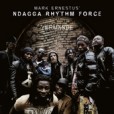
Five years into the project, Yermande announced a thrilling new phase for this Dakar-Berlin collaboration; a giant step forward.
The group of players was boiled down to twelve for recordings, eight for shows; sessions in Dakar become steeply more focussed. ‘This time around I was better able to specify what I wanted right from the initial recording sessions in Dakar,’ says Ernestus; ‘and further in the production process I took more freedom in reducing and editing audio tracks, changing MIDI data, replacing synth sounds and introducing electronic drum samples.’
Right away you hear music-making which has come startlingly into its own. Rather than submitting to the routine, discrete gradations of recording, producing and mixing, the music is tangibly permeated with deadly intent from the off. Lethally it plays a coiled, clipped, percussive venom and thumping bass against the soaring, open-throated spirituality of Mbene Seck’s singing. Plainly expert, drilled and rooted, the drumming is unpredictable, exclamatory, zinging with life. Likewise the production: intuitive and fresh but utterly attentive; limber but hefty; vividly sculpted against a backdrop of cavernous silence.
Six chunks of stunning, next-level mbalax, then, funky as anything.
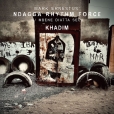
Whoa this record is totally killer.
Intensely concentrated, but with a fresh spontaneity; super-charged with expressivity.
The singing is riveting, diva-esque; the mbalax rhythms are dazzling.
At every turn there are sensational, thrilling injections of Basic Channel and Rhythm & Sound.
Hotly recommended; it’s a must.
Khadim is a stunning reconfiguration of the Ndagga Rhythm Force sound. The instrumentation is radically pared down. The guitar is gone; the concatenation of sabars; the drum-kit. Each of the four tracks hones in on just one or two drummers; otherwise the sole recorded element is the singing; everything else is programmed. Synths are dialogically locked into the drumming. Tellingly, Ernestus has reached for his beloved Prophet-5, a signature go-to since Basic Channel days, thirty years ago. Texturally, the sound is more dubwise; prickling with effects. There is a new spaciousness, announced at the start by the ambient sounds of Dakar street-life. At the microphone, Mbene Diatta Seck revels in this new openness: mbalax diva, she feelingly turns each of the four songs into a discrete dramatic episode, using different sets of rhetorical techniques. The music throughout is taut, grooving, complex, like before; but more volatile, intuitive and reaching, with turbulent emotional and spiritual expressivity.
Not that Khadim represents any kind of break. Its transformativeness is rooted in the hundreds upon hundreds of hours the Rhythm Force has played together. Nearly a decade has passed since Yermande, the unit’s previous album. Every year throughout that period — barring lockdowns — the group has toured extensively, in Europe, the US, and Japan. With improvisation at the core of its music-making, each performance has been evolutionary, as it turns out heading towards Khadim. “I didn’t want to simply continue with the same formula,” says Ernestus. “I preferred to wait for a new approach. Playing live so many times, I wanted to capture some of the energy and freedom of those performances.” Though several members of the touring ensemble sit out this recording — sabar drummers, kit-drummer, synth-player — their presence abides in the structure and swing of the music here…

‘Recorded across East London, South-East Kent and Snaresbrook Crown Court during what is described as “the UK media’s attempt at divining integrity from the orchestrated turbulence of Brexit”, with the record setting out to “juggle the documentation of this particular moment with the desire to discern motivation from despair”. World In Action takes in field recordings, woodwind freakouts and percussion from Valentina Magaletti amongst other elements’ (The Quietus).

D.K. and Low Jack.
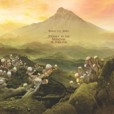
By themselves on the first record; for the second, joined by Evan Parker and Byron Wallen, harpist Tori Handsley and tabla player Sarathy Korwar, and drummer Yussef Dayes. Both sessions were recorded completely live, straight to tape, consolidating the ‘incandescent immediacy’ of the playing. The duo’s ‘soulful tenor sax sermons plus earthily funky drumming, fusing jazz, hip-hop and grime… winningly mix dark, classic Coltrane raptures, infectious hook-rooted rockers and Sonny Rollins-like calypsos. The larger group sets up thrilling rhythm textures merged from Parker’s seamless soprano lines and a chatter of snare drums and tablas; there are atmospheric guitar-like harp figures, and dramatically spontaneous two-tenor tussles’ (The Guardian).
‘CD of the year so far’ (London Jazz News).
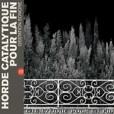
The French avant-garde quartet, four years in, improvising with instruments from Western, African, Middle-Eastern, and Far-Eastern cultures. Recorded for Futura in 1971, this is their sole album. “We just wanted the sound, the raw sound-texture, before being treated and shaped by any cultural code.”
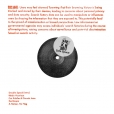
Beautifully constructed Japanese sleeves, letterpress-printed with fluorescent ink; stickered centre-label; riso insert.
Eight charged, intimate meditations by Julie Normal and Olivier Demeaux, playing a rickety ondes Martenot and an old church harmonium.
Gripping, detailed, stately improvisation — a bit like the ùrlars in classical bagpipe music — which nervily mixes the sternly doom-laden with precarious, other-worldly wonderment.
(The ondes Martenot is an amazing twentieth-century instrument — beloved by Messiaen, for example, and Varese. The theme-song of Star Trek is a vocal forgery of its sound. ‘J’aime cette fragilité qui côtoie la capacité de te décoller le tympan sur certaines fréquences inopinément,’ says Julie. ‘Je tiens une bombe dans les mains. J’aime son instabilité, son humanité.’)
Wood, breath, blood, eggshells… on the night of a purple moon.
Very warmly recommended.