

Your basket is empty

Sparky, engaging, inventive kitchen wave — on a mission to connect with you, cheer you up, and make you dance — rolling into TTT by way of Incienso and Workshop.
Also check out Kiki’s online cooking programmes and get pickling.

Magnificent Wolof drum music, performed by an extended griot family in the mystical setting of Lac Rose, outside Dakar.
Doudou Ndiaye Rose — who died in 2015 — is a key drummer in the musical history of the world. He developed a system of five hundred original drumming patterns, ancient and new. Amongst the modern rhythms here is Bench Mi — ‘under the Baobab tree,’ a spot where where problems get solved. Also Hibar Yi — ‘passing on information’ — the theme-tune of Senegalese TV national news for decades — and Les Rosettes, the signature rhythm of Senegal’s first ever all-female percussion group, convened by Doudou, and named after his grandmother.
These original compositions sit alongside important traditional rhythms, familiar to every Sabar player, such as Farwu Jar ( a courtship game sometimes resulting in a wedding), Ceebu Jin (also the name of the national dish of fish and rice), and Gumbé, often played after a successful harvest.
Recorded in joyful single takes, over seven consecutive days in February 2020, with no overdubs, mastered by Rashad Becker, the music is deep and thrilling, polyrhythmic to the bone, with a complex, pointillistic intensity at times evoking Jeff Mills in full flight.
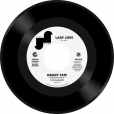
Terrific, propulsive, widescreen version of the Jon Lucien classic, flavoured with Curtis, featuring brilliant percussion by Montego Joe, alongside Ron Carter, Richard Tee, Ron Carter… Plus a Moondance excursion, on the flip.
One for the HJ pensioners massive.
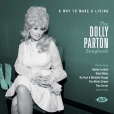
Over the last sixty-odd years Dolly Parton has written almost every major hit she has ever had (and quite a few minor ones, too). Her brilliant songs are covered here by everyone from Betty LaVette and Percy Sledge to Ru Paul and Nana Mouskouri. The booklet has some lovely, rare photos, and rich, track-by-track notes.
Prime Cuts from the legendary Scratch Perverts crew with an upful six-tracker, full of life and intelligence, and teeming with fidgety, DIY, turntablist energy.
For us it’s a bit like a raid on the racks at Honest Jons, over the decades… but fresh and bright. It kicks off with a headlong garbling of eighties jazz-funk, complete with synths, a vocoder, and some incipient Herbie, all sagging woozily into some nuts pitch control, before a mean beat-down. Some dubwise Channel One follows up, with almightily anthemic snatches of melody and unmistakable chords, almost breaking down under a barrage of skittering effects, scratching, laser-fire, strangulated melodica, and cowbell. Then three excursions in classic Detroit techno: moody electro funk, with a sprinkling of Harold Faltermeyer; hard-grooving minimalism, with a dash of It Takes Two; then a more industrial outing, with clattering percussion and gobbling synth. Finally an ambient interlude — overcast but twinklingly ambivalent — to close.
Ace. A lot of fun. Check it out.
The Observer raved about a recent performance of this at the Wigmore Hall: ‘Solo for Cello (and fixed audio) was the highlight, an extensive, ghostly work played by Apartment House’s indefatigable artistic director, Anton Lukoszevieze. Imagine a baroque dance suite — with the familiar figurations of arpeggios, quick finger work and string crossing — played muted and whispered a few galaxies away, and you get the idea.’
The performer of this recording, Anton himself has written that Solo is ‘an extended exploration of the resonant body of the cello, but also a kind of flickering, glitchy and incessant ‘moto perpetuo’ of extreme intensity and a delicate beauty. The cello has a particular scordatura tuning, which creates an enigmatic harmonic ‘space’ to its sounding throughout the work. As the cellist constantly bows the heavily muted cello with varied arpeggiated freneticism, the instrument emits a particular halo of harmonic resonances creating a spectral and ghostly effect, deceptive and illusory. The work gradually morphs into different sections, each with their own particular motivic identity, at times accompanied by an audio playback of various densities. The latter sections of the work have a baroque-like lightness and ornamental quality, but do not allay the dramatic incisiveness of the the work, which ends with a final enigmatic spasm of sounds.’
And the composer Sheen advised the mastering engineer that ‘the cello is muted with a very heavy metal mute which thins out the sound massively, and Anton plays a super-light bow with extreme flautando, which creates a strange thin wispy sound. I’d like it to sound as distant and liminal as possible, with a lot of bow sound and strange resonances from the harmonics of the cello. With the exception of a few obvious spots where it gets louder and fuller, there should be as little ‘core’ to the sound as possible, but as many strange resonances as possible. The words we used a lot of in rehearsals were ‘baroque’ and ‘internal’ and ‘light’. I hope this helps.’
Transfixing, and good for ears; with luminous strands of Marin Marais, Derek Bailey, and Eliane Radigue.
Check it out!
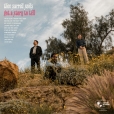
Grieving, hushed, involving music for voices, field recordings, and white noise, performed by Kantos.
A piano quintet composed for and recorded by Apartment House.
‘The instruments are muted and heavily prepared. Players are instructed to perform very quietly with an exaggerated flautando, using as much of the bow as possible while producing minimal sound. Sheen often even asks them to mime. The result is an unsettling disconnect between the intensity of physical exertion and the sound produced’ (Ed Cooper, VAN).
‘Press moves with grossly impoverished intent… trembling and stumbling on the cusp of accident… right on the edge of culture, just before language. Most of the time, it is enough simply to breathe and move: the complexity of these actions alone is astonishing… And then, through the buzz of wood, guts, and bluebottles, a piano appears—all shining lacquer, muscle, and grammar’ (Ed Atkins).
“When people play my violin pieces, I always joke with them that when you start playing them, the audience should feel like they’ve gone deaf or something. The sound is so not there that you should think there’s something wrong for a second…
“It’s so disappointing when you see a bunch of instrumentalists walk on stage and you already know how the piece is going to sound. It’s not what music is about for me…
“The word ‘liminal’ is such a cliché but it’s annoyingly pertinent for my music. Trying to find a sweet spot between states: in between presence and not presence, in between tonality and not tonality, whatever that is, between noise and pitch. I really want things to sit in an uncertain middle ground between everything.”
A terrific, fresh techno EP by Robin Stewart. Minimalist and dubwise, but fizzing with physical energy, and loaded with thrills and spills, like fairground ghost trains clanking and rattling through Rome, at a clip.
Check it out!
‘Regrows dub techno from the seeds,’ says Boomkat, ‘with a set of twisted warehouse melters that apply advanced dub logic to pointillistic technoid rhythms.
‘The off-grid, lolloping kicks are interesting enough on their own, but it’s how Stewart treats them that makes opener Stomach pop, sinking them in swirling, lysergic goop rather than drowning them out with rinsed tape FX. The oscillating, demonic subs that heave just beneath the surface don’t muddy things completely, they crack the sunroof on the top end, letting the industrialized foley clanks and hoarse vocaloid stutters boot us towards an unexpected destination. And although Compact is more trad on the surface — a gated peak-time roller, natch — Stewart’s canny processing makes the kicks tickle more than they thump. Everything builds up to the title track, where Stewart freezes mind-rinsing dissociated echo spirals into their own rhythmic forms that push against the relentless double-time thuds, weaving phantom polyrhythms out of thin air while spectral voices whisper overhead.’

“This is killer,” says Ben UFO.
Four dazzling, extended engagements with mbalax master-drumming.
The contribution from Holy Tongue is chase-the-devil steppers — thumping, clangorous, reverberating — super-charged with energy and atmosphere. From the off, drummer Valentina Magaletti detonates a hard rain of small bombs, rounds of fire, ticking fuses. Musical co-ordinates are somewhere between classic On-U Sound crew like African Head Charge, The Mothmen, and Creation Rebel, and the experimental funk of the Pop Group and 23 Skidoo, at their funkiest. Thrillingly, the two dubs are increasingly deranged.
Adjusting the same wavelengths as her superb Workaround LP, Beatrice Dillon plays spaced-out, abstract synth-work against the bodily physicality of the ancient, shifting mbalax rhythms. The music is poised, mindful, tentative; but also limber, fleet, and magical.
Phantasmagorical and efflorescent, Lamin Fofana’s one-two is simply stunning. Both excursions are wide-open, beautiful, epic, and propulsive — the first mix is banging and headlong, the second more syncopated and serpentine — teeming with freshly sublime, funkdafied updates on Jon Hassell’s Fourth World possible musics.
The two parts of LABOUR’s Etu Keur Gui engage the same sequence of drum patterns (called bakks) from different perspectives. The duo performed portions of this piece at the opening ceremony of the Dakar Biennial in 2022, at the Grand National Theater, with thirty sabar players from the family of Doudou Ndiaye Rose. This Wolof phrase for the inside-yard of a home — a meeting-place, an architectural breather — doubles here as a metaphor for inner space on a metaphysical level; and Pan Sonic, Muslimgauze, Zoviet France, early Shackleton… all ghost across the threshold.