

Your basket is empty

This is fire. Ring the alarm.
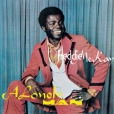
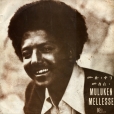
The opener is MM’s first recording, aged seventeen; a 45 on Amha Records. The remainder revives his 1976 LP for Kaifa, produced by Ali Abdella Kaifa aka Ali Tango, and featuring such mainstays of the scene as trumpeter Shimèlis Bèyènè, Dawit Yifru on keys, and the great Tilayé Gèbrè on saxophone and flute. In the teeth of the burgeoning Red Terror of the Derg junta, this LP was the swansong of Swinging Addis, and arguably its absolute masterpiece.
Intense, roiling Ethiopian afrobeat. Utterly killer; hotly recommended.
‘Mariolina Zitta began working with natural sounds at the end of the 1980s, developing a passion for speleology. Her encounter with Walter Maioli was fundamental, guiding and influencing her definitive research into sound archaeology and the primitive sources of musical acoustic phenomena. In these recordings Mariolina conducts a magical ritual as a cave priestess, celebrating the icons par excellence of the mysteries of the night: bats. The specific frequencies of the calls of these fascinating creatures are recorded with special detectors used by ecologists, creating an organic synthesizer. The fusion with the sounds of natural objects (stones, stalactites, logs, bone whistles, Tibetan bells, mouth bows, trumpet shells) and the vocal modulations of harmonic singing allow us to travel into a still unexplored sound dimension, through an evocative experience of total sensory listening. It is an arcane landscape filled with pure vibrations, magnetic resonances and aquatic sounds; an ancestral enchantment on the border between consciousness and dreams, a symbolic liturgy of primordial reverberations, echoes and whistles.’
An edition of 200 copies.
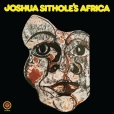
‘Masterful arrangements, inventive rhythms, rich harmonies, and a perfect balance of flute and saxophone interplay. Funk, Jazz, Gospel, Afro, and traditional elements all merge seamlessly into something unique and timeless.’
“South African spiritual funk gem. slick guitar, banks of horns” - Chris Albertyn (Matsuli).
“Dynamic South African funk. An album that will make you want to dance from start to finish” - Franck Descollonges (Heavenly Sweetness).
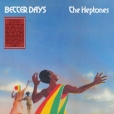
Earl Morgan and Barry Llewellyn joined by Naggo Morris in 1978, with the genius engineer Sylvan Morris and the mighty Niney the Observer at the controls, and a crack band featuring Sly Dunbar. Every Day Life and Mr. Do Over Man Song are crucial, tip-top Heptones.
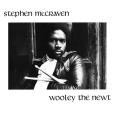
This expert drummer spent long stints with Archie Shepp and Sam Rivers; and he’s played with scores of other jazz greats, like Mal Waldron, Charles Tolliver, Yusef Lateef, Billy Harper, David Murray, and so on. He toured Europe with Marion Brown in 1977 — recording La Placita live in Willisau — and the following year cut Wooley The Newt for the saxophonist’s Sweet Earth label. His son Makaya sampled it recently on We’re New Again, his Gil Scott-Heron rework.
Free, grooving, spiritual jazz. Check it out.
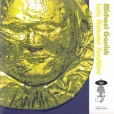
Combining two BBC Radio sessions, recorded at Maida Vale Studios in 1973 and 1978, with Norma Winstone, Henry Lowther, Art Themen, Tony Coe, and the gang.
Eight Garrick originals, including favourites from the Troppo and October Woman LPs, and an early, first showing for River Running and Galilee. Robin’s Rest only appears here.
‘Fabulous,’ says Record Collector.
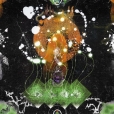
‘Bubbling tones, processed field recordings, and shifting electronic layers evoke the rhythms of atoms, molecules, and micro-organisms.
‘While grounded in experimental technique, The Vertical Luminous avoids the academic or austere, instead embracing a mischievous sense of melody and curiosity - a reminder that exploration and joy can coexist in sound.
‘A record that is both meditative and playful, equally suited to deep listening or casual drift.’
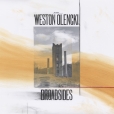
‘A psychoacoustic odyssey through the American South, influenced as much by Dock Boggs as by Luc Ferrari. This isn’t ‘avant-folk’ as per, but more expansive avant-garde compositions using components of traditional music as tools for storytelling. There are banjos, but they bounce around the stereo field in hypnotic patterns; there are autoharps, but they’re bowed, left detuned by time and humidity, and augmented with sounds of screeching cicadas.
‘Check out the haunted, ambient interpretation of the murder ballad Omie Wise, featuring fourteen different versions of the song time-stretched and overlaid with pedal steel by Tongue Depressor’s Henry Birdsey. It’s a wild listen!’

Mental baile future-funk.
Impossibly, round two ratchets through higher gears than round one. The cutting and scratching skills are brutally imperious, by turn eviscerating in split seconds a trembling flock of far-flung musical prey. Out of the wreckage looms the apotheosis of apocalyptic Techno Scratch terror; the ebulliently vengeful prophesy of forebears like Grand Wizzard Theodore and the Knights of the Turntable.
Blisteringly hot.
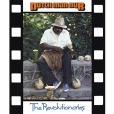
Late seventies; Channel One.