



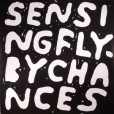

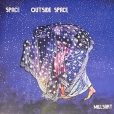

Prime Cuts from the legendary Scratch Perverts crew with an upful six-tracker, full of life and intelligence, and teeming with fidgety, DIY, turntablist energy.
For us it’s a bit like a raid on the racks at Honest Jons, over the decades… but fresh and bright. It kicks off with a headlong garbling of eighties jazz-funk, complete with synths, a vocoder, and some incipient Herbie, all sagging woozily into some nuts pitch control, before a mean beat-down. Some dubwise Channel One follows up, with almightily anthemic snatches of melody and unmistakable chords, almost breaking down under a barrage of skittering effects, scratching, laser-fire, strangulated melodica, and cowbell. Then three excursions in classic Detroit techno: moody electro funk, with a sprinkling of Harold Faltermeyer; hard-grooving minimalism, with a dash of It Takes Two; then a more industrial outing, with clattering percussion and gobbling synth. Finally an ambient interlude — overcast but twinklingly ambivalent — to close.
Ace. A lot of fun. Check it out.
The CD is newly remastered, adding three out-takes and two alternate versions.
‘Malombo music is an indigenous kind of music,’ says Lucky Ranku. ‘If you listen to it, you can feel that it can heal you, if you’ve got something wrong. It’s healing music.’
Lucky was one of the greatest African guitarists of his generation. The deep and hypnotic Down Lucky’s Way was the Jazz Makers’ third album. Recorded in 1969, it was the first to feature additional instruments, and the first to feature Abbey Cindi on soprano saxophone as well as flute. But more than anything else, Down Lucky’s Way is a transfixing showcase for Lucky Ranku’s sui generis guitar virtuosity.
Quite different from their previous recordings, the album shifted the Jazz Makers’ sound toward mesmerising, extended compositions, layered by organ bass and guitar overdubs. Of all the Malombo Jazz Makers recordings, Down Lucky’s Way is the deepest of mood, and the richest of vision.
The most rare, too: it may not ever have been properly issued. Original copies are outrageously scarce — only a few are known among collectors. Prior to this reissue, Lucky was unaware it had ever been released, and had never seen a copy.
Luminessence series.
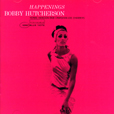
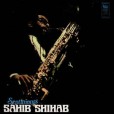
His third Blue Note as leader, in 1964, with Kenny Dorham, McCoy Tyner, Richard Davis and Elvin Jones. Rhythmically rooted in Trane, unsurprisingly, but Dorham and especially Henderson go their own searching, purposeful ways. The first three are his own compositions. Ace.
‘Son of Maalem Mahmoud Guinia, Maalem Houssam Guinia is one of Morocco’s most exciting young Gnawa masters.
‘Dead of Night was recorded live on the night of 3rd January 2022, in a relaxed session in a Casablanca residence. It captures Houssam at his most natural, singing and playing the Gnawa songs that have been with him since his birth, completely solo and free without percussion or backing vocals. Houssam says these are the songs he knows best; the music his father would play and sing late into the night in their home when he was an infant.
‘Raw, deep, spiritual Gnawa in its purest form.’
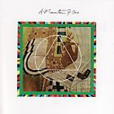
The first-ever vinyl reissue of this ravishingly beautiful private press album from 1988; Agustín’s most sought-after LP.
‘By now, Agustín had established himself as one of Argentina’s foremost interpreters of Brazilian music. The seventies brought success with his group Candeias, and recognition in Brazil, where he formed friendships and collaborations with luminaries such as Vinicius de Moraes, Baden Powell, Dorival Caymmi, Toquinho, and Maria Bethania. Following the era of dictatorship in South America, Agustín spent the late seventies and early eighties living and touring in Norway, during European travels with his quartet.
‘Recorded after returning to his native Buenos Aires — and featuring a team of crack Argentinian musicians, including drummer Osvaldo Avena, flautist Rubén Izarrualde, and saxophonist Bernardo Baraj — Puertos de Alternativa emerged from this confluence of diverse experiences, contexts, and influences. It begins rooted deeply in South American soil, drawing clear inspiration from Brazilian guitar masters like Heitor Villa Lobos, Garoto, and Baden Powell. But a sense of journey unfolds, evoking new landscapes and horizons — from the crystalline beauty of glacial Norway to the gentle currents of the Rio de la Plata.’
Patti Smithed. ‘Lyrically, stylistically and musically, this is a fearless, soon to be classic post-punk rock and roll record that delivers the goods from start to finish.’
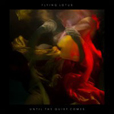
‘A maze of spirituals, on four levels. Ritual prayers, blues laments, vestal hymns and jubilant benedictions hearkening back to the esoteric balladry of This Coming Gladness, the native rhythms of Blood Rushing, the somnambulist waltzes of I’m A Dreamer, and the Shaker primitivism of Hazel Eyes, I Will Lead You. Self-accompaniment on guitar, piano, organ, harp and autoharp, with Victor Herrero (lead guitars), Gyða Valtýsdóttir (cello), Chris Scruggs (pedal steel) and Jon Estes (bass), as well as cameos by members of The Cherry Blossoms and others.’
Clear vinyl.
This is terrific. Rawly soulful trio jazz.
‘There’s no denying the expressiveness of Jones’ music. His sustained, lancing high notes, coarse overblowing and strategically managed vibrato can signify open pain and more complex syntheses of emotion. On No More My Lord, the sole cover in an otherwise original sequence of compositions, bassist Chris Lightcap’s bowed bass and Gerald Cleaver’s scrabbling percussion amplify the dolour and desperation in his playing…’ (The Wire).
Burial Mix numbers 6 to 12: classic after classic, like King In My Empire, Queen In My Empire, We Been Troddin’...
Classic Vinyl Series.
‘Classic Vinyl’ series.