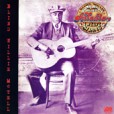



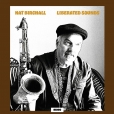

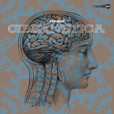
His first quartet session as leader — with Herbie, Joe Chambers and Bob Cranshaw. Seven BH originals and Maiden Voyage. A kind of breather, in amongst his experiments at this time; relaxed, gorgeous and atmospheric, with brilliant playing.
Warmly recommended.
‘Classic Vinyl series.’
The trio of Roland P. Young, Aisha Khalil and Glenn Howell, recorded in 1975 at 1750 Arch, in Berkeley, California.
“There was a vibe in the air that we connected with,” recalls Young, “along with other kindred spirits world-wide. What appeared to be ‘experimental’ was reaching for sounds and emotions that were unfamiliar. We often performed at rallies in support of various causes: Black Liberation, Women’s Movement, Anti-War Movement, Gay Liberation. While the music came out of the Black Liberation struggle our ultimate goal was a blending of cultures.”
‘A fascinating glimpse of the trio in action. It testifies to the energy that Infinite Sound channelled into their music, but also to their imaginative breadth and expressive versatility… with Howell’s buoyantly springy and resilient bass taking on a strong pivotal role around which Young’s horns and Kahlil’s voice dance and spar and soar and play. Well-defined rhythms dissolve into textures; melodic shapes soften into shadings of timbre or flare into exuberant bursts of tonal colour. The music’s mood swings unpredictably from flamboyance to introspection; pacing shifts spontaneously from languor to urgency. Moments of musical allusiveness, sly quotation or stylistic reference, mutate into passages of wild inventiveness.’
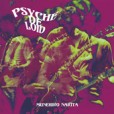
Eighteen freeform electronic miniatures by Lorenz Lindner — aka Mix Mup — after his love of experimental ambient and soundtrack idioms.
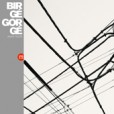
The legendary Library album by Sandro Brugnolini and Stefano Torossi, undercover in 1975 for contractual reasons.
Bad-ass headz vibes — madly sampledelic, super-funky, jazzy and widescreen — with the genies of Herbie, Barry White, Isaac Hayes and the Mizells, all in the mix.
The French avant-garde quartet, four years in, improvising with instruments from Western, African, Middle-Eastern, and Far-Eastern cultures. Recorded for Futura in 1971, this is their sole album. “We just wanted the sound, the raw sound-texture, before being treated and shaped by any cultural code.”
Cornerstone experimental music, from 1966.
‘Nostalgic testament to the interaction between the experimental avant-garde and the countercultural underground, the album was originally released on Elektra, recorded by Jac Holzman (the label’s founder, responsible for signing The Doors, Love, and The Stooges) and produced by DNA, a group that included Pink Floyd’s first manager, Peter Jenner (PF’s track Flaming is a tribute to the first side here)... Long tones sit next to abrasive thuds, the howl of uncontrolled feedback accompanies Cardew’s purposeful piano chords, radios beam in snatches of orchestral music… AMM sought to develop a collective sonic identity in which individual contributions could barely be discerned. Numerous auxiliary instruments and devices, including radios played by three members of the group, contribute to the sensation that the music is composed as a single monolithic object with multiple facets, rather than as an interaction between five distinct voices.’
Expert dubs by Prince Jammy.