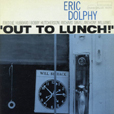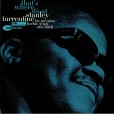

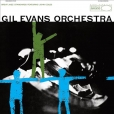
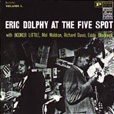
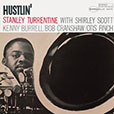
Totally unmissable just for the opener, a killer, 15-minute version of Arlen’s show-tune Out Of This World — drums and bass locking it down, Trane taking flight. From 1962, between Ole and Impressions.
Warda Ftouki is one of the great Arab divas of the twentieth century.
Aka Warda Al-Jazairia, Warda the Algerian was forced to leave Algeria in 1956, when FLN guns were discovered in her dad’s nightclub. (Warda was a lifelong, unflinching supporter of independence.)
Aged twenty, now singing in Beirut cabarets, she became the protege of Mohammed Abdel Wahab. Returning to Algeria after independence in 1961, she took a ten year break from singing, because this was forbidden by her new husband. She left him in 1972, moving to Egypt, where she married Baligh Hamdi.
Here she is in 1973, singing a composition by Hamdi, backed by a full Egyptian orchestra, including electric guitar and organ, in front of a euphoric, adoring crowd.
Wonderful music — swirling and grooving with dazzling virtuosity; imperiously funky and giddily soulful.
Driving, rawly soulful kologo music from northern Ghana, propelled by double-stringed lute.
African Head Charge front man Bonjo Iyabinghi Noah guests.
Putoo Katare Yire, Wickedness Has No Home.
Terrific.
‘The first thing is how unhinged it all sounds. The album brews and boils with an ominously dark tone in a desolate space, dense with energy, guitar overdriven past the point of sanity, slamming drum accents, vocals cutting through in what seems to be comprised of another, as yet unheard, language. Yet, inside the apparent wild abandon and destruction is a strict internal logic of construction that unveils itself upon listening…’ With Noel Von Harmonson from Comets On Fire on drums, and Rob Fisk from Badgerlore sharing the bass-playing with San Francisco psych legend Charlie Saufley.
Ndikho Xaba was born in 1934 in Pietermaritzburg, KZN, South Africa: for thirty-four years — 1964 –1998 — he lived in exile in the US, Canada and Tanzania. Originally issued by Trilyte Records out of Oakland, California, this 1970 recording is bracing, freewheeling Now Thing, suffused with SA idioms, and focussed by a political urgency wiring together US Black Power, Black Aesthetics and the anti-apartheid front-line like nothing else. You can hear Trane from the off — ‘a spiritual offering to my ancestors’ — and plenty of Sun Ra, with whom The Natives several times shared double-bills. Freedom is a gutbucket-soul rendition of the people’s anthem; that’s Plunky from the Oneness Of Juju playing saxophone on Nomusa; the thunderous finale features drummer Keita from the West Indies, and Baba Duru, who studied percussion in India, before winding up with Xaba blowing eerily through a horn made from a giant piece of tubular seaweed.
Andaleeb Wasif was a self-taught singer and harmonium player, born in Hyderabad, India, in 1928.
Here are six ravishing ghazals, setting some of the greatest Urdu poetry of the twentieth century, about love and longing.
Enigmatic, filled with pathos, timeless.
Her 1967 album of duets with Jacques Higelin, retaining arranger Jimmy Walter from her debut, the previous year. Two songs here — La Grippe and Maman — became centrepieces of the duo’s stage musical, Maman J’ai Peur.