







Your basket is empty


The Upsetter’s imperious do-over of the almighty Skylarking rhythm, featuring himself alongside Winston Blake at the microphone, berating people for having fun in public. (‘Sylvester the jesterer from Manchester’, you know who you are.)
Contrastingly backed with Jimmy Riley in a sombre mood, c&w soul style, over a bare-bones reworking of the People Funny Boy rhythm.
Unmissable, obviously.

‘The AS Colour Heavy Faded Tee, crafted from 100% carded cotton for durability and comfort. With a heavy 240 GSM weight and garment dyed finish, it features a boxy relaxed fit, dropped shoulders, and twin-stitched wide neck ribbing.’
Click through the image for a size guide.

Top-quality AS long-sleeve tees, expertly printed. The colours zing.
‘Heavy weight, 240 GSM, 16-singles, 100% carded cotton. Dropped shoulders, side neck ribbing with twin stitching, cuffed sleeves, side seamed, shoulder to shoulder tape, double needle hems, garment dyed, preshrunk to minimise shrinkage.’
Relaxed fit; very generous sizing. Click through the image for a size guide.
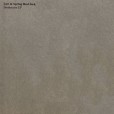
‘An extraordinarily lush, poignant collaboration… Bombscare bleeds mood, space, and texture as sounds ring out and echo into the distance. Hand So Small works like a literate lullaby as musical flourishes appear from thin air, a piano haunts the outskirts of the song, and Alan Sparhawk and Mimi Parker take turns singing about life “getting smaller.” So Easy (So Far) is perhaps the most traditional Low song, but Spring Heel Jack manages to make the band sound like they’re singing modern day Brothers Grimm tales. Way Behind is a stunning closer. It’s a truly exhilarating song that sounds like it was recorded in heaven, as Parker and Sparhawk again take turns singing angelically that they’ve left someone “way behind” over a jazzy electronic stew full of subtle found-sounds…
‘It’s too bad the collaborators didn’t compile an entire album’s worth of material, as these sixteen minutes seem magically fleeting. Bombscare couldn’t be a more superb collaboration between these innovative artists’ (AllMusic).
First reissue of the original release in 2000.
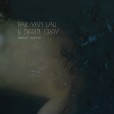
The basis of these works is a set of scintillating, widescreen improvisations by the Brussels-based pianist Pak Yan Lau (prepared piano, toy pianos, synth, objects and electronics) and Darin Gray (bass, preparations, objects and electronics), who has played alongside Jim O’Rourke for twenty years.
Over time Pak Yan added, layered, twisted, subtracted… including a recording of the underground tram in Albert, Brussels, for example. “I frequent this station all the time,” she says, ‘because my daughter goes to kindergarten there. One day there was an electricity problem, the whole station was humming, beautiful overtones coming out.”
“I liked the contrast between trudge (meaning you kind of move forward with difficulty and obstacles on your feet) and lightly (even in that situation doing it gracefully and lightly). The music on this record has that light/dark–ness.”
‘Mesmerising, fresh, inventive and intense,’ writes Stef Gijssels for The Free Jazz Collective.
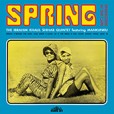
The landmark 1968 debut recording of pianist Ibrahim Khalil Shihab, aged twenty-two; also featuring terrific young saxophonist Winston ‘Mankunku’ Ngozi, Coltrane acolyte, on the verge of huge acclaim for his LP Yakhal’ Inkomo.
Scandalously, Paypal blocks anyone trying to buy this from us, because of the artist’s Arabic name.

Sensational French-language do-over of the 45 Faybiene had recently cut for Jack Ruby (following up her hit Prophecy), before moving in 1977 from Kingston to Montreal with Joe Cooper (who plays organ on Police & Thieves).
Zonked, sublime and rugged like Half Moon in Toronto, with a crazy whistling effect throughout, and spaced-out dub.
Bim.
Faybiene Miranda was one of a kind — a Joni Mitchell fan from Panama City who co-published with Mutubaruka. Soon after Tropical Energy broke up she toured the UK with Benjamin Zephaniah, reading her poetry. Before her death in 2013 she was living in Brooklyn, amongst Steel Pulse crew.
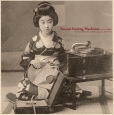
A miraculous bouquet of gagaku, shakuhachi, shamisen, storytelling, folksong and more, including the first commercial recordings in Asia.