




Your basket is empty

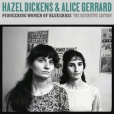
Their first two, groundbreaking Folkways LPs, plus a previously-unreleased go at the Louvins’ Childish Love. Decent booklet, with various essays and great photos.
‘When those albums first came out, I was disappointed with the quality of the sound,’ writes engineer Peter Siegel. ‘I think the new masters better capture the essence of Hazel and Alice’s music, and sound more like the traditional bluegrass style that these performances represent.’
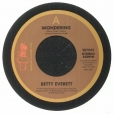
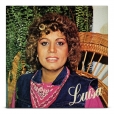
Gorgeous, wistful, tentative two-step from her late, hard-to-find, 1974 LP Love Rhymes (with production by Johnny Guitar Watson and David Axelrod).
Bim.
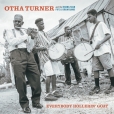
‘The trance blues stylings of Otha Turner and his Rising Star Fife And Drum Band should be a music classification unto itself, a whole new primitive take on drum and bass. This music is the oldest still-practiced post-colonial American music, and Turner was one of its greatest artists of the 20th century. Blowing the cane fife with a band of drummers as back up, The Rising Star Fife And Drum band was legendary in the hills of Tate County, Mississippi, where they would perform during the yearly goat picnics on Turner’s farm. These tracks were recorded by Luther Dickinson during such picnics and released when Turner was ninety years old. Everybody Hollerin’ Goat shows firsthand the hypnotic and rhythmic style of fife and drum music at its best — raw and beautiful. It is every bit as essential a document of America’s folk-music heritage as anything Harry Smith or Alan Lomax ever offered up for posterity. This first ever vinyl release of Everybody Hollerin’ Goat contains a whole side of unreleased recordings from one night of the picnic and is intended to bring the experience of hollerin’ for goat in Senatobia, Mississippi to the living room. Dancing around the plants is recommended (but don’t eat the pickled eggs).’

Four albums: Barrington Levy, Bounty Hunter; Cocoa Tea, Weh Dem A Go Do; Sound System and Dancehall Rockers, both by Charlie Chaplin. Plus extras.
‘Masses is an utterly unexpected, and utterly gripping, collaboration between the East London duo, Spring Heel Jack, and a group of top-flight improvisers, drawn largely from New York’s ascendant free jazz network but also including Evan Parker and microtonal violinist Matt Maneri.
‘If there are precedents for this particular mix, in which studio-processed audio environments are played back in real time as the triggers for, and fixed components in, a series of group improvisations, they feel few and far between. George Rusell’s 1967 Electronic Sonata For Souls Loved By Nature, Bob Ostertag’s Say No More Project, and some of Evan Parker’s explorations in the realm of synergetic electroacoustics provide three possible and very different models. But as Matthew Shipp points out, Masses ‘creates its own space and time’.
‘Masses opens a tunnel on a space where matter and anti-matter can co-exist without the vernacular power of either state being compromised or diminished. It is a total triumph.’
(The Wire).
Recorded in 1999 in NYC, with Matt Shipp, Roy Campbell, Matt Manieri, William Parker, and co.

Poor Isa — Ruben Machtelinckx and Frederik Leroux — playing woodblocks and prepared banjos; joined by Evan Parker, and Norwegian percussionist Ingar Zach.
Wonderful, moody, questing music, beautifully presented, in thick grey cardboard sleeves with foil stamping. Hand-numbered second edition of one hundred copies.
Strongly recommended.

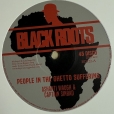
One of the top, top Barringtons on Jah Life. Heavy Channel One rhythms, each quite different; with banging dubs.
Barrington has a rather general go at his dad, mister One-Foot. ‘You are my father, so give me tings, give me tings.’ ‘You don’t buy me no shoes so I can do the boogaloo.’
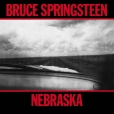
‘Gathers revelatory unheard material from this prolific period including the fabled Electric Nebraska sessions with the E Street Band and solo home and studio recordings, joined by a 2025 remaster of the original album, plus a new performance film of all ten Nebraska songs played in sequence.
‘Springsteen’s 1982 acoustic masterwork is augmented by seventeen contemporary recordings (fifteen previously unreleased) that were part of the groundswell of inspiration that shaped Nebraska and share its haunting themes.’