
Your basket is empty


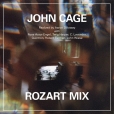
Ed Sanders founded a magazine called Fuck You (in 1962), a radical bookshop on the Lower East Side of NYC, named Peace Eye, and The Fugs.
This is a kind of incantatory left-anarchist history lesson, with interjections on a small keyboard called a pulse lyre, which he invented and built himself. It’s droll, epic, engaging, stirring; warmly recommended.
Presented in a beautiful gatefold sleeve, with lyric sheet.
‘Many mayhemic forces were set against the socialist zone…’
The full 12:45 John Morales mix.

With the Loose Lips MC in full flow, and complete with a Spinna house version. On percussion, Miguel Fuentes brings classic Philly vibes courtesy of the MFSB family.
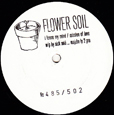
Top-notch deep house in a limited, one-sided, numbered edition, the flip silk-screened.
‘When Salsoul boss Ken Cayre handed over the multi-track tapes of Hit and Run to Walter Gibbons in 1976, the burgeoning art-form of the disco edit was liberated from its previous cut & paste routine. Following on from the likes of Grasso, Burgess, Levan, Scott, and Siano, Gibbons had become a lethal beat mixer, with an ‘uncanny sense of mixing that was so accurate it was unbelievable’, according to Francois Kevorkian. After early edit work with Salsoul releases Nice ’N’ Naasty and Salsoul 2001, Gibbons had established himself as a meticulous artist, able to completely rework existing tracks into new extended amalgams of rhythm and sound. Cayre’s multi-tracks conferred the ability to thoroughly deconstruct each of the songs elements, and Gibbons transformed the cut into an eleven minute opus which fellow tape pioneer Tom Moulton would distinguish as being ‘so different from the original that it must be classified as a new record.’ The resulting 12” would go on to sell 300,000 copies; DJs and the dance-floor would now dictate runnings as never before.
‘Whilst Gibbons transformed the original by banishing the strings and brass, Joe Claussell sets out for a different horizon entirely. The lead guitar is exchanged for a clean, chopped chucking; the vocals are promoted to a new spaciousness. The horns presage a rethinking of the rhythm, and by the time the familiar fuzz guitars are welcomed back, the coalescing orchestra has been sustained and revitalized in a complete surrender to time and pulse. As Holloway’s vocals are pulled into non-semantic expression, the track’s foundation is given a final rinse and farewell, before evaporating in delay. This is an iteration every bit inspired and fresh as Gibbons’ landmark mix.’

Crafted, varied EP from Kenneth Lay and Jason Carr, out of the Metasplice milieu in Philly. A couple of ant nests, a droner with an mbalax tic, and a monster-crunchy, sun-up soundscape. Boot cyan lean.
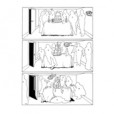
None other than Blawan on his lonesome ownsome — after collaborations with Pariah as Karenn, and Surgeon as Trade — returning to the blood-drenched scene of his heinous Why They Hide Their Bodies.
New name, new sound; heavier and slower than his Ternesc output. The title track is the banger. Acid techno — deliberate, widescreen and ominous.
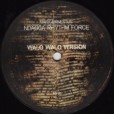
Three killers heralding the latest phase of this dazzling expression of a dream Dakar-Berlin nexus. All instrumental — though the opener has snatches of singing — with the vocal versions held back for the album.
The music just gets deadlier and deadlier — harder-boiled and deeper; more focussed, confident and dubwise.
Evoking the ancient cultural legacy of the griots, ‘Walo Walo’ is also the name of the sabar rhythm underlying the opener, which features Ibou Mbaye’s percussive synth-work, Mangone Ndiaye Dieng’s kit-drumming, and Bada Seck’s rigorous jolts of lower-pitched Thiol drum. The ‘Groove’ version is tough as nails; well and truly gnarly.
A tribute to the Baye Fall leader, Ndiguel Groove is a sparse, mellow interpretation of the most traditional cut on the album, showcasing Assane Ndoye Cisse’s insinuating guitar lines, Laye Lo’s super-elasticated snare-drumming, and Bada Seck playing the khine drums associated with the Baye Fall. (Short and wide; lightweight but low-pitched.)
Pretty awesome.
‘An extraordinarily lush, poignant collaboration… Bombscare bleeds mood, space, and texture as sounds ring out and echo into the distance. Hand So Small works like a literate lullaby as musical flourishes appear from thin air, a piano haunts the outskirts of the song, and Alan Sparhawk and Mimi Parker take turns singing about life “getting smaller.” So Easy (So Far) is perhaps the most traditional Low song, but Spring Heel Jack manages to make the band sound like they’re singing modern day Brothers Grimm tales. Way Behind is a stunning closer. It’s a truly exhilarating song that sounds like it was recorded in heaven, as Parker and Sparhawk again take turns singing angelically that they’ve left someone “way behind” over a jazzy electronic stew full of subtle found-sounds…
‘It’s too bad the collaborators didn’t compile an entire album’s worth of material, as these sixteen minutes seem magically fleeting. Bombscare couldn’t be a more superb collaboration between these innovative artists’ (AllMusic).
First reissue of the original release in 2000.
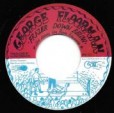
Rupie Edward’s wise and witty account of the 1973 Foreman-Frazier fight in Jamaica, over his own deadly Down Below rhythm, with tasty dashings of Errol Dunkley, and the influence of Lee Perry in full effect. Pure vibes.
Featured in its instrumental glory on the flip, the rhythm appealed so much to Coxsone Dodd that he bootlegged it.
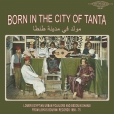
‘Egypt’s ‘official’ popular music throughout much of the twentieth century was a complex form of art song steeped in tradition, well-loved by the middle and upper classes. The music business was highly structured and professional; centred in Cairo. However, far from the metropolis, to the north and northwest, in towns like Tanta and Alexandria and extending across the Saharan Desert to the Libyan border, a raw, hybrid shaabi/al-musiqa al-shabiya style of music was springing up, supported by small, upstart labels.
‘This compilation covers the full range of styles presented by the short-lived but fecund Bourini Records, launched in the late 1960s in Benghazi, Libya. Gobsmacking moments include Basis Rahouma’s transformation into a growling, barking man-lion, and Reem Kamal’s onwards-and-upwards hand-clapping party banger, with a grooving nihilistic dissonance reminiscent of the Velvet Underground. The thorough-going contrast with mainstream Egyptian popular music is stark in Ana Mish Hafwatak, its vocal woven deftly through a constant accordion drone, and the sparse, slow-burning lament Al Bint al Libya. Whereas the mainstream was aspirational, projecting Egyptian culture at its most refined, the performances captured by Bourini were authentic expressions of ordinary, everyday life. More than half a century old, this music has lost none of its urgency, presence, or relevance.’
We ship worldwide. The postage rates for your order are displayed before payment, which is processed using Paypal. You can pay using your Paypal account or any of the following cards. No need to join Paypal.