





Your basket is empty

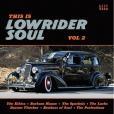
Another knockout diggers’ selection of sweet, stately soul music; heavy on the hurt and harmony, just like its predecessor.
Both volumes are stuffed with killlers, and hotly recommended.
Terrific.

‘The first in a new series from Jazzman featuring the lowest of the lowball schlock n’ roll 45s never known to exist! No box untouched, no crate unrummaged, no pile unpilfered! Just the greasiest and grimiest, the most shocking and sordid 45s… like The Zombie Walk, Night Sweats, The Chiller, The Prowler, and Screaming Vampire! By combos like The Sadists, The Monstrosities, The Nightmares, The Gravestone Four… Putrid pieces of raucous rot n’ roll.’

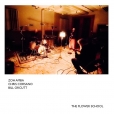
‘Back to the core formation of Lisa Alvarado on harmonium, Mikel Patrick Avery on drums, Jason Stein on bass clarinet, and composer/multi-instrumentalist Joshua Abrams on guimbri, for one continuous 37 minute composition across a single LP.
‘This time around, Abrams has pushed post production techniques found only sporadically on earlier NIS records deep into the heart of the music, distorting and reshaping instruments to mutate timbre and texture, color and time.
‘Refracting the band’s signature mesmerizing chains of overlapping rhythmic patterns through the sonic funhouse of dub makes Perseverance Flow the most formally experimental NIS album to date.’
“I imagine Perseverance Flow like a live extended realization of a Jaylib lost instrumental as remixed by Kevin Shields,” says Abrams. “Or vice versa. I also think it has sympathies with some of the more rhythmically intricate dance musics out of Chicago and Lisbon… Perseverance Flow is skipping rope in slo-mo. A dance of co-operation to rally guts and humors and keep marching through pouring tears.”
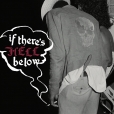
‘This thirteen-track compilation exhumes forgotten brilliance from the Afroamerican underground of the 1970s. Awash in fuzzed-out guitars, wah-wah pedals, lysergic-soaked grooves, and enough inflation depression to fill the tank of a shag wagon, If There’s Hell Below imagines a world where Hendrix lived on and Funkadelic never crawled out of the garage.’
Transparent red vinyl.
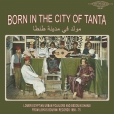
‘Egypt’s ‘official’ popular music throughout much of the twentieth century was a complex form of art song steeped in tradition, well-loved by the middle and upper classes. The music business was highly structured and professional; centred in Cairo. However, far from the metropolis, to the north and northwest, in towns like Tanta and Alexandria and extending across the Saharan Desert to the Libyan border, a raw, hybrid shaabi/al-musiqa al-shabiya style of music was springing up, supported by small, upstart labels.
‘This compilation covers the full range of styles presented by the short-lived but fecund Bourini Records, launched in the late 1960s in Benghazi, Libya. Gobsmacking moments include Basis Rahouma’s transformation into a growling, barking man-lion, and Reem Kamal’s onwards-and-upwards hand-clapping party banger, with a grooving nihilistic dissonance reminiscent of the Velvet Underground. The thorough-going contrast with mainstream Egyptian popular music is stark in Ana Mish Hafwatak, its vocal woven deftly through a constant accordion drone, and the sparse, slow-burning lament Al Bint al Libya. Whereas the mainstream was aspirational, projecting Egyptian culture at its most refined, the performances captured by Bourini were authentic expressions of ordinary, everyday life. More than half a century old, this music has lost none of its urgency, presence, or relevance.’
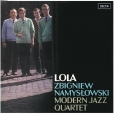
From 1964, a fresh, invigorating, up-for-it, personal take on happening US jazz — Coltrane in particular — blending in themes from Polish folk music. Try the rollicking Piatawka, with its evocation of highlander bagpipes. Scorcher!
Multi-instrumentalist Namyslowski was an alumnus of Krystof Komeda’s ground-breaking quintet. In the early sixties, he formed the Jazz Rockers with Micha Urbaniak, and in 1962 both joined The Wreckers, playing the Newport Jazz Festival. In 1964 his own Modern Jazz Quartet toured throughout England, Scotland, and Wales. “We had songs like Piatawka in the programme, inspired by Polish mountain folklore… These were the forms that had never been heard there before… Not only was I a musician from behind the ‘Iron Curtain’, but it also turned out that this musician had his own voice and showed something innovatory.”
Pianist Wlodzimierz Gulgowski plays a blinder, too; nodding to both Chopin and Mal Waldron. (A decade later he hooked up with Urbaniak, for the LPs Fusion III and Funk Factory.)
Lola was recorded in London; produced by Mike Vernon, who founded the Blue Horizon label, and produced Fleetwood Mac and David Bowie, amongst others. For the cover shot, Decca commissioned the same photographer as for the first Rolling Stones LP, to follow suit. “We are in the same sweaters from Marks & Spencers, only each in a different colour.”