







Honest Jon's has enrolled with the European Union 'Import One-Stop Shop'. For EU customers, this means that you will not be charged any additional VAT or duty, nor any handling fees. No further costs.

Routinely passed over, King Edwards ska is for the gods, so a phase of Dub Store reissues is a mouth-watering prospect.
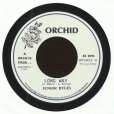
This opening salvo is low-slung, moody, trombone-led fire.
The leader usually goes by the diminutive Ron, reserving Ran and Rad for his Pantomine sides. He was an Alpha Boys alumnus, a Soul Brother after Don D’s departure, and an Upsetter for Blackboard Jungle.
Wayne and Larry Douglas’ flip is the A-side of the original Rio 45, in 1965: a stomper illumined with sweet lyrics about suffering, gratitude, and fidelity.
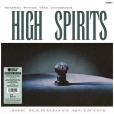
Five-star business. With James Spaulding, Freddie Hubbard, Herbie Hancock, Ron Carter and Joe Chambers, in 1965. The first side is all Hutcherson compositions — including Little B’s Poem, his lovely signature tune, written for his toddler Barry — the second all Chambers’, more abstract and reaching.
This landmark album by Donato Dozzy and Neel in full on vinyl for the first time.
‘One of the most pure and absorbing listening experiences in techno… a touchstone in ambient techno, reshaping the global landscape of hypnotic and atmospheric electronic music… A decade on, its quiet intensity, musical storytelling and slowly unfolding tension remain in a class of one. Each sound is meticulously designed and placed, and the spaces left behind are just as important in conveying such a captivating mood and emotion. Rather than traditional kick drums, hi-hats or snares, this is music crafted from layers of real-world sound — dripping water, chirping birds, rustling leaves or a distant breeze — and it’s that which defines the album’s organic allure. From deeply contemplative to cautiously optimistic, pastoral organic scenes to more underwater worlds, Voices From the Lake is a cohesive collection of tracks that add up to one inseparable whole.’
‘In the thirteen years since Voices From The Lake I, the duo has performed worldwide, released a handful of EPs, worked on installations, and founded record labels, all while continuing to refine the project’s unique identity. Its core has always been its deep, aqueous approach to sound, a sensibility that returns in full force on II. “The project was never meant to become what it did. At one point, we even paused it. Only to later embrace it in all its forms. II is both a continuation and a reinvention.” True to that spirit, Voices From The Lake have explored extremes in recent years, from high-tempo live sets to seated listening concerts, while remaining anchored in the meditative pulse of ambient techno. II extends this lineage, carrying forward the immersive sound design and boundary-pushing vision that has defined their work from the beginning.’
Nine tunes copped from the archives of the legendary 78s collector Harry Smith — ‘pointedly taken from regions shaped by major US conflicts since Anderson’s birth in 1970. While her fascinating liner notes track what is lost and found when trying to translate these compositions, their universal musicality still cuts through. Opener Quodlibet is beautiful: an intricate, minor-key medley of Uzbek tunes originally performed on the dambura (a fretless lute), on which Anderson adds bluegrass techniques to counter her inability to play quarter-tones on her guitar. Her take on a qawwali vocal tune, Hamd, is also a highlight, her stacked guitar layers ringing with warmth and emotion. Gisela Rodríguez Fernández adds violin to Sarvi Simin, a shimmering tune from Soviet-era Afghanistan, while a Yemeni tune, Zar, intended to exorcise evil spirits from the sick, sees Anderson and Fernández constantly rearranging five notes without repetition. Dark ambient moods are also conjured in Pair of Duduk, on which Anderson shifts the drones of Armenian woodwinds on to reverb-heavy guitar and bassy synths, while in Vietnamese tune Whistle Song, transferred from bamboo flutes to electric piano, the composition’s closeness to minimalism sings out.’
Wonderful. Here’s to volume two.
‘Strung between Cambien’s razor-sharp prepared piano, and drummer Andersen’s surgical pointillism, Nergaard grounds the music in fresh bass science. The trio transitions fluently from enveloping drones — drawing from British improv — to ecstatic grooves that nod towards free jazz.
‘Though a debut album, the sound is exceptionally well-balanced. An energised calm fills the music with nerve and momentum, combining contemplativeness and expressivity. An extraordinary sense of consonance and texture creates an inviting tactility; something you can dive deep inside. The music sounds mature, but not remotely complacent. Rough and direct, yet eloquent and generous; both patient and restless, it stands firm.’
‘Hans Hulbækmo and Egil Kalman have long been a playful and creative rhythm section, with one foot in free jazz and the other in folk music. They’ve played together in the Marthe Lea Band and other projects, and since last year they’ve delved into the folk music of Norway and Sweden — all set in an experimental duo format. Drums and jaw harp (Hans) meet modular synth and double bass (Egil).
‘Unit of Time draws from the rhythmic details of folk music, as the basis for minimalist compositions full of improvisation. It’s not all about the groove, though. Some melodies are interpreted straightforwardly enough, but the unconventional instruments give the music a new depth. Unusual timbres and sonic phenomena emerge, mesemerizingly.’
Three ravishingly soulful, wondrous ragas in the Hindustani Indian classical manner, superbly played on sarod and tabla.
Mohini is an enchantress, sometime slayer of demons.
‘The saxophonist leading a septet into fascinating, playful and sparky combinations of contemporary music, avant-garde jazz, techno, and improv; a kind of seance summoning the wailing fairy of Irish folklore, a shrieking harbinger of death.’
‘The French jazz magazine Citizen Jazz acclaimed Marthe’s debut album Asura, in 2021, singling out her ‘ability to hold disparate idioms together, to mix a whole bunch of influences (musical or not) in the crucible of her own personality, of her own history, to bring out a great personal and extraordinary whole, a fresh and singular music which belongs only to herself.’
‘This follow-up maintains the same life-affirming energy. It explores new nooks and crannies in the same wonderful universe. Again, it ranges widely, with the same free approach to composition. Some of the tracks make it impossible to keep your dancing feet still, while others give room for introspection and reflection.
‘Herlighetens Vei — Path of Glory — conveys a humble and respectful attitude to Life. It avers that human existence is sacred and mysterious. Keep an open and alert mind, and the mystery will naturally unfold before you.’
The Chicago-based poet and singer heads up a spicy gumbo of jazz, folk and soul.
‘By merging ferociously honest poetry with various black musical traditions, Tate stands as heir to Chicagoan Oscar Brown Jr., the veteran urban griot whose lyrics long have decried racism and social injustice’ (The Chicago Tribune).
‘Marvelling, playful, inquisitive contemplations, ranging from the stardust that forms us to the very first human sound that reverberated through a cave; ambient, liminal narratives woven by poetic recitation and Buchla, bass and sitar, edging towards blues and spiritual jazz.’
‘Though one long piece, New Old Medicine moves through several unofficial chapters. It originates in the psychic depths with a pensive melody. Gradually solidifying, the organ’s first solo ushers the piece into a swaying, reverent dance. This dance nears its end with a vigorously percussive section on oud, handing it off to the violin for a climactic solo. A momentary pause, then the rhythm thickens, and the musicians ride untethered through the midnight. This frenzy is followed by a calm repose on placid water. But this calm is merely a deep inhale before the final charged ascent into cosmic rapture.’
Clear vinyl.
Unmissable LP from 1973; round about the same time as Coffy.
Murderously pimped versions of Ain’t No Sunshine and Papa Was A Rolling Stone open and close. There is a slinky, bubbling go at Aretha’s gorgeous Day Dreaming, and the classy, tricky jazz-funk of Cocoa Butter. Not to mention the Pan-African title track: stone-cold-killer, utterly essential Roy Ayers funk.
His second LP is foundational bossa. With the spotlight on acoustic guitar and his caressing voice, these are spare, intimate renditions of songs which would become much-versioned standards, severally revisited by Valle himself. Listen out for the blueprints of Astrud Gilberto’s hits The Face I Love and So Nice, for example.