





Your basket is empty

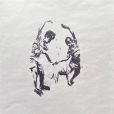
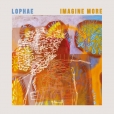
‘A wobbly loop of found sound. Almost inaudible speech from an unidentified documentary. Lapping waves of folk guitar created at the edges of the player’s ability. A haunted melodica. Mumbled vocals that reinvent the singer’s uncertainties as a deliciously glum pose. Layer these up in the recording software of your choice. Labour in a back bedroom overlooking the railway line to summon ghosts.
‘Spirits arrive from West Yorkshire, from Glasgow and Dunedin, from the suburban Midwest. Rising from squats and university accommodation past, from damp rooms filled with old paperbacks, stale hash smoke and abandoned mugs of tea.
‘Even as you listen to this collection of home recordings, made over the last few years by South London duo Jemima, these ghosts crowd around. Born in the Seventies to chase the tape experiments and gentle strumming of the Sixties they crane their necks and edge closer to the laptop. When something this perfect comes along, even the most tranquillised must stir their stumps.
‘It’s lonely music created around a wine bottle with a candle in it, made too late to appear via Xpressway or Cordelia. Don’t imagine though, that it has no home in the now. These spectres remain close because they know they are still wanted. We need them as much as they need us.
‘This spell-binding LP is a window onto a half-lit world on a deeper plane of consciousness.’

Phil Pratt productions, 1972-1974; Sunshots recorded at Channel One, Black Ark, Dynamic Sound and Randy’s Studio 17, with house engineers Ernest Hoo Kim, Lee Perry, Carlton Lee and Errol Thompson at the helm, and backing by Sly & Robbie, Family Man, Chinna, and co, aka Soul Syndicate. Check the versions of Money Money Money and I Don’t Want To Be Outside.
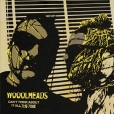
‘Eight tracks of jagged electronics, heavy basslines, and fractured spoken word collide in a body-jerking soundclash that is both raw and vital.’
Good On Paper enjoyed ‘Baldauf’s crisp, distanced tones accompanied by Roe’s ominous, pulsating programmed bass line and four-to-the-floor whack, coaxing pure pop out of tension and incongruity.’ Electronic Sound Magazine hailed the LP as ‘a blistering, club-forward workout’, with ‘top-drawer, nose-bloodying electronics,’ positioning the Stroud duo as ‘rather like a wonky Tom Tom Club with added grit.’

‘Back to the core formation of Lisa Alvarado on harmonium, Mikel Patrick Avery on drums, Jason Stein on bass clarinet, and composer/multi-instrumentalist Joshua Abrams on guimbri, for one continuous 37 minute composition across a single LP.
‘This time around, Abrams has pushed post production techniques found only sporadically on earlier NIS records deep into the heart of the music, distorting and reshaping instruments to mutate timbre and texture, color and time.
‘Refracting the band’s signature mesmerizing chains of overlapping rhythmic patterns through the sonic funhouse of dub makes Perseverance Flow the most formally experimental NIS album to date.’
“I imagine Perseverance Flow like a live extended realization of a Jaylib lost instrumental as remixed by Kevin Shields,” says Abrams. “Or vice versa. I also think it has sympathies with some of the more rhythmically intricate dance musics out of Chicago and Lisbon… Perseverance Flow is skipping rope in slo-mo. A dance of co-operation to rally guts and humors and keep marching through pouring tears.”
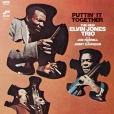
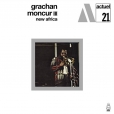
‘Classic vinyl series.’

‘Charles Lloyd pays homage to his dear friend and longtime collaborator, master-tablaist Zakir Hussain. The album is built around studio recordings made in Mumbai in 2009 for an interrupted project featuring an expanded ensemble with drummer Eric Harland, Carnatic singer Vijay Prakash, Rakesh Chaurasia on bansuri, Sabir Khan on sarangi, Ranjit Barot on keyboard, and Niladri Kumar on sitar.’