

Your basket is empty

The first volume of Budgie’s contributions to The Good Book I and II, his gospel-sampling collaborations with The Alchemist, from 2014 and 2017.
Featuring J.Rocc, Action Bronson, Aston Matthews and Mick Luter.
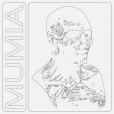
This is terrific.
Brazilian post-punk, art rock and DIY from 1988, released here for the first time, by the duo Celso Alves and Kodiak Bachine (whose records with the band Agentss are desperately sought-after nowadays).
Dubwise and rhythmic, percussive and synthy, with tangy Brazilian roots, and a droll humour to its reflections on embalming, LSD and zombies, the music freewheels roughly and vividly from the truffling, chattering, tropical atmospherics of the opener, through to the machine-funk, Romeroesque terrors of the Greenhouse Massacres, to close.
Sung in Portuguese and English, studded with Spanish, French and German, the lyrics are reproduced on an insert. Pressed at Pallas.
Ace. Check it out.
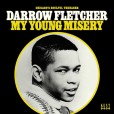
Hip dance sides and Lowrider ballads from Darrow’s Chicago years.
From his career-opening smash The Pain Gets A Little Deeper, via Northern dancefloor classics like My Young Misery, Infatuation and Gotta Draw The Line, and ballads like Sitting There That Night and My Judgement Day, through to the new social consciousness of Now Is The Time For Love, recorded in 1971 for his step-dad Johnnie Haygood’s Genna label.
Startlingly accomplished new jazz from South Africa, teeming with ideas, influences and idioms.
Maybe you remember Asher’s drumming on Angel Bat Dawid’s The Oracle.
Hotly recommended.
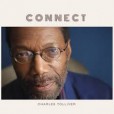
The first album in thirteen years by this great trumpeter (and founder of Strata East).
A quintet — with US veterans Jesse Davis, Keith Brown, Buster Williams and Lenny White — joined by Binker Moses on a couple of cuts.
‘With a new lineup including multi-instrumentalists Kwake Bass and Wu-Lu, who are also the producers and arrangers. Horns, played by Soothsayers’ founders saxophonist Idris Rahman and trumpeter Robin Hopcraft, are included on just two of the ten tracks…
‘McFarlane’s spellbinding, crystalline voice continues to be acoustically recorded and reproduced and the primary focus of attention. Her lyrics, as before, are strong on message and relate to the experience of being a black person in Britain, touching on race, identity and the legacy of colonialism.
‘McFarlane’s performances aside, what binds Arise and Songs of An Unknown Tongue together is her embrace of her Jamaican heritage. What makes them distinct from each other is how that heritage is referenced in the material, lyrically and instrumentally. Born and brought up in London, McFarlane made an extended trip to Jamaica in 2018, when she penetrated further into the country’s folk culture and spiritual traditions than she had been able to do on previous, shorter visits. She devoted much of her time to researching the African-derived rhythms that shape the country’s folk music. On her return to London she worked with Wu-Lu and Kwake Bass to present them in a modern electro-acoustic context…
‘It looks forward to a brighter future while acknowleding the past and confronting present. It is deep, immaculately crafted and beautiful.’
(Chris May, All About Jazz).
Even at the age of eighty — Nation Time is fifty years old — Joe McPhee refuses to stand still or bask in nostalgia. For all its lovely strangeness — for a start, besides playing, he sings and recites — this LP elaborates lineages in his oeuvre initiated with John Snyder in the seventies, and sustained with Pauline Oliveros.
Lasse Marhaug is an old hand, young at heart, too. After thirty years of making electronic music — hundreds of releases, collaborations and projects — his name is synonymous with Norwegian noise music.
A one-of-a-kind, highly enjoyable, compelling mixture of free jazz and electronics, inspired by science fiction and early electronic music.
His startling 1970 comeback for Reprise, recorded at Fame Studios in Muscle Shoals, Alabama. A blend of blues, Sly Stone and country rock loaded with the Richard scream, rollicking piano and booting saxophone. ‘He was just singing his booty off,” recalled Travis Wammack (who wrote Greenwood, Mississippi for the session).
The title track kicks off side two with a staggering dollop of super-heavy funk: ten increasingly frazzled minutes of breaks-and-beats heaven pilfered by everyone from Big L and Lord Finesse to Prodigy.