
Your basket is empty

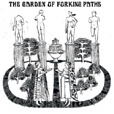
Curator James Blackshaw brings together Espers’ Swedish cellist Helena Espvall, koto virtuoso Chieko Mori, Dutch lute player Josef Van Wissem — along with a track from Blackshaw himself.
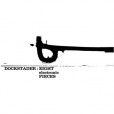
Representing three years of recording after-hours at the New York radio station where he worked, this is TD’s stunning debut, originally self-released in 1961, and later issued by Folkways.
‘Oscillators pulse and clash with fragments of incidental tape music, leaving collages of sound as tuneful and memorable as they are otherworldly. A visionary debut that presages the abstract ambience of modern IDM and an essential addition to any collection of early electronic music.’
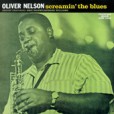
With Eric Dolphy, Richard Williams, Roy Haynes and George Duvivier in 1960, Van Gelder at the controls.
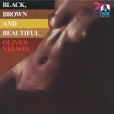
‘Originally released in 1970, Black, Brown and Beautiful saw legendary composer and arranger Oliver Nelson musically address the state of black America in the wake of the assassination of Martin Luther King. Tracks like Requiem, Lamb Of God and Martin Was A Man, A Real Man directly address the passing of King, whereas Self Help Is Needed and I Hope In Time A Change Will Come passionately ask questions still unanswered today.
“I have always felt that the Federal Government wasn’t going to do a damn thing and American Blacks were going to have to do it themselves. However, you can’t have a foot on your neck making it impossible for you to help yourself. That seems logical – doesn’t it?”
‘Musically, this is a sumptuous big band banquet with Nelson himself talking the soprano sax solo on the aching I Hope In Time A Change Will Come. Those who are fans of classic Nelson albums like The Blues And The Abstract Truth (1961) and the equally polemical The Mayor And The People (1971) will find much to enjoy here.’
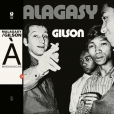
The fabulous, legendary LP originally issued by Lumen in 1972, born out of several visits to Madagascar by Gilson and fellow musicians from Paris, and their collaborations with musicians on the island.
Fittingly the first trip was on May 13 1968, the day of the general strike in France: this is tumultuous, insurgent, joyous, blisteringly swinging, outernational Malagasy jazz, including a a charged, unmissable The Creator Has A Masterplan, and Avaradoha, a composition by Madagascan saxophonist Serge Rahoerson (who leads this recording), which was the anthem of the rotaka protests in 1972, bringing down the neo-colonial First Republic of Madagascar. The closer showcases various traditional Madagascan percussion instruments, played by the same trio which that year recorded Le Massacre Du Printemps, Gilson’s avant-noise homage in memoriam of Stravinsky.
Hot.
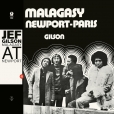
Jef Gilson, Sylvin Marc and his cousin Ange Japhet, Del Rabenja, Gérard Rakotoarivony and Frank Raholison, blending together bebop, sub-Saharan roots and electric funk.
Requiem Pour Django, Dizzy 48 and Anamorphose — renamed Salegy Jef after this re-routing via Madagascar — rejuvenate Gilson compositions from the previous couple of decades. Newport Bounce is a reworking of Interlude, recorded by Gilson in 1969 with Philly Joe Jones. Le Newport was a club in rue Grégoire de Tours, Saint Germain des Prés.
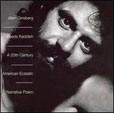
The 1964 recording of AG’s poem for his mother Naomi, fuelled by morphine, meth… and Ray Charles’ I Got A Woman on repeat.
Red vinyl, in its original gatefold packaging, with an added inner sleeve featuring new liner notes, and memorabilia provided by the Allen Ginsberg estate.
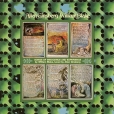
The first disc presents the original MGM LP, with Ginsberg accompanying himself on piano and harmonium, supported by Don Cherry, Elvin Jones and Bob Dorough amongst others, in twenty-one vocal settings of Blake’s Songs Of Innocence And Experience. Plus an alternate take, as well as a song intended for the LP, but left off due to time constraints.
A couple of years later, in 1971, Ginsberg returned to the Blake material, recording eleven songs in San Francisco with none other than Arthur Russell. The ensemble also recorded three Tibetan mantras with a Buddhist choir. All on the second disc.
The classic session plus eleven previously unissued performances, featuring contributions from Bob Dylan, Happy Traum, Don Cherry, Peter Orlovsky, Arthur Russell and co, in a luxuriously turned out 28-page colour booklet with rare photos and new essay by the producer Pat Thomas.
John Hammond was chuffed by the original release of The First Blues in 1983: ‘I recorded Allen in 1976 but Columbia Records refused to issue the results, considering the songs obscene and disrespectful. I am thrilled to finally be able to present Allen… I will present ‘disrespectful’ music like this as often as possible.’
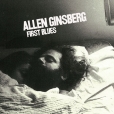
With Arthur Russell, Bob Dylan, Anne Waldman, Perry Robinson, David Amram and co, having a whale of a time in sessions which sound like the best kind of parties, between 1971 and 1981.
‘Rags, Ballads & Harmonium Songs. Chanteys, Come-All-Ye’s, Aborigine Song Sticks. Gospel, Improvisations, Renaissance Lyrics, Blake Hymns, Bluegrass, Hillbilly Riffs, Country & Western, 50’s R&B, Dirty Dozens & New Wave.’
The first-ever full vinyl reissue; gatefold sleeve. Photography by Robert Frank!
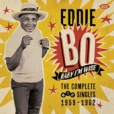
Classic New Orleans rhythm and blues, same cloth as Lee Dorsey and Ernie K Doe, before funk got a hold.