
Your basket is empty

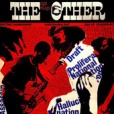
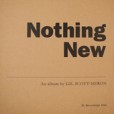
An anti-war collage of words and sounds from August 6, 1966, including contributions from a plastic clock-radio, The Velvet Underground, Gerard Malanga, Marion Brown, Allen Ginsberg, Ishmael Reed, Andy Warhol (standing around silently) and Ed Sanders.

His first album simply under his own name, from 2022. ‘In a quieter, more meditative space than the pulsing, driving material found in his other groups Sons of Kemet, The Comet Is Coming, Shabaka and The Ancestors.’
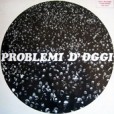
Dark, spooked, early-seventies worries from PU — disguised as M. Zalla, in the throes of his fascination with psychedelia and electronics — with titles like Mondo in Crisi, Problemi Sociali, Azione Sindacale and Mafia Oggi.
Drum-machines, Moog and EMS Synthi.
Still acutely germane; musically and temperamentally.
Demdike Stare has called it the first techno record.
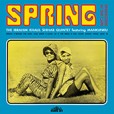
The landmark 1968 debut recording of pianist Ibrahim Khalil Shihab, aged twenty-two; also featuring terrific young saxophonist Winston ‘Mankunku’ Ngozi, Coltrane acolyte, on the verge of huge acclaim for his LP Yakhal’ Inkomo.
Scandalously, Paypal blocks anyone trying to buy this from us, because of the artist’s Arabic name.
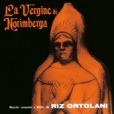
Taut horror soundtrack from 1963: dramatically orchestral, with jazzy intervals.
Reissued for the first time since its initial 1969 release.
Side one was recorded earlier that year at the gallery of Heiner Friedrich in Munich, where Young and Zazeela premiered their Dream House sound and light installation. Running their voices against a sine wave drone, the composition has its roots in The Tortoise, His Dreams and Journeys, begun in 1964 with The Theatre of Eternal Music. According to Young, the raga-like melodic phrases of his voice were heavily influenced by his future teacher, the Hindustani singer Pandit Pran Nath.
Side two was recorded in Young and Zazeela’s NYC studio in 1964. A section of the longer composition Studies in the Bowed Disc, this is an extended, highly abstract noise piece for bowed gong. The liner notes explain that the record can be played at 33 and 1/3 rpm as usual, but also at any slower speed down to 8 and 1/3 RPM on turntables with this capacity.
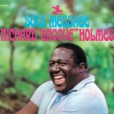
RH came through with Les McCann and Gerald Wilson. Prestige tried him out with Gene Ammons and Joe Pass, before this trio debut as leader, in 1965.
Top-notch, archetypal soul jazz — the opener states the case, the closer sums up — hard-swinging, blues-saturated, lots of chords, propulsive bass, open and gritty.
Nicely Latinized version of Song For My Father.
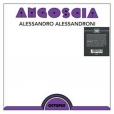
AA is the close collaborator of Ennio Morricone. He’s worked with Bruno Nicolai, Nino Rota, Franco Micalizzi, Francesco De Masi… He says he wrote the Muppet Song (and that Piero Umiliani nicked his royalties). He whistled for Fellini.
Originally released by Octopus in 1975, Angoscia catches him at his creative peak.
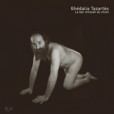
Twelve enactments of mental distress. Anguish, dismay, desperation, uncertainty, pride, resignation, frustration, desolation, agony, prostration, obsession and — finally — fear.
Arnold Schoenberg’s in the house.
A barrel of laughs, then; warmly recommended.
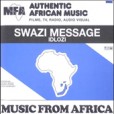
More from the archives of Tom Mkhize, re-imagining traditional South African music as Library Music in 1980s Johannesburg. Plenty of mbaqanga on this volume, running back to kwela, marabi and early South African jazz. The opener’s a knockout — thumb piano (heavy with delay), makhoyane gourd-resonated musical bow, sikhelekehle fiddle, steel drum and synthesizer.