
Your basket is empty

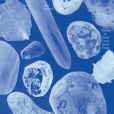
‘Minimalism is usually cool, detached, frictionless and mathematical. The music made by percussionist Bex Burch is not any of these things. What she calls ‘messy minimalism’ shares some characteristics with the music of Steve Reich and John Adams, but this is minimalism that isn’t afraid to break into a sweat and get its hands dirty (quite literally, given that Burch actually builds her own instruments from scratch). She mainly plays a gyil, a marimba-like tuned percussion instrument she learned while studying music in Ghana.
‘Burch’s first solo album lands her in Chicago, enlisting trumpeter Ben LaMar Gay and members of Tortoise. Sometimes, the results sound like an earthier Philip Glass: Dawn Blessings pairs her dreamlike, two-note gyil pattern with violinist Macie Stewart’s beautiful harmonies; Don’t Go Back to Sleep sees Burch’s gyil fractionally out of phase with a synthesiser, then spins into hypnotic but disorientating minimal techno.
‘Other tracks get wilder. There are drum circles, water drums and birdsong; tracks that exploit the acoustics of a California canyon. Pardieu turns a three-note xylophone riff into a compelling funk groove; Fruit Smoothie With Peanut Butter is a wonderfully chaotic drum circle that sounds melodic despite not featuring any tuned instruments. Best of all is You Thought You Were Free?, which layers clattering percussion over the wailing siren of a tornado warning relayed over Chicago until it sounds like a freakish fusion of the Master Musicians of Joujouka and Fela Kuti’ (The Guardian).
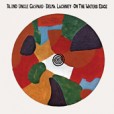
Fragile, dignified performances by two of Cajun music’s finest and most unusual artists, originally released on 78 in the late 1920s. French vocals accompanied by guitar or fiddle, or sometimes both. Impeccable ballads and breakdowns. Old school tip-on cover.
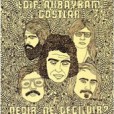
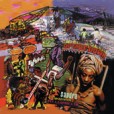
Oppositional Anatolian psych from 1977, drafting in members of Moğollar and Bariş Manço’s Kurtalan Ekspres. Pop-up gatefold sleeve, as originally.

‘Brotzmann barely plays saxophone at all, sticking mostly to tarogato and a host of clarinets; Nilssen-Love mostly plays gongs, bells and other metal percussion. With the changes in tools comes a change in approach. Nilssen-Love is sparer and more decorative, providing accentuating commentary that highlights the more solemn and yearning aspects of his partner’s playing, and Brotzmann explores melancholy to devastating effect. This is a career peak for the recently departed reedist’ (Bill Meyer, The Wire).
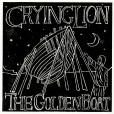
Refreshing, rootedly odd, mostly unaccompanied four-part-harmony singing recorded in Govan Old Parish Church, Glasgow, by members of Trembling Bells and Muldoon’s Picnic. Elements of Sacred Harp, Gregorian chant, medieval madrigal and English folk, with poetic influences including Maya Deren, Saint John The Divine and Dennis Potter — a unique blend of the visionary and the earthly, the intimate and glorious.
Silk-screened sleeve.
‘A rare and wonderful thing, a whirling, warm-blooded extension of the cosmic traveler’s inner consciousness, filled with surprise and steadiness instead of apprehension and fear. Fans of raga, psychedelic rock, jazz and world music are in for a real treat’ (Dusted).
‘Engaging, deliberately hypnotic music, its style ambiguously pitched between retro psychedelia, contemporary drone and timeless North African’ (All About Jazz).
‘One of the rough gems of the post-everything musical era’ (New York Times).
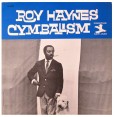
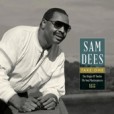
Highly entertaining, varied session for New Jazz in 1963 — the same year as Cracklin’ — with Frank Strozier (playing saxophone and flute), Larry Ridley and Ronnie Matthews. The tricky, careering opener Modette is terrific.
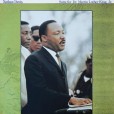
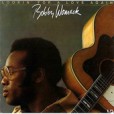
A moving, lovely, heartfelt tribute, seamlessly combining jazz-funk, soul, gospel, Black Jazz, bebop, Latin, spoken word and co, with palpably higher concerns than genre and market. Released in 1976 on his own imprint by the jazz veteran — sixties cohort of Eric Dolphy, Ray Charles, Donald Byrd and the rest — alongside the all-time classic If.
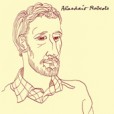
Quite different to A Wonder Working Stone and Spoils, the ten songs here are ‘sparse, intimate and concise. The focus throughout is on Alasdair’s deft acoustic fingerstyle guitar and his voice. The songs are variously elliptical and gnomic, direct and personal, romantic and tender.’ With sparing, decisive contributions on clarinet and tin whistle — and from Crying Lion.
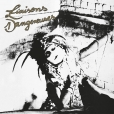
Notorious, seminal electropunk from 1981 — Beate Bartel from Einstürzende Neubauten and Chrislo ‘DAF’ Haas, with vocalist Krishna Goineau — which coursed into Chicago house and Detroit techno. Undiminished; still vital.
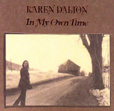
‘My favourite singer in the place was Karen Dalton. Karen had a voice like Billie Holiday’s and played the guitar like Jimmy Reed’ (Bob Dylan).