
Your basket is empty

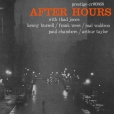
A classy, rock steady sextet — the rhythm section is Art Taylor and Paul Chambers — presenting four compositions by Mal Waldron.
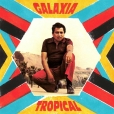
‘Fourteen tracks of irresistible psych-spiked cumbia and Link Wray guitar from the edge of the Peruvian jungle’ (Uncut).
‘Rambunctious Peruvian Cumbia Amazonica … The unpredictable and unrestrained sound that locals lovingly called ‘llullampeo’ can be heard in all its glory in Gitanita’ (Sounds And Colours).
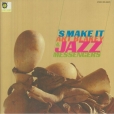
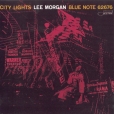
With Lee Morgan, Curtis Fuller, Victor Sproles, John Hicks, and John Gilmore.
‘It’s a shame that this was the only recording by this particular lineup of the Jazz Messengers, as Gilmore’s strong blowing complements Morgan very well (AllMusic).
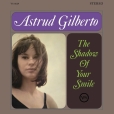
Astrud’s second Verve, branching out into jazz and American vocal staples, thankfully interwoven with five songs by Luiz Bonfá. Her signature emotional discretion and understated musical cool are played against the fluttering flutes and shaded strings of broad orchestral arrangements by Don Sebesky, Claus Ogerman, and João Donato. Produced by Creed Taylor;
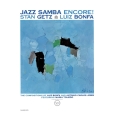
‘Recorded in February and March of 1963, reuniting Stan Getz with Brazilian musicians Luiz Bonfá and Maria Toledo for a lyrically focused follow-up to the landmark Jazz Samba of 1962.
‘Rather than reprising the earlier landmark album’s airy, guitar-driven bossa nova formula, Encore offers a more intimate, reflective setting shaped by Bonfá’s darker harmonic language and Toledo’s distinctive vocal and percussive presence. Getz’s tenor saxophone — warm, unhurried, and effortlessly melodic — threads through this atmosphere with a depth characteristic of his early-1960s work.
‘The program blends Bonfá’s original compositions with pieces by Antônio Carlos Jobim, including Só Danço Samba and Insensatez, highlighting the evolving transnational dialogue between Brazilian songcraft and American jazz phrasing. Bonfá’s nylon-string guitar provides the album’s tonal anchor, its rhythmic clarity and harmonic subtlety opening space for Getz’s lyrical phrasing. Toledo contributes both vocals and percussion, lending the session a textural and emotional range distinct from other Getz bossa nova collaborations.
‘The result is a quieter, more introspective album than its predecessor — one that underscores Getz’s ability to adapt his voice to a variety of Brazilian idioms without dominating them. Jobim appears on several tracks, further grounding the session in the core creators of the bossa nova repertoire.’
‘Verve Vault.’