



Your basket is empty

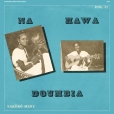
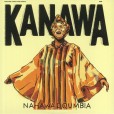
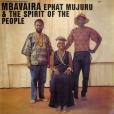
Starkly intimate, utterly captivating early recordings by this wonderful Malian singer. Voice and acoustic guitar only; as if you were the only person in the room.
The sound has been brilliantly restored by Awesome Tapes, for its fiftieth release.
Achingly beautiful music; hotly recommended.
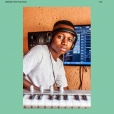
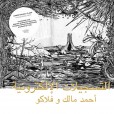
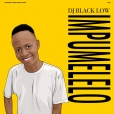
Stark, moody, percussive amapiano.
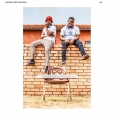
Two teenagers’ amapiano music from Gauteng province in South Africa, drawing on jazz, folk, afro, deep and tech house, kwaito, and dibacardi… but sounding like none of them.
Geo Rip is John Jones (Dope Body, Nerftoss) with Aaron Leitko and Mike Petillo (Protect-U), making its vinyl debut. Broken samples and electronics improvised live to tape.
An auspicious, thrilling, varied first outing — daredevil, visceral, and fresh — in customarily gorgeous TTT livery, with top-notch sound.
Sparky, engaging, inventive kitchen wave — on a mission to connect with you, cheer you up, and make you dance — rolling into TTT by way of Incienso and Workshop.
Also check out Kiki’s online cooking programmes and get pickling.
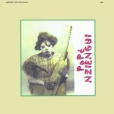
Stunningly modernised Tsogho ritual music from the interior forest of Gabon.
Beaten rattles, synths, Bwiti harp, male-female dialogical singing.
Released in 1989, to the intense consternation of purists; never before available outside Gabon.
Game-changing, and as authentic as it gets; warmly recommended.
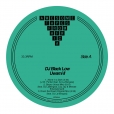
Prime Cuts from the legendary Scratch Perverts crew with an upful six-tracker, full of life and intelligence, and teeming with fidgety, DIY, turntablist energy.
For us it’s a bit like a raid on the racks at Honest Jons, over the decades… but fresh and bright. It kicks off with a headlong garbling of eighties jazz-funk, complete with synths, a vocoder, and some incipient Herbie, all sagging woozily into some nuts pitch control, before a mean beat-down. Some dubwise Channel One follows up, with almightily anthemic snatches of melody and unmistakable chords, almost breaking down under a barrage of skittering effects, scratching, laser-fire, strangulated melodica, and cowbell. Then three excursions in classic Detroit techno: moody electro funk, with a sprinkling of Harold Faltermeyer; hard-grooving minimalism, with a dash of It Takes Two; then a more industrial outing, with clattering percussion and gobbling synth. Finally an ambient interlude — overcast but twinklingly ambivalent — to close.
Ace. A lot of fun. Check it out.
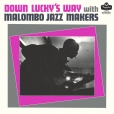
‘Malombo music is an indigenous kind of music,’ says Lucky Ranku. ‘If you listen to it, you can feel that it can heal you, if you’ve got something wrong. It’s healing music.’
Lucky was one of the greatest African guitarists of his generation. The deep and hypnotic Down Lucky’s Way was the Jazz Makers’ third album. Recorded in 1969, it was the first to feature additional instruments, and the first to feature Abbey Cindi on soprano saxophone as well as flute. But more than anything else, Down Lucky’s Way is a transfixing showcase for Lucky Ranku’s sui generis guitar virtuosity.
Quite different from their previous recordings, the album shifted the Jazz Makers’ sound toward mesmerising, extended compositions, layered by organ bass and guitar overdubs. Of all the Malombo Jazz Makers recordings, Down Lucky’s Way is the deepest of mood, and the richest of vision.
The most rare, too: it may not ever have been properly issued. Original copies are outrageously scarce — only a few are known among collectors. Prior to this reissue, Lucky was unaware it had ever been released, and had never seen a copy.
The Observer raved about a recent performance of this at the Wigmore Hall: ‘Solo for Cello (and fixed audio) was the highlight, an extensive, ghostly work played by Apartment House’s indefatigable artistic director, Anton Lukoszevieze. Imagine a baroque dance suite — with the familiar figurations of arpeggios, quick finger work and string crossing — played muted and whispered a few galaxies away, and you get the idea.’
The performer of this recording, Anton himself has written that Solo is ‘an extended exploration of the resonant body of the cello, but also a kind of flickering, glitchy and incessant ‘moto perpetuo’ of extreme intensity and a delicate beauty. The cello has a particular scordatura tuning, which creates an enigmatic harmonic ‘space’ to its sounding throughout the work. As the cellist constantly bows the heavily muted cello with varied arpeggiated freneticism, the instrument emits a particular halo of harmonic resonances creating a spectral and ghostly effect, deceptive and illusory. The work gradually morphs into different sections, each with their own particular motivic identity, at times accompanied by an audio playback of various densities. The latter sections of the work have a baroque-like lightness and ornamental quality, but do not allay the dramatic incisiveness of the the work, which ends with a final enigmatic spasm of sounds.’
And the composer Sheen advised the mastering engineer that ‘the cello is muted with a very heavy metal mute which thins out the sound massively, and Anton plays a super-light bow with extreme flautando, which creates a strange thin wispy sound. I’d like it to sound as distant and liminal as possible, with a lot of bow sound and strange resonances from the harmonics of the cello. With the exception of a few obvious spots where it gets louder and fuller, there should be as little ‘core’ to the sound as possible, but as many strange resonances as possible. The words we used a lot of in rehearsals were ‘baroque’ and ‘internal’ and ‘light’. I hope this helps.’
Transfixing, and good for ears; with luminous strands of Marin Marais, Derek Bailey, and Eliane Radigue.
Check it out!
Grieving, hushed, involving music for voices, field recordings, and white noise, performed by Kantos.
A piano quintet composed for and recorded by Apartment House.
‘The instruments are muted and heavily prepared. Players are instructed to perform very quietly with an exaggerated flautando, using as much of the bow as possible while producing minimal sound. Sheen often even asks them to mime. The result is an unsettling disconnect between the intensity of physical exertion and the sound produced’ (Ed Cooper, VAN).
‘Press moves with grossly impoverished intent… trembling and stumbling on the cusp of accident… right on the edge of culture, just before language. Most of the time, it is enough simply to breathe and move: the complexity of these actions alone is astonishing… And then, through the buzz of wood, guts, and bluebottles, a piano appears—all shining lacquer, muscle, and grammar’ (Ed Atkins).
“When people play my violin pieces, I always joke with them that when you start playing them, the audience should feel like they’ve gone deaf or something. The sound is so not there that you should think there’s something wrong for a second…
“It’s so disappointing when you see a bunch of instrumentalists walk on stage and you already know how the piece is going to sound. It’s not what music is about for me…
“The word ‘liminal’ is such a cliché but it’s annoyingly pertinent for my music. Trying to find a sweet spot between states: in between presence and not presence, in between tonality and not tonality, whatever that is, between noise and pitch. I really want things to sit in an uncertain middle ground between everything.”