


Your basket is empty

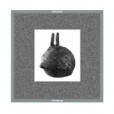
Eight charged, intimate meditations by Julie Normal and Olivier Demeaux, playing a rickety ondes Martenot and an old church harmonium.
Gripping, detailed, stately improvisation — a bit like the ùrlars in classical bagpipe music — which nervily mixes the sternly doom-laden with precarious, other-worldly wonderment.
(The ondes Martenot is an amazing twentieth-century instrument — beloved by Messiaen, for example, and Varese. The theme-song of Star Trek is a vocal forgery of its sound. ‘J’aime cette fragilité qui côtoie la capacité de te décoller le tympan sur certaines fréquences inopinément,’ says Julie. ‘Je tiens une bombe dans les mains. J’aime son instabilité, son humanité.’)
Wood, breath, blood, eggshells… on the night of a purple moon.
Very warmly recommended.
None other than Blawan on his lonesome ownsome — after collaborations with Pariah as Karenn, and Surgeon as Trade — returning to the blood-drenched scene of his heinous Why They Hide Their Bodies.
New name, new sound; heavier and slower than his Ternesc output. The title track is the banger. Acid techno — deliberate, widescreen and ominous.
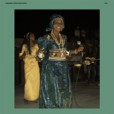
Lovely, hypnotic, rocking peulh music from Dilly commune, Mali, near the border with Mauritania (and the same family grouping as the celebrated singer Inna Baba Coulibaly). Duelling ngonis, calabash, flute, dashes of electric guitar; newly recorded.
A cosmic, percussive jam and bitter-sweet electroid house — both veering sharply into dark, steely, dubwise self-harm. Allegedly the fiftieth utterance of our favourite dance music label in the world. Hats off! More worries!
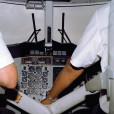
You can’t make sense of this, clicking through mp3s, on tin-pan computer speakers. Put the record on, though, and set the controls for the heart of the bloke next door, and it’s terrific. The drum-less, throbbing, droning, wailing, sawing, twinkling reconnaissance of Nothing, with massive, unnerving swoops, throttling and surges.
Beatrice Dillon and Kassem Mosse.
Great photos by Anne Tetzlaff on the sleeve.
DJ Nobu & NHK yx Koyxen.
Kassem Mosse worries.
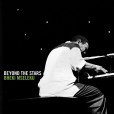
An electrifying, previously unreleased studio album, recorded in 2003, this stunning solo piano suite condenses Mseleku’s visionary overstanding of South African music into a flowing, pulsing statement in six parts. With jazzwise echoes of marabi, amahubo, maskanda and Nguni song forms binding it to the deep music of Mseleku’s Zulu heritage, Beyond The Stars provides what Blue Note recording artist Nduduzo Makhathini describes in his liner notes as ‘a divine summary’ of Bheki’s life story: ‘a sonic pilgrimage from the beautiful and organic landscapes of Durban, to the vibrant energy of London and ultimately toward the inner dimensions of one’s being.’
A magnificent start by new label Tapestry Works.
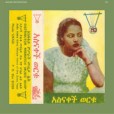
The best Awesome Tapes for ages!
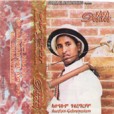
The mighty, game-changing, iconic Asnakech in narcotic, bare-bones performances from 1975. Her singing and virtuosic krar-playing are intensely gripping throughout, accompanied by Hailu Mergia’s cosmic, zonked organ, and Temare Harege’s ultra-minimal brush-work and foot-pedal, like a barely audible drum-machine.
Haunting, intoxicating, wonderful stuff.
Beau Wanzer and Shawn O’Sullivan.
A set of five throbbing, twinkling, oscillating excursions on analogue synth. Cosmic but intriguingly personable. Have a listen!
A second killer Trilogy EP from DJT in Japan, advancing the legacy of Chain Reaction.
Serious, emotionally reined-in music; structurally minimal, linear and open-ended, without the puppeteering routines of most dance music… but all the more enthralling and grooving, with hefty bass. The sense of monumental, weather-distressed, darkening dread is counter-balanced by this forward momentum, and expertly dubwise light-and-shade, with layered detail.
The reverberative, gong-like tolling of the opener gives way on the flip to machines starting up in a cavernous space, like vast beating wings, with a tumping bottom end, over nine minutes.
In-between is a more atmospheric and tentative interval, with slowly roiling synths and near-and-far, morse-code percussion.
Ace.