





Jeff Parker ETA IVtet.
‘Among the most influential European ensembles of the 21st century, this chamber group’s work on ECM and Hubro has redefined the boundaries between jazz, contemporary composition and folk music, developing a highly distinctive language built on restraint, timbral nuance and collective interplay…
‘Over time, the Ensemble has developed a language that is immediately recognizable — marked by reduction, clarity and a deep attention to sonic detail. While each release has its own character, the underlying aesthetic remains consistent: a focus on the inner life of sound itself. Rather than foregrounding gesture or virtuosity, the music draws the listener toward the smallest elements, where meaning emerges gradually through texture, spacing and timbre. The listening experience becomes one of concentration and proximity, where each sound carries weight, and the accumulation of detail forms a larger whole. References may be sensed — to early polyphonic music, Norwegian folk traditions, or more recent experimental practices — but these are absorbed into a singular musical language that resists categorization.
‘Non Sonett advances the group’s integration of electronics as a fundamental part of the sound world. Each musician engages with electronic elements alongside their acoustic instruments, creating a layered and dynamic sonic environment. At times, this leads into extended, exploratory passages reminiscent of analogue musique concrète; at others, electronics operate almost imperceptibly, subtly altering and extending the acoustic textures in real time.’
Soulful, lo-fi, Casiotone renditions of Amharic folk songs and lullabies, Tigrinya love songs, Gurage and Oromifa popular songs, and hits like Tilahun Gessesse’s Tiz Alegne Yetintu.
A landmark recording from Ethiopia’s vibrant 1980s cassette culture.
”Instrumental music, for me, is a space of reflection. Without words, the listener is invited to remember, imagine, and feel freely. In Resonance of Time, I hear my own musical philosophy: respect for Ethiopian kignit, careful dialogue with Western harmony, and a deep trust in melody as a storyteller.”
Roman Norfleet from the Cosmic Tones Research Trio and Andre Raiah from Brown Calculus. ‘Esoteric texts, sacred imagery, and mystic thought feed into spare diagrams of sound as space, tone, and pulse, drawn by saxophone, keyboard and percussion.’
Warmly recommended; check it out.
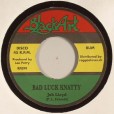
Twin detournements of Lieber & Stoller.
Hugh Godfrey coolly channels Love Potion No. 9 into a rude boy anthem, with tasty riding-east piano and full-steam-ahead saxophone.
On the flip, Norma Fraser switches the roles of the Big Mama Thornton classic. An erstwhile dawg is played by the singer. The raucous, sexually dismissive wordplay of the original — ‘You can wag your tail / But I ain’t gonna feed you no more’ — is replaced by dignified verses about female independence and resilience.
Killer 45.
Nine tunes copped from the archives of the legendary 78s collector Harry Smith — ‘pointedly taken from regions shaped by major US conflicts since Anderson’s birth in 1970. While her fascinating liner notes track what is lost and found when trying to translate these compositions, their universal musicality still cuts through. Opener Quodlibet is beautiful: an intricate, minor-key medley of Uzbek tunes originally performed on the dambura (a fretless lute), on which Anderson adds bluegrass techniques to counter her inability to play quarter-tones on her guitar. Her take on a qawwali vocal tune, Hamd, is also a highlight, her stacked guitar layers ringing with warmth and emotion. Gisela Rodríguez Fernández adds violin to Sarvi Simin, a shimmering tune from Soviet-era Afghanistan, while a Yemeni tune, Zar, intended to exorcise evil spirits from the sick, sees Anderson and Fernández constantly rearranging five notes without repetition. Dark ambient moods are also conjured in Pair of Duduk, on which Anderson shifts the drones of Armenian woodwinds on to reverb-heavy guitar and bassy synths, while in Vietnamese tune Whistle Song, transferred from bamboo flutes to electric piano, the composition’s closeness to minimalism sings out.’
Wonderful. Here’s to volume two.