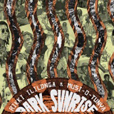

Recorded one long hot night in July 1978.
Sun Ra at the Rhodes, Disco Kid on guitar… Deadly funk, heady and grooving. A stone classic.
The new box set features the original LP alongside alternative mixes by Bob Blank first released in limited quantities for a 1978 Arkestra gig at Georgia Tech. Both versions of the album are cut loud at 45 rpm over 2LPs each.
Housed in a silver foil box, as per the original issues the first LP comes in a foiled sleeve while the second features two yellow A4 sheets pasted onto a white sleeve. With a twelve-page booklet featuring previously unseen photos and various texts.
The CD version is housed in a foil digipak.
The single LP is a straightforward reissue of the original LP.
The title track was ‘one of Sun Ra’s on-the-spot compositions,’ recalls Danny Ray Thompson. ‘Almost like an Ancient Egyptian Stargazing Ceremony, mapping out the stars and the planets.’ Where Pathways Meet is his ‘funky version of an Egyptian march. Pharaoh is sending his troops off to fight and this is his pep-talk! The music seems to take different pathways but still converges.’ The loping groove of That’s How I Feel features the reflective trumpet lines of Eddie Gale, with solos by John Gilmore, and Marshall Allen on ‘snake charming oboe’. The funky Twin Stars Of Thence weaves around Richard Williams celebrated elastic bassline; the haunting closer There Are Other Worlds is pure ‘space music’.
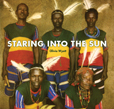
Fresh homage to Pharoah, Alice, Ra, and co, from an all-star Kiwi line-up.
‘Each instrument seems to be in orbit around the concept of symbiotic synergy, and everyone is given equal space to shine: from a psychedelic Korg, to a delirious saxophone or the gentle ripples of a harp. There’s a huge array of keyboards, with a standout acoustic piano solo by Guy Harrison on Plume. The wind section delivers ecstatic saxophone riffs, futtering flutes and solid horn choruses throughout. Percussion, vibraphone and acoustic bass lay the foundations. A full choir performs arrangements by Matt Hunter.’
The LP is in the ‘Verve By Request’ series.
‘This improvised, telepathic collaboration between underground legend Rob Mazurek and modular-synth maestro Alberto Novello is a dizzying, psychedelic space ritual. A delicate weft of harmony and melody on trumpet — plus atmospheric bells and samples — rides a loose rhythmic, timbral magic carpet, way out into uncharted dimensions of sound.’
This is terrific; warmly recommended.
‘Brìghde Chaimbeul is a leading purveyor of celtic experimentalism and a master of the Scottish smallpipes; a bellows-blown, mellower cousin to the famous Highland bagpipes. A native Gaelic speaker, Brìghde roots her music in her language and culture. She rose to prominence as a prodigy of traditional music, but has since begun a journey to take the smallpipes into unchartered territory. She has devised a unique way or arranging for pipe music that emphasises the rich textural drones of the instrument; the constancy of sound that creates a trance-like atmosphere, played with enticing virtuosic liquidity. She draws inspiration from the world of interconnected piping traditions, but her most recent album brings in influence from ambient, avant garde and electronic music.’
‘In an age when any old modal groove with a tambura drone pasted on is marketed as spiritual jazz, Kingsport, Tennessee born Zoh Amba is the real deal…
‘Opening track Fruit Gathering is a brief aubade to the Holy Spirit, weeping with a tremulous vulnerability recalling Ayler at his most tender and melodic… On the album’s more expansive tunes, her quartet plugs into the tumultuous swells and raging energy of late 1960s US free jazz exemplified by players such as Frank Wright and Noah Howard, which built on the intensity of John Coltrane’s later, spiritually driven exhortations. Here, Amba pushes past low, guttural blasts to altissimo shrieks and the screaming multiphonics pioneered by Pharaoh Sanders during his tenure with Coltrane.
‘On Champa Flower, Amba connects with her Tennessee roots, picking and strumming at an acoustic guitar while cymbals shimmer and bass throbs. Joining the dots between folk, American primitive, pastoral psychedelia and 2000s free folk, she proposes an alternative living continuum of American devotional music. Most affecting, though, are the three solo meditations on which she plays piano with her right hand and sax with her left. Captured in lo-fi on a Zoom recorder, and ending abruptly as though suddenly out of batteries, they’re intimate glimpses of a soul in motion’ (Daniel Spicer, The Wire).
Combining two BBC Radio sessions, recorded at Maida Vale Studios in 1973 and 1978, with Norma Winstone, Henry Lowther, Art Themen, Tony Coe, and the gang.
Eight Garrick originals, including favourites from the Troppo and October Woman LPs, and an early, first showing for River Running and Galilee. Robin’s Rest only appears here.
‘Fabulous,’ says Record Collector.
Ace, late-seventies set, warmly buoyant and inimitably baggy, including Space Is The Place.
Six reeds (including John Gilmore and Marshall Allen), three trumpets (including Michael Ray and Eddie Gale), two trombones (with a young Robin Eubanks), the French horn of Vincent Chancey, guitarist Dale Williams, three bassists, four percussionists, singer June Tyson and of course Ra on keyboards.
The George Harrison… Just Like A Woman detourned… O-o-h Child, Mr Bojangles… even an uptempo, conga-driven My Way.
Another unmissable Ra LP — previously impossible to find — from the same 1972 sessions as Space Is the Place. The opener Pan Afro is a modal tear-up bossed by Gilmore’s saxophone; the title track is a hugely enjoyable, side-long, Ra-led space chant.
From 1964, with Pharoah Sanders sitting in for John Gilmore (away working with Paul Bley, Andrew Hill and Art Blakey); also flautist Harold Murray and the brilliant bassist Alan Silva. The debut of The Shadow World.