












Your basket is empty


Watch How The People Dancing
Unity Sounds From The London Dancehall 1986 - 1989
Honest Jon's Records
Exhilarating reggae music from Stoke Newington, north east London, made by soundboys on a Casio and a drum machine, in a room over Eddie Regal’s record shop.

Live in London, 1968.

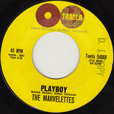
One-sided promo.

Fine Detroit doo wop, Drifters and Coasters style, definitively presented in this limited edition.

A mix of overlooked gems and local boomshots from the cassette tape scene in Libya, during the late 80s to early 2000, when independent artists relied on makeshift home studios or travelled abroad to record in Tunisia and Egypt. A judicious mash-up of boundary-pushing sounds which reflects this precariousness and nascency; also the political and cultural crossroads at which Libya found itself. North African rhythms meet Arab melodies and deep African roots. Disco and house run into gritty pop. Reggae courses through, with an unmistakable Libyan twist — not just musically, in the slowed-down cadence of traditional shaabi beats, but also culturally, taking to heart its outernational message of proud, defiant self-awareness.
Assembled by Habibi Funk with personality and love, as per; with a 32-page booklet. Another winner.
Last few box sets!

Monumental soul-reggae in its full 12-inch glory, with a terrific old school rap from Welton Irie, and two dubs.
Arguably the definitive version of the Randy Newman song, though it’s probably a Nina Simone cover.

Stunningly beautiful, poignant music from Bilād al-Shām — ‘the countries of Damascus’, known nowadays as Syria, Lebanon and Palestine — including performances from the very first recording sessions in the region.
The legendary, moody Beirut singer Būlus Ṣulbān is here — some historians have him singing before Egypt’s Pasha Ibrāhīm Bāshā during his military campaign in Syria, in 1841 — and Ḥasība Moshēh, Jewish ‘nightingale of the Damascene gardens’. Thurayyā Qaddūra from Jerusalem; Yūsuf Tāj, a folk singer from Mount-Lebanon; Farjallāh Baiḍā, cousin to the founders of Baidaphon Records… Musical directors like the lutist Qāsim Abū Jamīl al-Durzī and the violinist Anṭūn al-Shawwā (followed by his son Sāmī); such virtuosi as the qanun-players Nakhleh Ilyās al-Maṭarjī and Ya‘qūb Ghazāla, and lutist Salīm ‘Awaḍ.
Even at the time, notwithstanding such brilliance, public music-making was frowned upon as morally demeaning, especially for women. Musical venues were generally dodgy. Ṣulbān once cut short a wedding performance for the Beiruti posh, after just one song, he was so disgusted with his audience.
‘If I had to tell you about the catcalls,’ one commentator wrote about the musical theatre of the time, ‘the stomping of feet, the sound of sticks hitting the ground, the noise of the water-pipes, the teeth cracking watermelon seeds and pistachio nuts, the screams of the waiters, and the clinking of arak glasses on the tables, I would need to go on and on and on…’

His first solo LP, from 1973, brilliantly produced by Willie Hutch. Highlights include three killers: the sublime, expansive, funky protest of Just My Soul Responding; the achingly beautiful Sweet Harmony; and The Family Song, a two-step classic.

Excellent compilation of country blues, 1933-39.
Bo Carter, Scrapper Blackwell, Walter Davis, Black Ace… and less well-known names, like Peanut The Kidnapper and One Arm Slim.
‘One Arm Slim’s piano is rather erratic due to the fact that he is probably using only one hand,’ according to the sleevenotes.
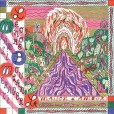
Gorgeous, restorative duets by a French singer and Iranian singer/instrumentalist, taking a highly personal, affective approach to the traditional radif repertoire established by Ostad Abdollah Davami. Ecstatic, sensual ghazals from the thirteenth and fourteenth centuries: ‘You gave me away free,’ she chides. ‘I wouldn’t take the world for a single hair from your head.’
Two sides triumphantly add organ and harmonium, bendir and n’goni.
The performances are considered and expert enough, but with a have-a-go freshness and emotional truth, without snoot or prettification.
Wonderful artwork by Gwénola Carrère.
A magical record.
We ship worldwide. The postage rates for your order are displayed before payment, which is processed using Paypal. You can pay using your Paypal account or any of the following cards. No need to join Paypal.