







Your basket is empty


Monumental soul-reggae in its full 12-inch glory, with a terrific old school rap from Welton Irie, and two dubs.
Arguably the definitive version of the Randy Newman song, though it’s probably a Nina Simone cover.
A symphonic layering of phone-taps by Scanner and TT, aka DJ Sprinkles.
Plus some deep, glitchy Ambient by the label-boss, with piano and harpsichord.

Excellent compilation of country blues, 1933-39.
Bo Carter, Scrapper Blackwell, Walter Davis, Black Ace… and less well-known names, like Peanut The Kidnapper and One Arm Slim.
‘One Arm Slim’s piano is rather erratic due to the fact that he is probably using only one hand,’ according to the sleevenotes.

Free-flowing recordings made in Pakistan with members of the instrumental quartet Jaubi (including Zohaib Hassan Khan on sarangi).

Rawly ethereal, other-worldly singing by members of hill tribes in China, Vietnam, and Laos.

‘Based in the south of France, Beduneau builds intricate self-playing installations and DIY electronics. Bringing a fresh and personal perspective to electronic and electroacoustic music, his work is intent on opening up dialogues about the social construction of disability, and other norms and conventions.
‘‘Clairon’ refers both to a medieval trumpet and to the beloved with whom this music was first shared, as a kind of impressionistic, though deeply moving sound-diary, during the stillness of the pandemic. The movement of air, pressure, resonance, and the physical properties of the trumpet are reimagined; organic ASMR tones, synthesized bird calls, and pirouetting melodies of pipes and bells score an imaginary biodome where chaos and harmony coexist.
‘Striking, singular, and boundary-pushing.’

‘Deep and haunting; a dense tapestry of layered percussion, time-warped tape loops, and spiralling drumgita figures, all underpinned by hypnotic improvisations from Brazilian pianist Rafael Dos Santos. Privately pressed in 1982, it is both ecstatic and unsettling, a landmark recording in black British experimental music.’

Watch How The People Dancing
Unity Sounds From The London Dancehall 1986 - 1989
Honest Jon's Records
Exhilarating reggae music from Stoke Newington, north east London, made by soundboys on a Casio and a drum machine, in a room over Eddie Regal’s record shop.

Stunningly beautiful, poignant music from Bilād al-Shām — ‘the countries of Damascus’, known nowadays as Syria, Lebanon and Palestine — including performances from the very first recording sessions in the region.
The legendary, moody Beirut singer Būlus Ṣulbān is here — some historians have him singing before Egypt’s Pasha Ibrāhīm Bāshā during his military campaign in Syria, in 1841 — and Ḥasība Moshēh, Jewish ‘nightingale of the Damascene gardens’. Thurayyā Qaddūra from Jerusalem; Yūsuf Tāj, a folk singer from Mount-Lebanon; Farjallāh Baiḍā, cousin to the founders of Baidaphon Records… Musical directors like the lutist Qāsim Abū Jamīl al-Durzī and the violinist Anṭūn al-Shawwā (followed by his son Sāmī); such virtuosi as the qanun-players Nakhleh Ilyās al-Maṭarjī and Ya‘qūb Ghazāla, and lutist Salīm ‘Awaḍ.
Even at the time, notwithstanding such brilliance, public music-making was frowned upon as morally demeaning, especially for women. Musical venues were generally dodgy. Ṣulbān once cut short a wedding performance for the Beiruti posh, after just one song, he was so disgusted with his audience.
‘If I had to tell you about the catcalls,’ one commentator wrote about the musical theatre of the time, ‘the stomping of feet, the sound of sticks hitting the ground, the noise of the water-pipes, the teeth cracking watermelon seeds and pistachio nuts, the screams of the waiters, and the clinking of arak glasses on the tables, I would need to go on and on and on…’
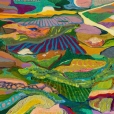
The eagerly awaited return of Bastian Epple to Marionette, for his debut album. Fifteen richly evocative vignettes conjured up with modular synth, tape-work, synthetic sounds, percussion, guitar: captivating, scene-setting catalysts of dreams, nostalgia, and other imaginary voyages; intimate, unpredictable, and alive; full of curiosity and wonder.
‘In the thirteen years since Voices From The Lake I, the duo has performed worldwide, released a handful of EPs, worked on installations, and founded record labels, all while continuing to refine the project’s unique identity. Its core has always been its deep, aqueous approach to sound, a sensibility that returns in full force on II. “The project was never meant to become what it did. At one point, we even paused it. Only to later embrace it in all its forms. II is both a continuation and a reinvention.” True to that spirit, Voices From The Lake have explored extremes in recent years, from high-tempo live sets to seated listening concerts, while remaining anchored in the meditative pulse of ambient techno. II extends this lineage, carrying forward the immersive sound design and boundary-pushing vision that has defined their work from the beginning.’

A mix of overlooked gems and local boomshots from the cassette tape scene in Libya, during the late 80s to early 2000, when independent artists relied on makeshift home studios or travelled abroad to record in Tunisia and Egypt. A judicious mash-up of boundary-pushing sounds which reflects this precariousness and nascency; also the political and cultural crossroads at which Libya found itself. North African rhythms meet Arab melodies and deep African roots. Disco and house run into gritty pop. Reggae courses through, with an unmistakable Libyan twist — not just musically, in the slowed-down cadence of traditional shaabi beats, but also culturally, taking to heart its outernational message of proud, defiant self-awareness.
Assembled by Habibi Funk with personality and love, as per; with a 32-page booklet. Another winner.
Last few box sets!
We ship worldwide. The postage rates for your order are displayed before payment, which is processed using Paypal. You can pay using your Paypal account or any of the following cards. No need to join Paypal.