
Your basket is empty

With guests Kit Downes on hammond organ, and cellist Lucy Railton.
Jazz album of the month, in The Guardian: ‘an unusual path, combining spellbinding singing with wayward improv… Speak Low II foregrounds Cadotsch’s crystal-clear lyricism more than its predecessor without ever cramping the freedoms of her classy improvising partners. She brings a graceful accessibility to a personal and ingeniously offbeat setup.’
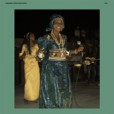
Lovely, hypnotic, rocking peulh music from Dilly commune, Mali, near the border with Mauritania (and the same family grouping as the celebrated singer Inna Baba Coulibaly). Duelling ngonis, calabash, flute, dashes of electric guitar; newly recorded.

A survey of Nashboro Records gospel, by Mike McGonigal of the Detroit Gospel Reissue Project.
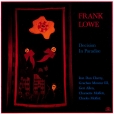
Killer, jostling lineup: Don Cherry, Grachan Moncur, Geri Allen, Charnett and Charles Mofffett.
‘Don has one of his best outings for years, bright, warmly antagonistic and full of melody. Moncur plays as well as ever, varying his slide positions and embouchure to just this side of multiphonics’ (Penguin Guide).
Warmly recommended.
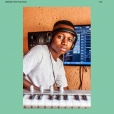
Stark, moody, percussive amapiano.
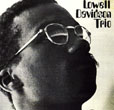
Ornette brought the pianist to ESP in 1965.
With Milford Graves and Gary Peacock.
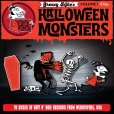
‘The first in a new series from Jazzman featuring the lowest of the lowball schlock n’ roll 45s never known to exist! No box untouched, no crate unrummaged, no pile unpilfered! Just the greasiest and grimiest, the most shocking and sordid 45s… like The Zombie Walk, Night Sweats, The Chiller, The Prowler, and Screaming Vampire! By combos like The Sadists, The Monstrosities, The Nightmares, The Gravestone Four… Putrid pieces of raucous rot n’ roll.’
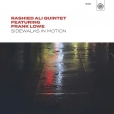
‘Rashied Ali stood as a magnetic force for the musical environment around him. In his last decades he sponsored rehearsal opportunities for young musicians, tightened up neighborhood street-corner drum circles he happened to pass, and for years would pull promising young talents into his orbit. One unique group that Ali led at the 2002 Vision Festival in NYC, along with Frank Lowe, he also took into the studio. Sidewalks in Motion features Ali and Lowe along with young musicians Jumaane Smith (trumpet), Andrew Bemkey on piano, and bassist Joris Teepe. In the years after Lowe’s death Ali selected the best takes, and mixed and mastered them for release, but the material remained on the shelf… till now.’
Presented in an old-school tip-on jacket featuring photos and Joris Teepe’s recollections.
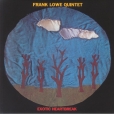
‘An affectionate update on the sort of tightly arranged hard-bop album that was a specialty of the Blue Note label from the mid-1950s through the mid-1960s. Frank Lowe has developed a thoughtfully muscular approach to the tenor saxophone that’s exceptionally resourceful and personal, and his bandmates… are similarly animated by both an exploratory bent and a love for the hard-bop tradition. This is Mr. Lowe’s finest album to date’ (New York Times).
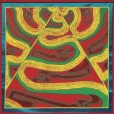
‘Back to the core formation of Lisa Alvarado on harmonium, Mikel Patrick Avery on drums, Jason Stein on bass clarinet, and composer/multi-instrumentalist Joshua Abrams on guimbri, for one continuous 37 minute composition across a single LP.
‘This time around, Abrams has pushed post production techniques found only sporadically on earlier NIS records deep into the heart of the music, distorting and reshaping instruments to mutate timbre and texture, color and time.
‘Refracting the band’s signature mesmerizing chains of overlapping rhythmic patterns through the sonic funhouse of dub makes Perseverance Flow the most formally experimental NIS album to date.’
“I imagine Perseverance Flow like a live extended realization of a Jaylib lost instrumental as remixed by Kevin Shields,” says Abrams. “Or vice versa. I also think it has sympathies with some of the more rhythmically intricate dance musics out of Chicago and Lisbon… Perseverance Flow is skipping rope in slo-mo. A dance of co-operation to rally guts and humors and keep marching through pouring tears.”
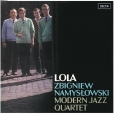
From 1964, a fresh, invigorating, up-for-it, personal take on happening US jazz — Coltrane in particular — blending in themes from Polish folk music. Try the rollicking Piatawka, with its evocation of highlander bagpipes. Scorcher!
Multi-instrumentalist Namyslowski was an alumnus of Krystof Komeda’s ground-breaking quintet. In the early sixties, he formed the Jazz Rockers with Micha Urbaniak, and in 1962 both joined The Wreckers, playing the Newport Jazz Festival. In 1964 his own Modern Jazz Quartet toured throughout England, Scotland, and Wales. “We had songs like Piatawka in the programme, inspired by Polish mountain folklore… These were the forms that had never been heard there before… Not only was I a musician from behind the ‘Iron Curtain’, but it also turned out that this musician had his own voice and showed something innovatory.”
Pianist Wlodzimierz Gulgowski plays a blinder, too; nodding to both Chopin and Mal Waldron. (A decade later he hooked up with Urbaniak, for the LPs Fusion III and Funk Factory.)
Lola was recorded in London; produced by Mike Vernon, who founded the Blue Horizon label, and produced Fleetwood Mac and David Bowie, amongst others. For the cover shot, Decca commissioned the same photographer as for the first Rolling Stones LP, to follow suit. “We are in the same sweaters from Marks & Spencers, only each in a different colour.”
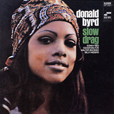
Ace hard bop from 1967, elegantly alternating bluesy with modal. Cedar Walton, Billy Higgins, and the excellent Sonny Red. The title track is extended, sultry and grooving; and there’s a version of the dancer Book’s Bossa.
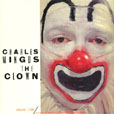
‘I am trying to play the truth of what I am. The reason it’s difficult is because I’m changing all the time.’ From 1957, hard on the heels of Pithecanthropus Erectus — hotter fire, and another masterpiece, featuring killer soloing from CM. On Haitian Fight Song: ‘I can’t play it right unless I’m thinking about prejudice and persecution, and how unfair is it. There’s sadness and cries in it, but also determination. And it usually ends with my feeling ‘I told them! I hope somebody heard me!’’ Reincarnation Of A Lovebird is here, too.