
Your basket is empty

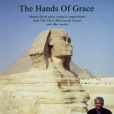
‘You’re never too old to learn something new. Reed credits bebop with keeping him and his friends out of reform school because they were too busy listening to records to get into trouble. Finding fame as a writer, he returned to music circuitously, eventually taking the plunge at aged 60 to study jazz piano. Diagnosed with prostate cancer in 2006 he hastily assembled a quintet to fulfil a lifelong ambition of recording an album. He made the record (and recovered). Cash-strapped during COVID, he became a composer to generate funds money for his plays, enlisting his daughter Tennessee as narrator.
‘These humble origins and a genuine love and natural talent for music are what underpins The Hands Of Grace. Consisting of works written for Reed’s play The Slave Who Loved Caviar alongside new original compositions, it brings in close friends and family to accompany his casual, unvarnished playing style that’s so genuinely heartfelt it feels as if you could be sat alongside in their living room. The music carries a lived-in simplicity yet it also holds something ambiguous that draws it away from the predictable. Music papers rustle, a living room chair is dragged up to the keys whilst Reed’s wife Carla contributes violin and daughter Tennessee recites her poetry on standout How High The Moon. This is a poignant family affair with no-one left out, ending on a touching tribute and voicemail from their late daughter Timothy.’
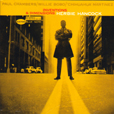
On the wing with Paul Chambers, and — Miles’ idea — two Latin percussionists, Willie Bobo on drums and timbales, and Osvaldo ‘Chihuahua’ Martinez, conga and bongo.
‘Classic Vinyl Series.’
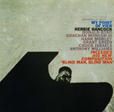
Amazing lineup — and a cool reworking of Watermelon Man.
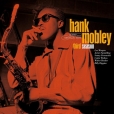
Anthony Williams, Chuck Israels, Grant Green, Grachan Moncur, Hank Mobley.
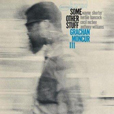
From 1963, following stints for Jackie McLean on One Step Beyond and Destination… Out!, this is maybe the great trombonist’s best record, with Wayne Shorter, Herbie Hancock, and Tony Williams — all involved with Miles around this time — and Cecil McBee. Four Moncur originals: bold, free, forward-looking music; but expansive and assured, never forced. ‘Some other stuff’; not full of itself, but a bit different. Try The Twins — dedicated to his two brothers — for a better sense of his musical good humour.
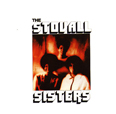
Classic gospel soul from 1971, with the scorcher Hang On In There.
The Sisters were former Ikettes, who sang back-up for Norman Greenbaum on Spirit In The Sky, versioned here.
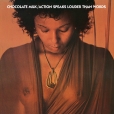
Stone classic Allen Toussaint and Marshall Sehorn production.
Funk bombs like the rare groove protest of the opener, running straight into Time Machine… phew.
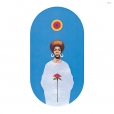
‘With just four long, leisurely, percussion-drenched tracks, it’s a latin-jazz jam-band dream, with none other than Joe Henderson adding smoky tenor that ratchets up the intensity and mystery, and fusion avatars Stanley Clark and Lenny White super-charging the grooves. Think of it as a direct descendant of In A Silent Way, but with a lysergic twist and Miles’s tentative phrases replaced by Gasca’s brash, sassy blasts.’ (Jazzwise)
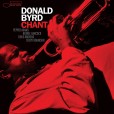
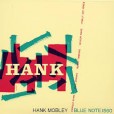
1961 session with Pepper Adams and Herbie Hancock. Kicks off with I’m An Old Cowhand… always a winner.
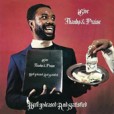
The debut LP of David Jahson and Jerry Baxter, from 1978 (featuring the classic, parping Black On Black, from four years earlier).
The CD adds the Love Train album.
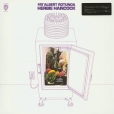
‘A playful, joyous album in which Hancock clearly had a great time, this music was composed for the pilot of a children’s TV show, redirecting the post-bop of his five-year stint with Miles towards new r&b and funk styles. Flying high with three horn players — Joe Henderson, Garrett Brown and Johnny Coles — alongside Hancock’s soaring Fender Rhodes, the group could swing freely on a track like the rousing Fat Mama and emote precisely on the subtle Tell Me A Bedtime Story.’
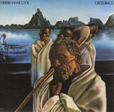
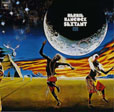
‘Herbie took the basic instrumental tracks of Quasar and Water Torture to Patrick
Gleeson’s Different Fur Studios, hoping to learn how to play the Moog synthesizer. Instead, Hancock let Gleeson contribute layers of sound to both pieces: on Quasar extending the horn playing of Bennie Maupin, Julian Priester and Eddie Henderson through electronic accents; on Water Torture providing a ghostly counter melody on the Mellotron (using samples from string instruments). These studio enhancements give Crossings an
otherworldly dimension, making the album feel bigger and more fantastical, yet the Sextet’s playing — recorded without much in way of edits or overdubs — keeps everything grounded. Indeed, Gleason’s additions are often so natural that it is hard to pick out what’s acoustic and what’s synthesized.’
The second LP by the sextet aka the Mwandishi Band, and Herbie’s last for Warner Brothers, clearing the way for the Headunters.
LP from Music On Vinyl.
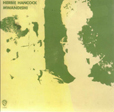
‘After releasing their Warner Bros. debut, the Herbie Hancock Sextet underwent a major transformation in the early ’70s. Over the course of a year, every member was replaced (except Herbie Hancock himself and bassist Buster Williams) and each adopted Swahili names. Hancock chose the moniker Mwandishi (‘composer’), and the Sextet became unofficially known as the Mwandishi Band.
‘The lineup’s first album reflects Hancock’s new aesthetic and spiritual directions. Stretching out from the r&b/jazz-fusion of Fat Albert Rotunda, the pianist would draw inspiration from his time with Miles Davis…
‘Dedicated to Angela Davis, Ostinato is an extended jam with stunning rhythmic complexity — enhanced by such studio effects as Echoplex delay. On You’ll Know When You Get There, Hancock’s tight arrangements are saturated in reverb, which gives an ever-shifting dimensionality. Side-long closer Wandering Spirit Song, written by trombonist Julian Priester, goes even further out: alternating between dynamic soloing and group improvisation, the Sextet fully manifests the radical potential of their collective identity/energy.
‘A bold and expansive statement, even after nearly fifty years.’
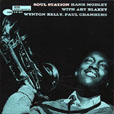
‘Classic Vinyl Edition.’
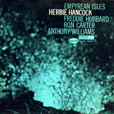
‘Classic Vinyl Series.’
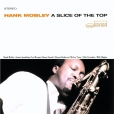
Remarkable 1966 lineup, with James Spaulding, Lee Morgan, Howard Johnson and Kiane Ziwadi in the brass line — the title track reminds you where the Hypnotics are coming from — and McCoy Tyner, besides.