Your basket is empty

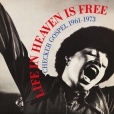
Gospel melts into Soul in this dazzling collection of sides originally released by the Chess subsidiary label Checker.
Devised by the same team supporting the likes of Muddy Waters and Etta James at Chess, the vintage of Checker Gospel celebrated here is distinguished by its expertly raw, rugged, live feel — thumping bass and pounding drums, bluesy guitar and horns — and its keen engagement with contemporary realities and politics, with an underlying, unwavering commitment to the Civil Rights movement. Not forgetting its sheer, startling, richly diverse soulfulness.
Key architects of the Chicago Sound and Motown are amongst the scores of contributors: Charles Stepney, Gene Barge, Eddie Kendricks, and Leonard Caston Jr. are in the house… Morris Jennings, drummer on Curtis’ Superfly and Terry Callier’s What Color Is Love… Louis Satterfield from The Pharaohs and Earth Wind & Fire… Ramsey Lewis’ guitarist Byron Gregory… Phil Upchurch… Laura Lee…
Producer Monk Higgins joined Checker in 1967, bringing his experience of R&B and Gospel hit-making for the labels One-derful and Satellite, together with a loyal cohort of musicians. A protege of Willie Dixon, engineer Malcolm Chisholm set up the Ter Mar studio as if preparing for a live gig, carefully teasing measures of bleed into the microphones. With Ralph Bass from King Records running A&R, they knew exactly what they were after. ‘I’m using horns and an R&B sound in gospel recordings,’ said Bass. ‘We have no charts. All the musicians are given the chord changes. I want the cats to think when we’re cutting. I want spontaneity, and that’s what we’re getting.’ And: ‘There is more to gospel than just finding solace in the church. This follows the same message of Martin King, who was fighting for a new way of life. Kids are tired of hearing Jesus Give Us Help. They want a positive message.’
Focussed on the late sixties and early seventies, the twenty-five recordings here are all killer no filler, but try these four, random entry points: the heavy funk ostinato of the Violinaires’ Groovin’ With Jesus, working itself up into a post-James-Brown brass frenzy, sure to knock your socks off; Cleo Jackson Randle’s title track, for those who like their Gospel straight-up and hard-core; Eddie Kendricks’ achingly timely choral call-to-arms, Stand Up America, Don’t Be Afraid; the East St Louis Gospelettes’ heart-stopping, fathoms-deep rendition of Bobby Bland’s I’ll Take Care Of You.
A beautiful gatefold sleeve; a full-colour booklet with excellent notes by Robert Marovich; top-notch sound. Another knockout selection by Greg Belson and David Hill.
A shoo-in for soul compilation of the year.
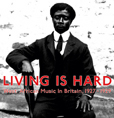
‘So it is that Honest Jon’s has (again) unearthed an episode of black music history in Britain: these are tough cuts — in no way easy listening, but absolutely essential’ (**** The Observer).
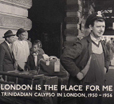
‘an exquisitely poignant, evocative record’, Daily Telegraph; ‘wonderful… album of the year’, Sunday Times; ‘simply a classic album. Music by the people, for the people,’ The Voice.

London Is The Place For Me
2: Calypso And Kwela, Highlife And Jazz From Young Black London
Honest Jon's Records
‘superlative’, Mojo; ‘sensational’, The Observer; ‘hugely evocative and poignant’, Daily Telegraph; ‘*****’ The Times, Metro; ‘sheer joy from start to finish’, Sunday Telegraph.

Modern Nigerian music starts here.
‘*****’, Mojo; ‘these songs leap out of the past like madeleines soaked in palm wine’, The Observer; ‘impeccably curated and packaged’, The Wire.
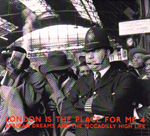
‘*****’, The Times, Independent On Sunday, Daily Telegraph, What’s On, Evening Standard, The Independent. ‘Marvellous pop — catchy, fun, young, effortless’, The Times; ‘one of the delights of the age’, Songlines.


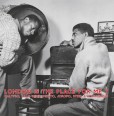
Still deeper forays into the musical landscape of the Windrush generation.
A dazzling range of calypso, mento, joropo, steelband, palm-wine and r’n'b. Expert revivals of stringband music, from way back, alongside proto-Afro-funk.
An uproarious selection of songs about the H-Bomb and modern phones, prostitution and Haile Selassie, mid-life crisis and the London Underground, racism and solidarity, the Highway Code and a 100% West Indian Royal Wedding.
For example some frantic British-Guianan joropo music-hall about Eatwell Brown from Clapham, who starts out biting off a piece of his mother-in-law’s face at a party, then devours everything in his path… a chunk of Brixton Prison, a Union Jack, a policeman’s uniform. Or Marie Bryant — collaborator of Lester Young and Duke Ellington — taking time off from skewering the South African PM Daniel Malan at her West End revue, to contribute some arch, swinging filth about uber-genitalia.
Superior sound, courtesy of Abbey Road, D&M and Pallas; lovely gatefold sleeve; full-size booklet, with full notes, and fabulous previously-unseen photographs, including a set from the family archive of Russ Henderson (who led the first, impromptu Notting Hill Carnival march, in 1966).
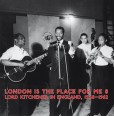
The genius of Lord Kitchener has been the mainstay of our series.
In this volume devoted to his post-war London recordings, Kitch plays his many roles with signature aplomb and poised subtlety.
First there is the hooligan chantwell, up for anything in the hurly-burly of carnival proper; and then the casual reporter, firing off postcards to Trinidad about taxis, flashy booze, fast women and football in Manchester, with homesickness and grievance nestled just behind the optimism, pride and tentative senses of belonging.
There is the bearer of news from home, in detailed accounts of murders, tales of stupid local coppers, and reminiscences about food and particular mango trees; the political thinker, considering racism and Africa; and the diarist, with his vivid tales of infidelity, and disclosure of the break-up of his marriage, and his desire to get away.
One foot in the UK, the other in Trinidad; but the man himself somewhere in-between. Kitch In The Jungle, nobody around. A ‘diasporic explorer’; a key twentieth-century witness, alongside such hallowed figures as Samuel Selvon and Edward Kamau Braithwaite.
Though in frustration Kitch would sometimes take over double-bass duties himself, the musicianship of Rupert Nurse, Fitzroy Coleman and co is top-notch. The original glorious sound is down to Denys Preston, recording for Melodisc, often at Abbey Road Studios (where we transferred and restored the 78s compiled here).
Presented in a lovely gatefold sleeve, with a full-size booklet containing superb, specially-commissioned sleevenotes by Kitch biographer Anthony Joseph, and fabulous, previously-unseen photographs.

Visceral, elemental, electronic funk, conjured from scraps of sound, breath, mutterings, dubwise remembrances, scuffling, sweat and blood, thin air — ‘crawled out of the slime’, as the opener puts it, self-engendering like the baddie in Terminator — all harnessed to cruelly grooving earthquake bass and b-boy drum science.
Rhythmically it has ants in its pants and it needs to dance, with an improvisatory, streetwise nervous energy and uninhibited, purposeful rapture — akin to this guy, say, eighteen minutes in — crossed with on-song Pepe Bradock and stripped-to-the-bone, mongrel hip-hop.
It’s unruly and edgy, a bit off its rocker, emotionally ranging — typically anxious, often nostalgic — and riveting dance music.
Judge-dread mastering by D&M; first-class Pallas pressing; stunning gatefold artwork by Will Bankhead.
Ruff ruff ruff.
Three brilliant re-routings of Detroit machine funk — Moodymann in particular — into deep mid-Atlantic co-minglings with raw, old-school hiphop and house.
Str8 Crooked is clattering, chugging jack, holding something like Paisley soul under the water; Build Back Better Sweatshops is more driving, riven with breakdowns and horror-show vocal samples. With an uptempo downbeat which nonetheless sounds like a tolling bell, the epic, immersive, sixteen-minutes-plus Episcopi Vagantes pulls off the deadly combination of a kind of stifled, timeworn, melodic wistfulness and percussively restless, passing-through urgency.
This is killer dance music, run through with swingeing, parping bass and ruff b-boy drum-machine rhythms: encrusted and detailed, mangled and nervy, but intensely hard-grooving; wired with punk insouciance, edginess, and free spirit.
Bim bim bim.

Sublimely convulsive Shangaan electro-gospel by a pastor from Giyani, Limpopo, recorded in 2008, brimming with aching, plaintive, mournful spirituality. However fractured, multi-faceted and fresh the music comes across — that signature whistle and sampled marimba, a little wonky high-life, rough, skittering drum patterns, no bass — the surging vocal lines and harmonies are unmistakably rooted in traditional South African music.

Consummate Berlin dub science by the maestro.
Beautifully textured, shuffling Lagos funk, on home-made percussion… militant horns… and a walloping, filthy-stinking kick-drum like the bucking, hairy hind-most of the Devil himself.
The Dub is Warrior Charge, 2016.
What a record. Bim squared.
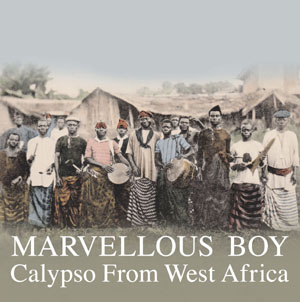
Marvellous Boy is the West African counterpart of the 1950s Soho scene of our series London Is The Place For Me. Calypso, highlife and jazz, brimming over with lust for life, topicality, and extravagant creativity.
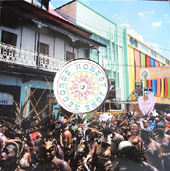
Tearaway soca from the studio of Darryl Braxton, mixing it up with ragga and rave vibes.

Alasdair Roberts, Nancy Elizabeth, Michael Hurley, James Yorkston, Victoria Williams, Richard Youngs: six ravishing, luminous new interpretations. Short-run vinyl sampler, fine pressing, silk-screened sleeves.

Originally released by Epic in 1953.

From the 1950s, when Moondog was homeless and busking in NYC. ‘His later records may be better known, but this is the real shit’ (Byron Coley, The Wire).
Startlingly remastered at Abbey Road.
Originally relelased on the Moondog label in 1955.

At its most open, shifting and expressive to date. For all the music’s complexity and deep coherence, freedom is the key. At times it grooves hard; at others it’s lush, romantic.
With Tikiman and Marc Muellbauer.
A handful of LPs signed by Moritz!

Moritz from Basic Channel and Rhythm And Sound, alongside Vladislav Delay (Chain Reaction) and Max Loderbauer (Sahko): a dream crossing of classic Berlin techno, On-The-Corner Miles, Larry Heard, and Can.

Beautiful, insurgent, fabulously danceable jazz music from South Africa, flowing out of the penny-whistle kwela bands of the 1950s. (Kwela means ‘get moving’, in Xhosa.)
Bra Gwigwi played alto and clarinet alongside Hugh Masekela and Kippie Moeketsi in The Jazz Dazzlers; also in The Jazz Maniacs and The Harlem Swingsters. He came to the UK from Johannesburg as an actor and clarinettist in King Kong — a musical about a Zulu boxer — which opened in London in February 1961.
Recording in January 1967, at Dennis Duerden’s Transcription Centre, he is joined here by Dudu Pukwana, Chris McGregor, Laurie Allan, and Ronnie Beer, all from The Blue Notes. Ladbroke Grove legend, and mainstay of our London Is The Place For Me series, Coleridge Goode plays double bass.
No less than sixteen shots of jubilant, jump-up mbaqanga. Check the Ethiopian vibe of Mra (which became core repertoire of The Brotherhood of Breath). Listen to Nyusamkhaya, and try to get it out of your head. Impossible.
Lovely notes by Steve Beresford, too.
‘The South African folk music that makes people glad to be alive!’
‘***** beautiful, deeply affecting… hard to beat as the year’s most worthwhile reissue’, The Guardian; ‘magnificent… wonderfully austere’, Time Out.
This is lovely.
Brand new, rambunctious, rootsy, spiritual brass-band music from Lagos, with singing, drums and home-made percussion.
Obadikah is a group of old friends who play together in the Cherubim & Seraphim and Baptist churches of the Ikeja and Isale Eko districts. A couple of them were founder-members of the Eko Brass Band; they’ve played with pretty much all the key Nigerian reggae artists.
The tunes are mostly traditional Yoruban melodies, often sung at bed-time. The songs are mostly original, sung in Yoruba (though Jomido is an Egun song from the Badagry area of Lagos state).